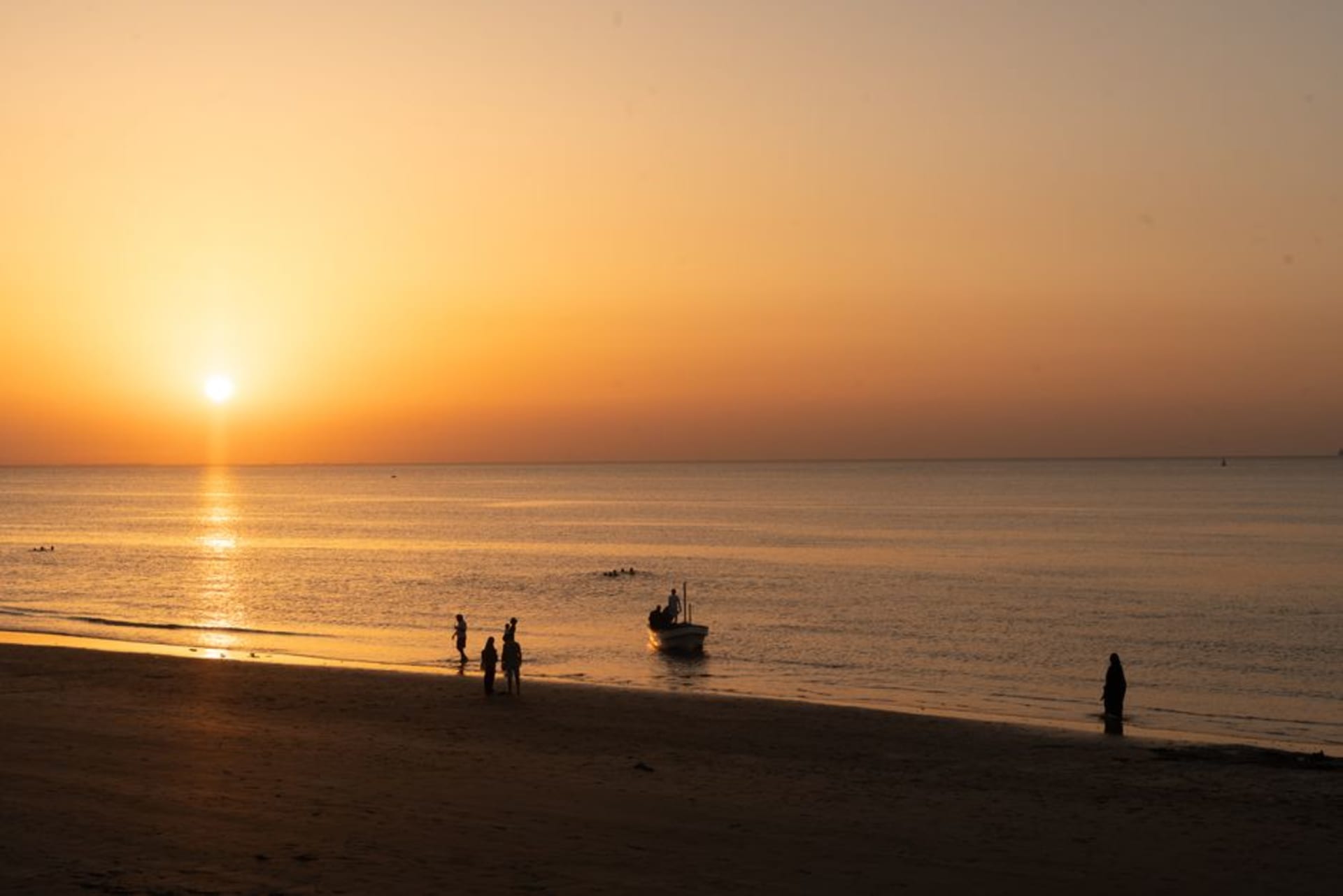
A boomtown port on the empty central coast where new cranes rise over an old fishing harbour, and whale sharks pass close offshore.
Duqm is a strange place to arrive at, and I mean that as a compliment. You drive for hours down the coast road from Muscat or up from Salalah through some of the most featureless desert in Oman, and then suddenly there are cranes on the horizon, a brand-new port, and a special economic zone being built at a scale that feels wildly disproportionate to the emptiness surrounding it.
A City Still Under Construction
The port and the surrounding development are genuinely new — Duqm has been positioned as one of Oman’s major infrastructure bets, a deep-water harbour and industrial zone meant to diversify the economy away from oil. Driving through, you pass finished highways running past nothing, roundabouts serving almost no traffic, and a dry dock large enough to service oil tankers. Lia found the whole thing slightly eerie, like a city built ahead of its own population.
What the Older Coast Still Offers
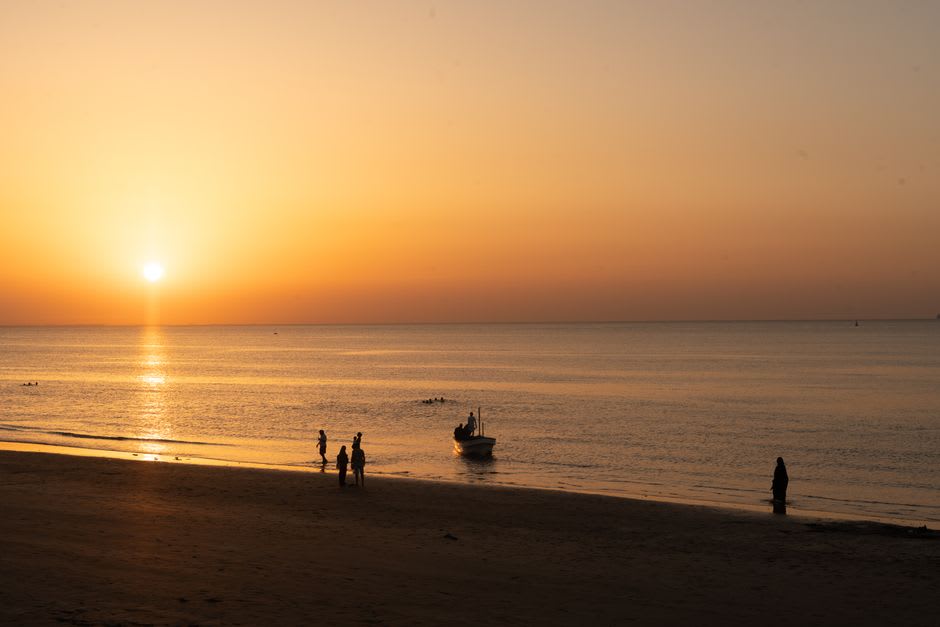
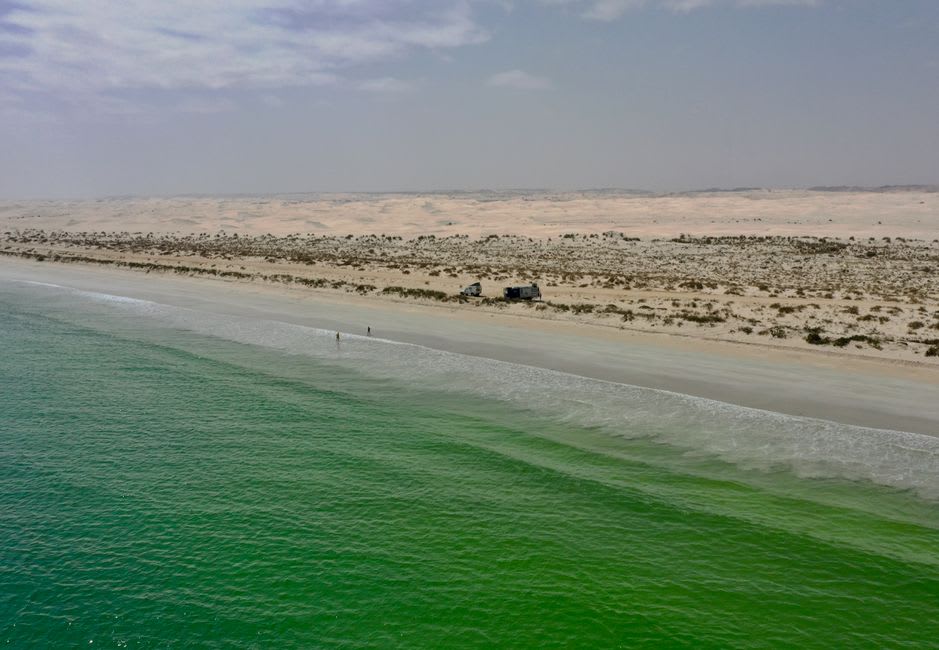
Past the new development, the coastline reverts to what it’s clearly been for millennia — flat, wind-scoured beaches, low limestone cliffs pocked with sea caves, and a fishing harbour where wooden boats still bring in kingfish and shark most mornings. We chartered one for a few hours and found ourselves, unexpectedly, in the middle of a small pod of dolphins working a bait ball, and our captain mentioned, almost as an aside, that whale sharks pass through these waters with some regularity between late summer and autumn, drawn by the same nutrient-rich currents.
The Rock at Ras Duqm
A short drive from town, the headland at Ras Duqm gives you the clearest sense of the coast’s older character — dramatic limestone formations shaped by wind and surf, a scattering of sea caves, and views back toward the port that make the contrast between old and new impossible to ignore.
When to go: October through April for comfortable temperatures. Late summer and early autumn offer the best odds of whale shark sightings offshore, if you can handle the heat.