Nine uninhabited islets off Muscat where turtles nest, reef sharks patrol, and Oman's best snorkeling happens without another boat in sight.
A dive shop owner in Al Mouj told me about the Daymaniyat Islands the way you’d mention a good restaurant you don’t want overrun — quietly, and only after I’d asked twice. “An hour by boat, maybe less,” he said. “Just don’t go in July, the currents get mean.” That was enough for Lia and me to book the first available slot.
Getting There Matters
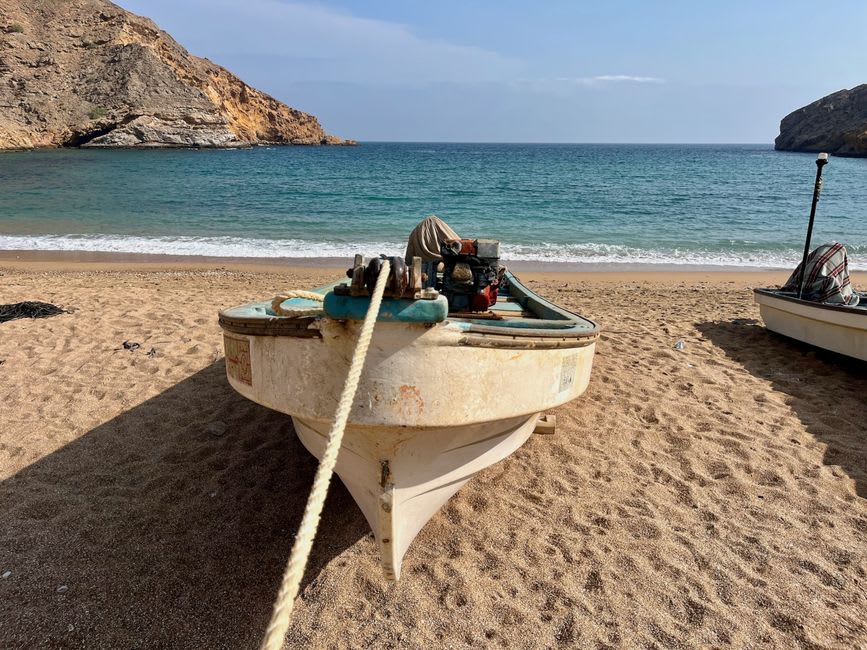
The islands sit roughly eighteen kilometers off the Al Batinah coast, northwest of Muscat, and you can only visit with a licensed operator — the whole chain is a protected nature reserve, no overnight stays, no fires, no fishing. We left from a marina before seven, the water flat and pewter-colored in the early light, and by the time the sun cleared the mountains behind us the first islet was already visible: low, rocky, fringed with a sand skirt so white it looked artificial.
What’s Under the Water
We snorkeled three separate sites in one day, and each felt like a different aquarium. At the first, a hawksbill turtle grazed on the reef ten feet below us, entirely unbothered by our presence. At the second, a blacktip reef shark cut past in the blue haze beyond the coral shelf — close enough that Lia grabbed my arm underwater, which is the only time I’ve ever seen her do that. The visibility in October ran to fifteen or twenty meters, and the coral, while not Red Sea-spectacular, was healthier and more colorful than I expected from a country better known for its deserts than its reefs.
The Islands Themselves
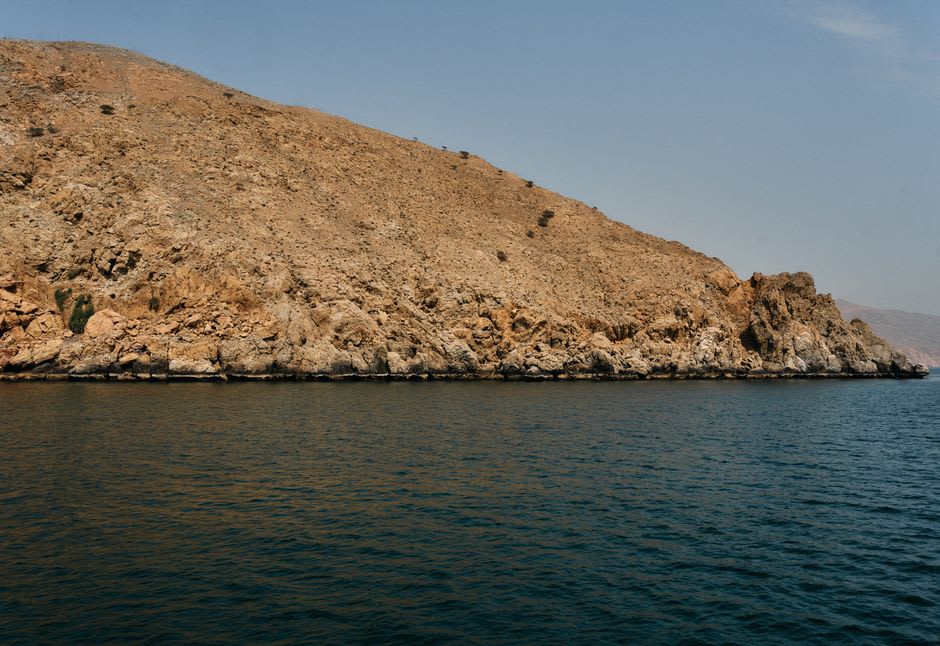
You’re not allowed onto most of the islets — they’re nesting grounds for seabirds and, on a couple of the outer ones, for turtles — but the boat idles close enough that you get the full effect: sun-bleached rock, a few scrubby plants clinging to the highest points, and an almost total absence of any human trace. Our guide cut the engine at one point simply so we could hear it, which turned out to be nothing but wind and the slap of small waves against the hull.
When to go: October through April, when the sea is calm and visibility is best. The reserve is often closed to visitors entirely from June through September, both for the heat and to protect nesting turtles.
Keep exploring
More from Oman
 oman
oman Dhalkut
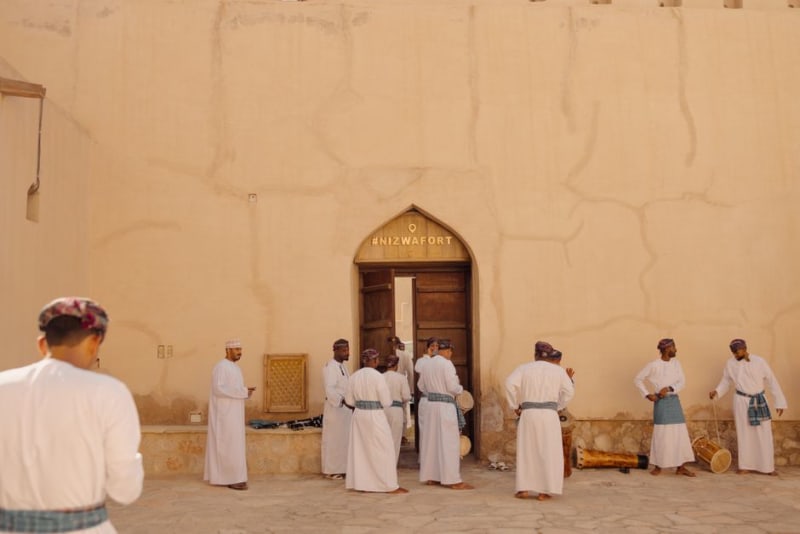
The westernmost tip of Oman's Dhofar coast, near the Yemen border, where the khareef arrives first and the crowds never arrive at all.
Explore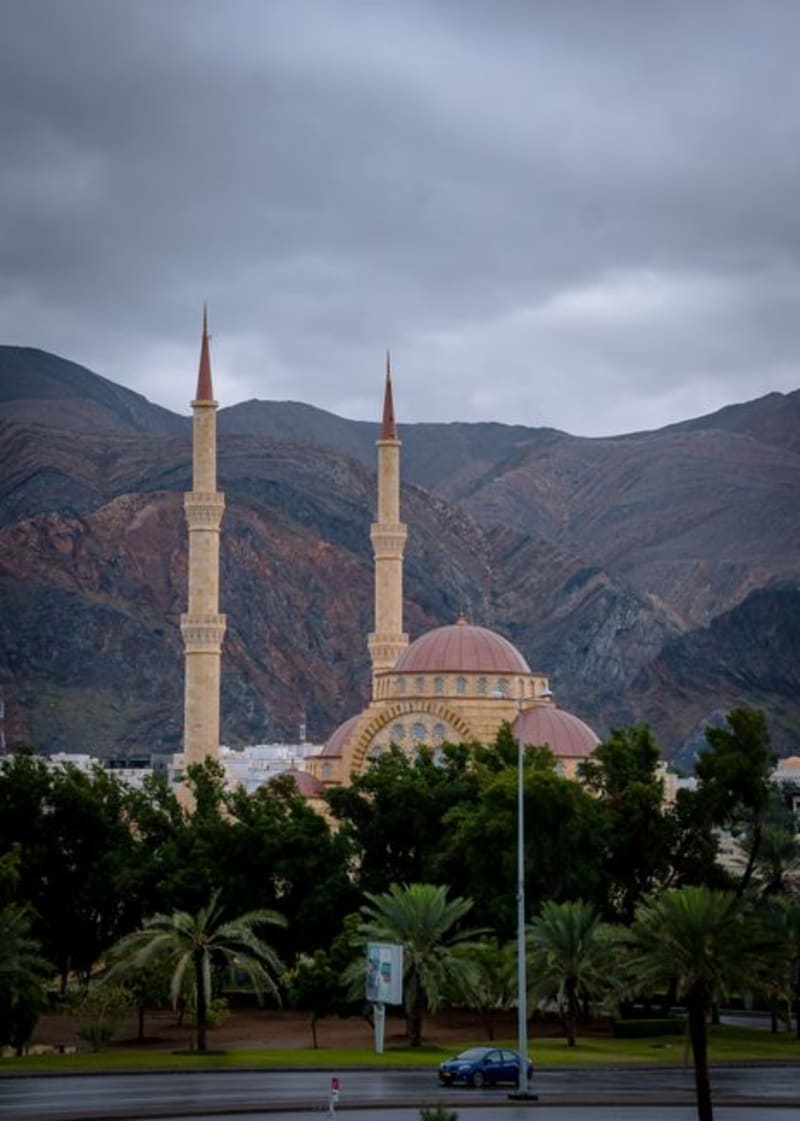 oman
oman Dibba
The gateway port where Musandam's mountains meet the Gulf of Oman, split awkwardly across three jurisdictions and unbothered by the fact.
Explore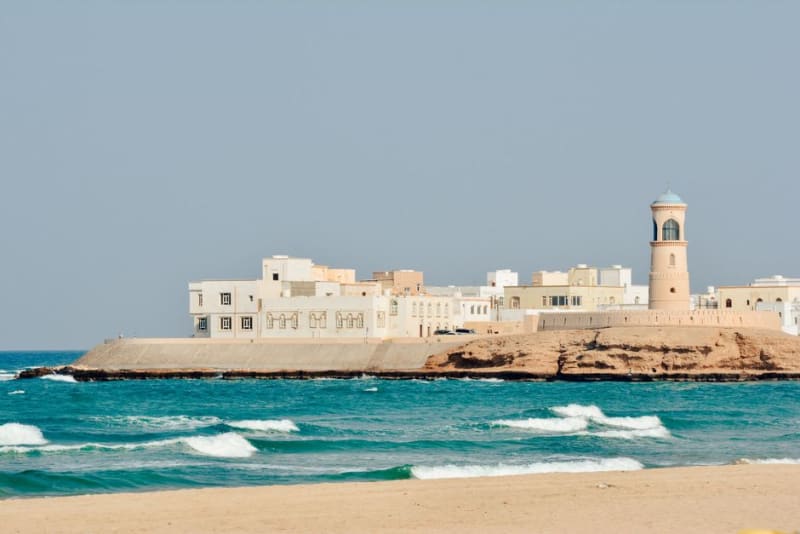 oman
oman Duqm
A boomtown port on the empty central coast where new cranes rise over an old fishing harbour, and whale sharks pass close offshore.
Explore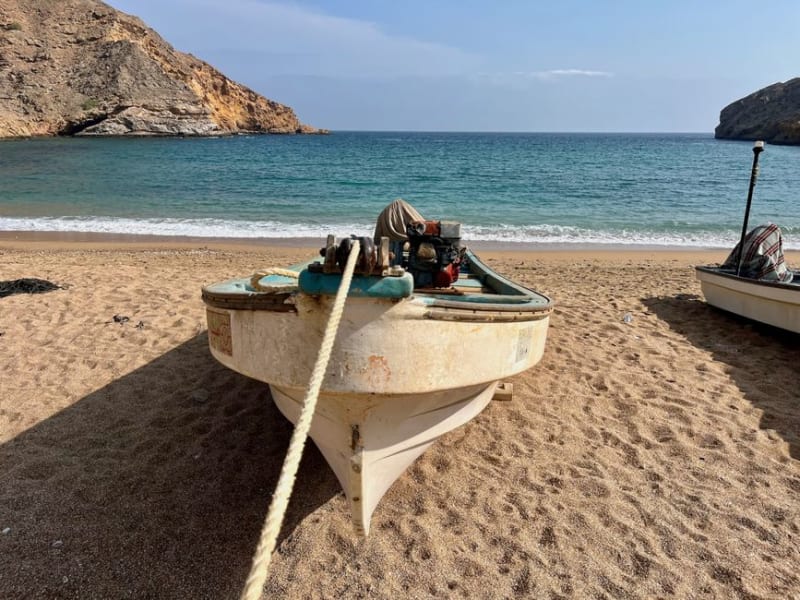 oman
oman Fahal Island
A jagged volcanic islet just off Muscat's harbour, better known to divers as Shark Island for the reef sharks patrolling its drop-offs.
Explore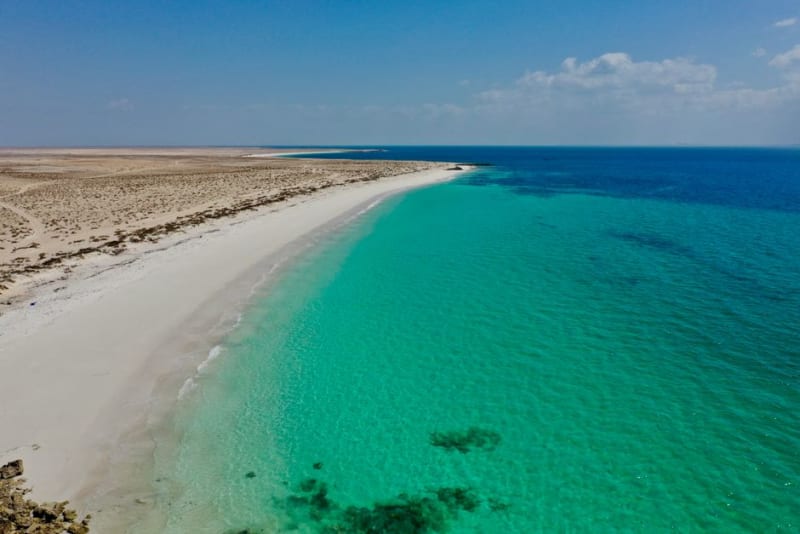 oman
oman Fins Beach
A curved bay of white sand and reef between Quriyat and Sur, popular with weekend campers and almost nobody else during the week.
Explore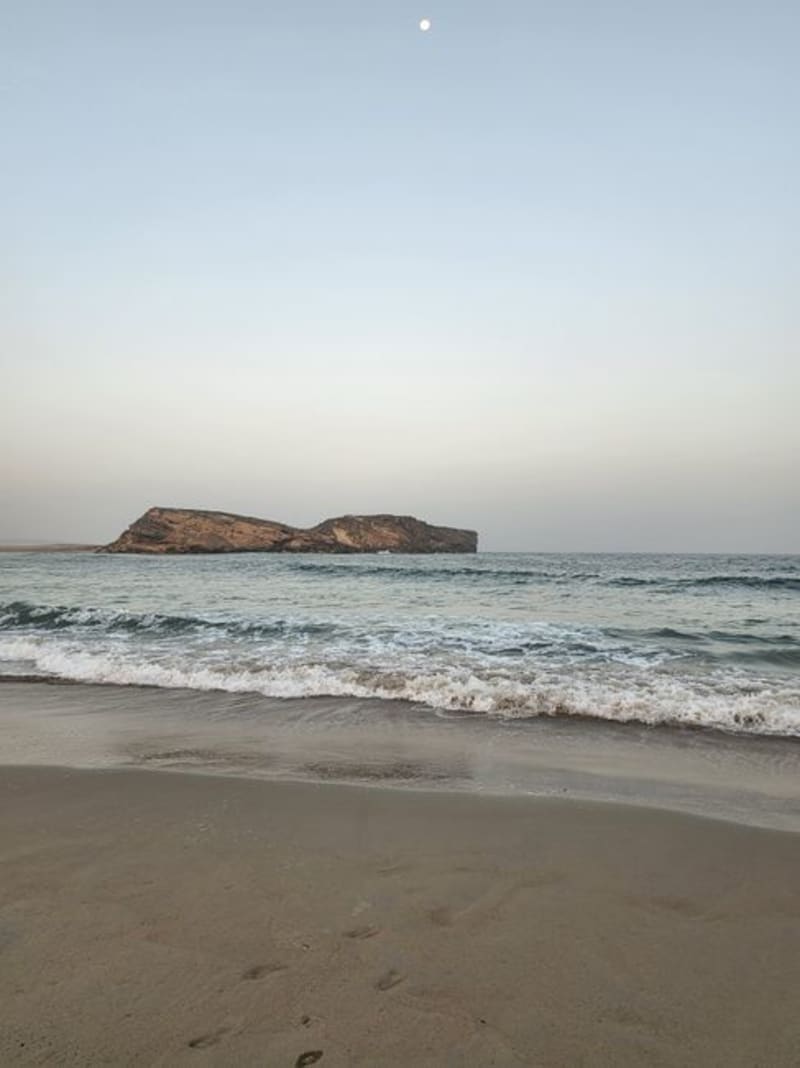 oman
oman Hallaniyat Islands
A remote archipelago off Dhofar where fishermen outnumber tourists a thousand to one, and the diving is as raw as it gets in Arabia.
Explore