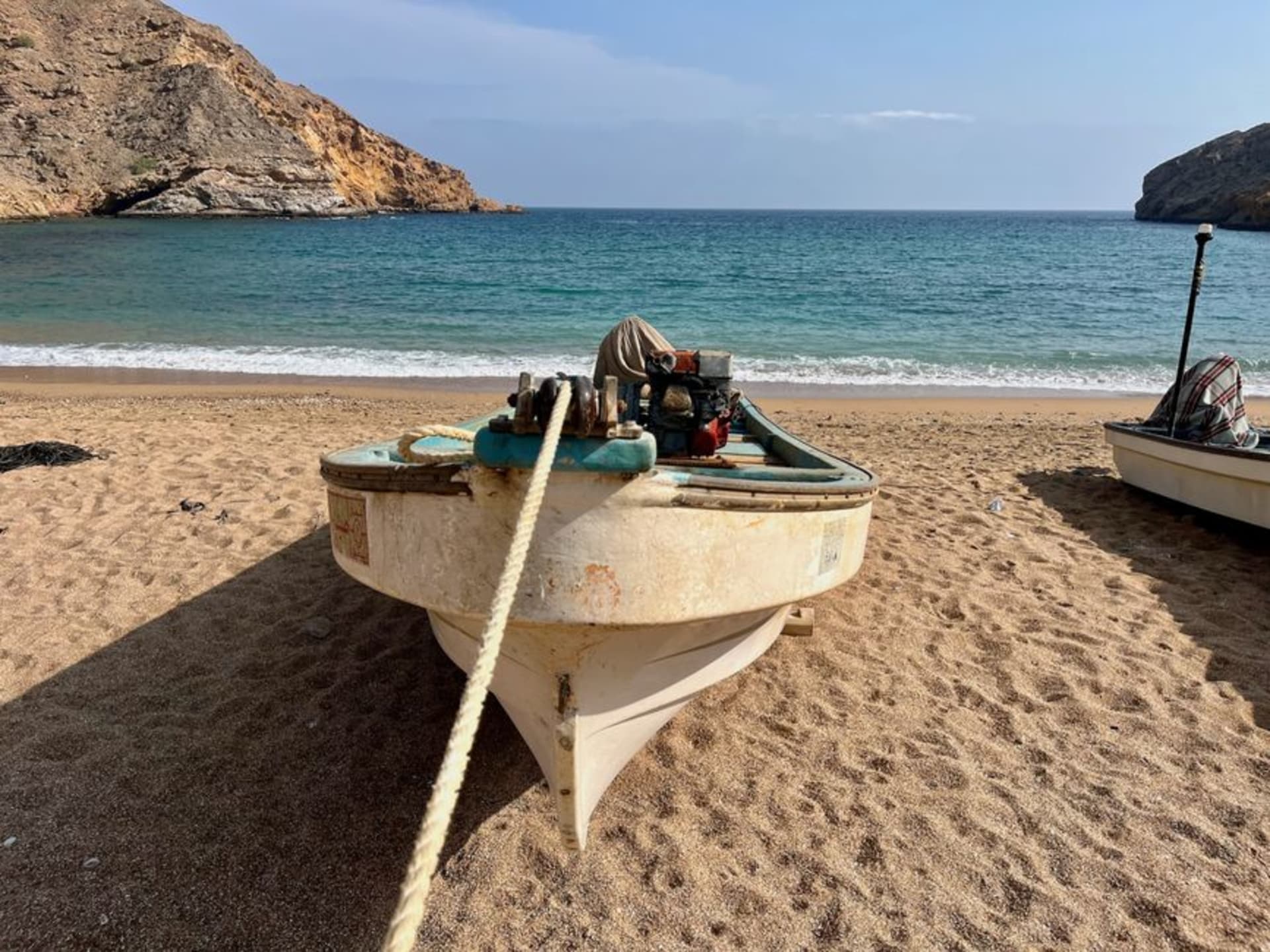
A crumbling mud-brick ghost village and its living falaj-fed oasis, at the foot of the road up to Jebel Akhdar.
Most people who pass through Birkat Al Mouz are on their way somewhere else — it sits right where the plain gives out and the road begins its climb toward Jebel Akhdar, and I’d driven through it myself on a previous trip without stopping, distracted by the mountain ahead. Coming back deliberately, on a slower morning, turned out to be worth every one of the twenty minutes we gave it.
The Ruins of Al Qariyah
The old village — locally called Al Qariyah, the abandoned quarter — is a cluster of crumbling mud-brick towers and roofless houses standing three and four stories in places, walls the color of the surrounding dust, doorways low enough that I had to duck through most of them. Families lived here for generations, stacking rooms upward as households grew, until modern housing and the promise of easier plumbing emptied the place out sometime in the latter half of the last century. Nobody’s fixing it and nobody’s tearing it down either. It just stands, slowly returning to the ground it was built from, watched over by a small hilltop fort with a view down the whole oasis.
Falaj Al Khatmeen
What makes Birkat Al Mouz more than a photogenic ruin is the falaj running directly beneath it — Falaj Al Khatmeen, one of the five Omani aflaj systems inscribed by UNESCO, still carrying water down from a mountain spring into date palm and banana groves that are actively farmed today. I followed the channel on foot from the ruins down into the palms and found it in constant, quiet use: a farmer diverting a side gate with a flat stone to flood his section of terrace, a child crouched at the water’s edge, unbothered by the fact that this system predates his family by roughly a thousand years. Lia pointed out how the temperature dropped the moment we walked under the palm canopy — five degrees, easily, just from the shade and the water moving nearby.
A Ten-Minute Stop That Isn’t
We’d planned to spend ten minutes here before continuing up to Jebel Akhdar. We spent closer to two hours, most of it just following the water channel wherever it led, no particular destination in mind. That is, I’ve come to think, the correct way to see Birkat Al Mouz — not as a monument with a car park and a viewing platform, but as a working system you can wander into and lose track of time inside.
When to go: Year-round, though October to April brings cooler mornings that make walking the falaj and the ruins genuinely pleasant rather than merely tolerable. Best combined as a first or last stop on the drive to or from Jebel Akhdar.
Keep exploring
More from Oman
 oman
oman Bukha Fort
A squat coastal fortress guarding the road between the UAE and Khasab, and the fishing village that grew up in its shadow.
Explore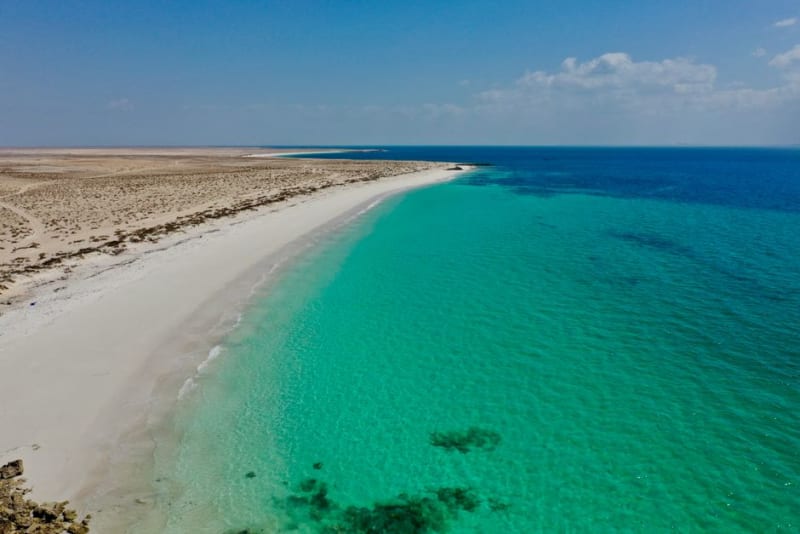 oman
oman Daymaniyat Islands
Nine uninhabited islets off Muscat where turtles nest, reef sharks patrol, and Oman's best snorkeling happens without another boat in sight.
Explore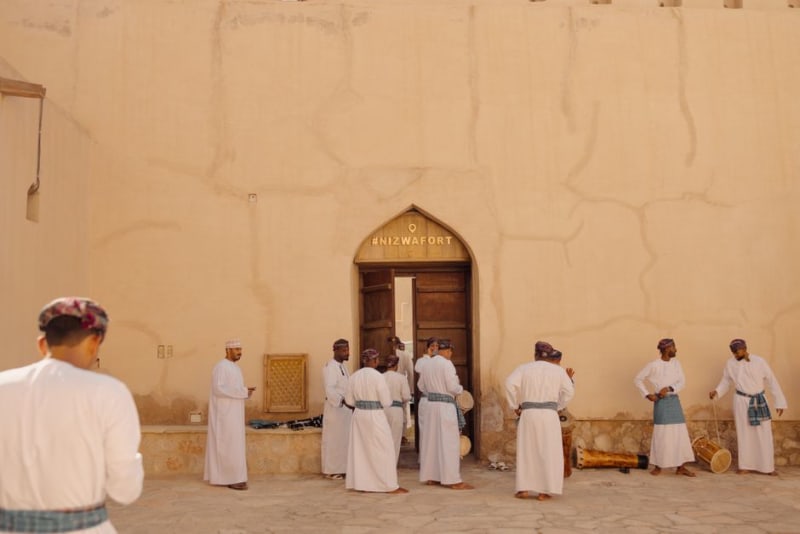 oman
oman Dhalkut
The westernmost tip of Oman's Dhofar coast, near the Yemen border, where the khareef arrives first and the crowds never arrive at all.
Explore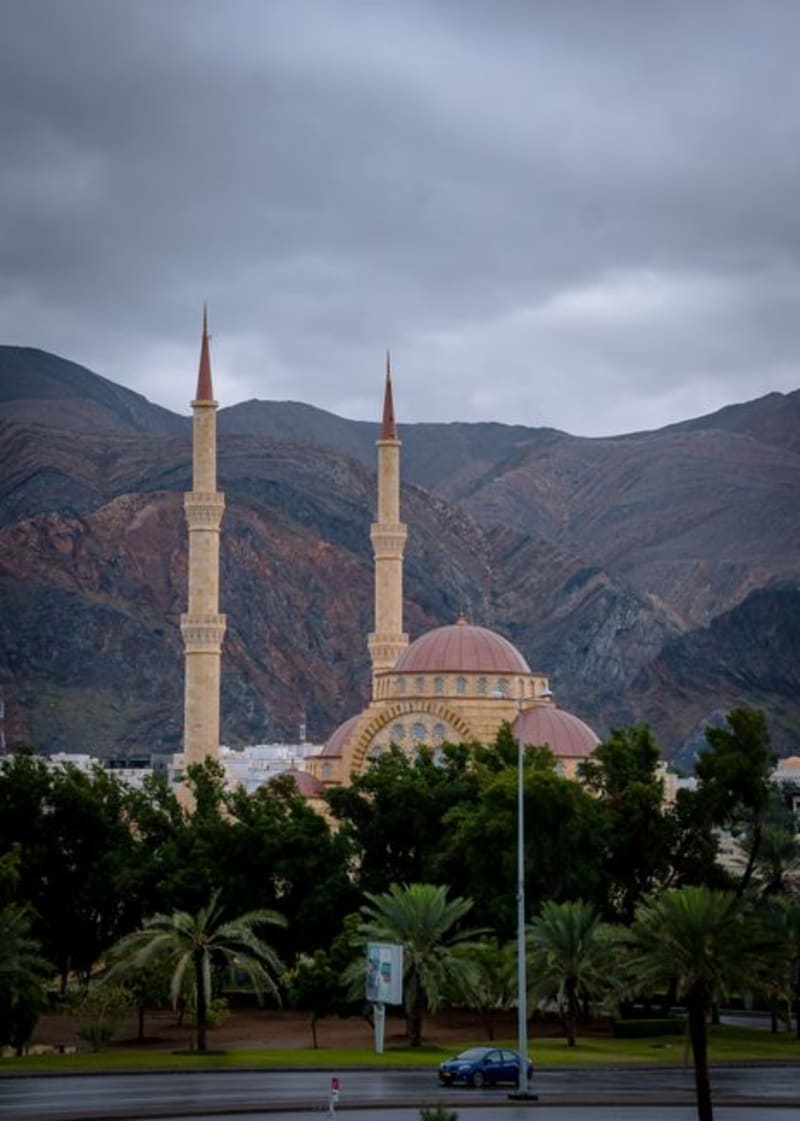 oman
oman Dibba
The gateway port where Musandam's mountains meet the Gulf of Oman, split awkwardly across three jurisdictions and unbothered by the fact.
Explore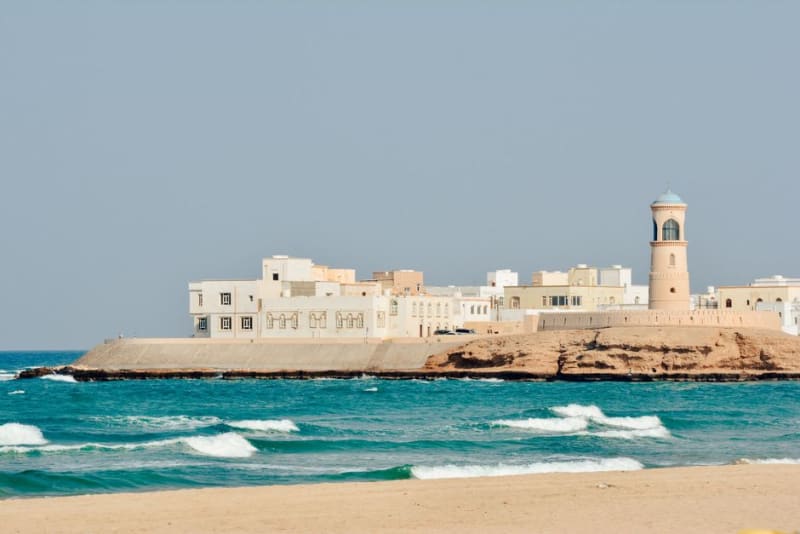 oman
oman Duqm
A boomtown port on the empty central coast where new cranes rise over an old fishing harbour, and whale sharks pass close offshore.
Explore oman
oman Fahal Island
A jagged volcanic islet just off Muscat's harbour, better known to divers as Shark Island for the reef sharks patrolling its drop-offs.
Explore