A terraced mountain village reached through Wadi Bani Awf's canyon road, so photogenic it shows up in phone commercials, and still somehow uncrowded.
I’d seen photos of Bilad Sayt before I’d heard its name — it’s the village that turns up in car commercials and phone ads, terraced fields and stone houses tucked into a bowl of mountains, always shot from the same high viewpoint. I assumed, reasonably, that a place this photogenic would have been thoroughly discovered by the time we got there. It has been, a little. But not nearly as much as the postcard fame suggested it should.
The Road Is the First Attraction
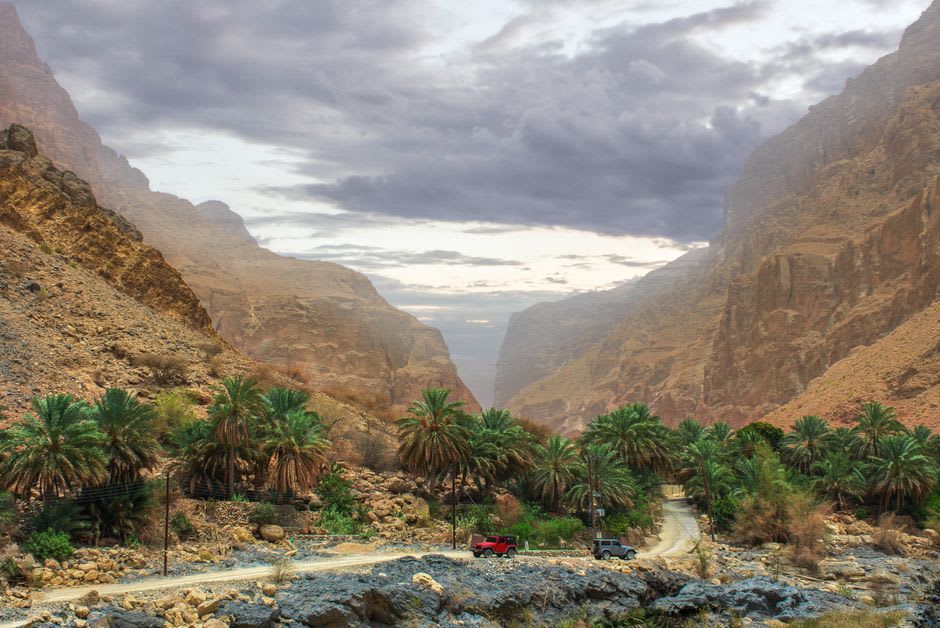
Getting to Bilad Sayt means driving Wadi Bani Awf, a canyon road that alternates between graded gravel and sections carved directly into rock overhangs, narrow enough in places that meeting an oncoming vehicle requires one of you to reverse to a wider spot. I’d read warnings about this road being intense and had mentally discounted them, the way you do with warnings aimed at other travelers. They were accurate. Lia gripped the door handle through most of the final descent, and I didn’t blame her — the drop on one side is real, the road surface unpredictable, and a high-clearance 4x4 is not optional here regardless of what a rental agency implies.
The payoff for the nerves is a canyon landscape that shifts constantly — grey-and-rust rock walls, sudden pockets of green where a spring surfaces, goats appearing on ledges that look structurally impossible.
The Village in the Bowl
Bilad Sayt itself sits in a natural bowl surrounded by sheer canyon walls, its stone houses stacked in tiers above terraced fields of alfalfa and date palms, all of it fed by a falaj system that’s kept the village self-sufficient for generations. The famous viewpoint — the one from all those commercials — is a short climb above the village on the approach road, and it’s genuinely as striking in person as in the photos, maybe more so, because you’ve just spent an hour on a road that makes you appreciate how isolated this place actually is.
We walked down into the village itself rather than just photographing it from above, along narrow paths between the terraces, and found a small guesthouse where the owner made us mint tea on a covered terrace overlooking his own fields. He mentioned, without much fuss, that the road hadn’t existed at all until relatively recently — before that, everything in and out came by donkey track over the mountain.
Staying Past the Photo
Most day-trippers get their photo from the viewpoint and drive on toward Snake Canyon or back out to the main road. We stayed a few hours longer, walking the terraces, drinking tea, watching a farmer clear a falaj channel of leaves with a stick in movements that looked practiced to the point of unconscious. The village doesn’t need the extra time to be worth visiting. But it rewards it.
When to go: October through April — the canyon road can become dangerous or impassable after rain, and summer heat in the enclosed wadi is severe. Check road conditions locally before committing to the drive.