
Oman's only UNESCO World Heritage fort, a vast mud-brick fortress ringed by nine kilometres of crumbling defensive wall and a souq that still trades in pottery and old stories.
Everyone in Nizwa had an opinion about Bahla before I’d even asked for one. The fort was cursed, a shopkeeper told me while wrapping dates in newspaper — built with the help of djinn, which was supposedly why it took a full restoration effort from UNESCO in the 1980s just to stop it collapsing back into the earth it came from. I drove the twenty minutes from Nizwa half expecting a tourist trap dressed up in folklore. What I found instead was the largest fort I’d seen anywhere in Oman, and one of the emptiest.
A Wall With No End
The thing that undid my expectations first wasn’t the fort itself but the wall around it — a mud-brick rampart that once enclosed the entire oasis town, nine kilometres of it, snaking off into the palm groves in both directions until it simply became landscape. Sections have been rebuilt, sections have been left to erode back into mounds of packed earth, and somehow both states manage to look equally deliberate. I parked and just walked along the base of it for a while before I even bought a ticket, tracing where old and new brick met like a scar that hadn’t quite finished healing.
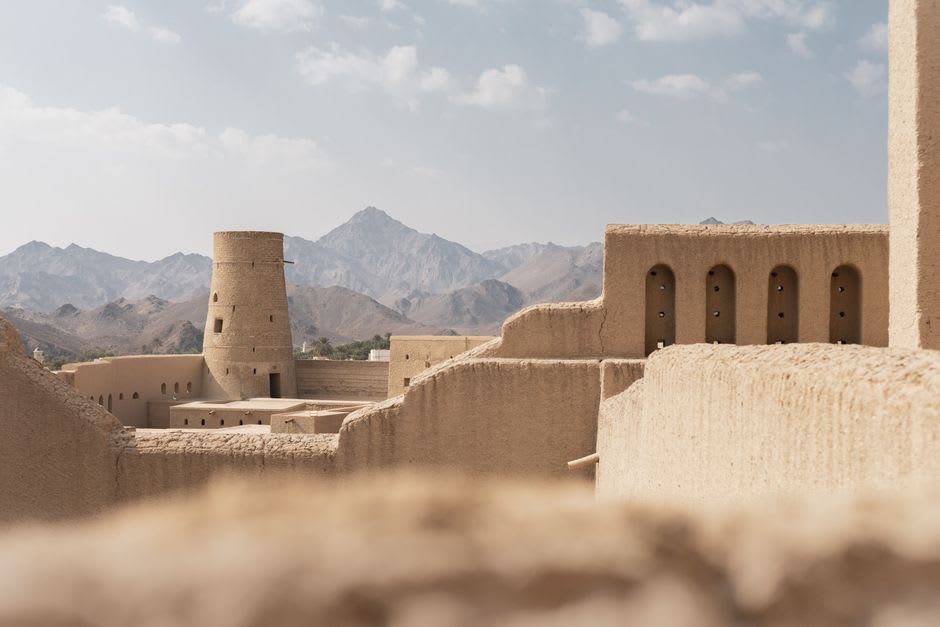
Inside, the fort itself sprawls rather than towers. Where Nizwa’s fort reads as a single confident cylinder, Bahla is a maze — courtyards leading to more courtyards, staircases that dead-end at watchtowers, a mosque tucked into a corner nobody would find without a map. The restoration work has been careful, almost reverent, patched with the same reddish mud plaster that would have gone up originally, and the result is a building that feels lived-in rather than preserved behind glass.
The Potters Who Never Left
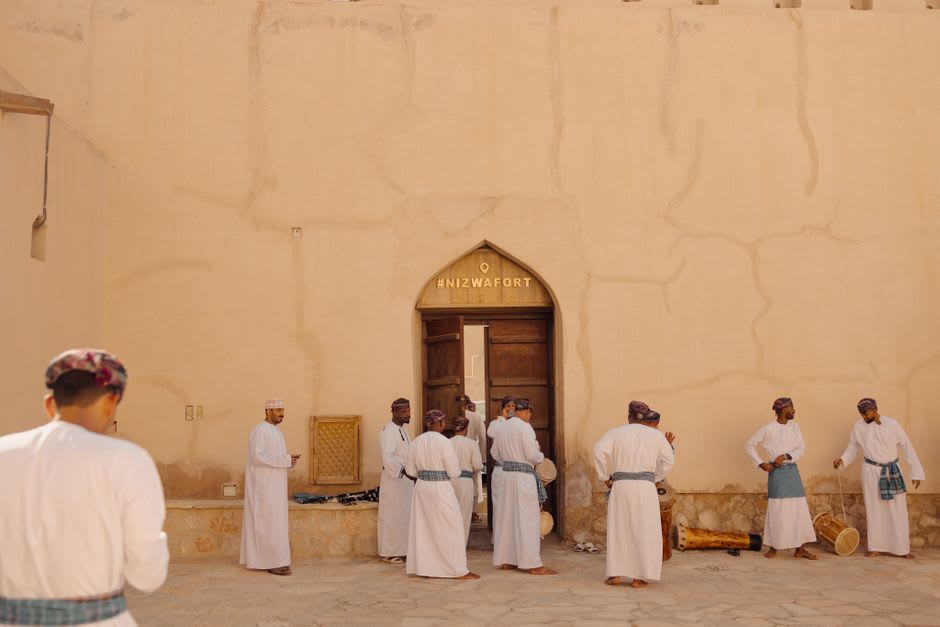
Bahla has been a pottery town for centuries, and the souq beneath the fort still proves it. I found a workshop where a potter’s wheel — foot-powered, not electric — was throwing bowls in the same unglazed terracotta that’s been coming out of this town since before the fort had a name. Lia bought two small water jugs, the kind Omani households still use to keep drinking water cool through the mud’s evaporation, and the potter wrapped them in old cement bags with the unbothered efficiency of someone who has done this ten thousand times.
What struck me walking back to the car was how little ceremony there was to any of it. No craft demonstration staged for visitors, no gift shop lighting. Just a man making bowls the way his father did, in a shop attached to the wall of a UNESCO site, because that’s simply what the shop has always been for.
The Djinn Detail
The guide at the entrance — an older man with a limp and a genuine fondness for the subject — told me the djinn story with a completely straight face, then immediately followed it with the actual, more mundane explanation: the Banu Nebhan dynasty built the fort in the 13th century as their capital, using the same techniques that raised Jabrin and Rustaq. I asked which version he preferred. He shrugged and said both were true, just at different distances.
When to go: October through March, when the interior heat is bearable enough to walk the full length of the fort and the surrounding wall without retreating to the car every twenty minutes. Early morning brings the best light on the mud-brick and the fewest other visitors.