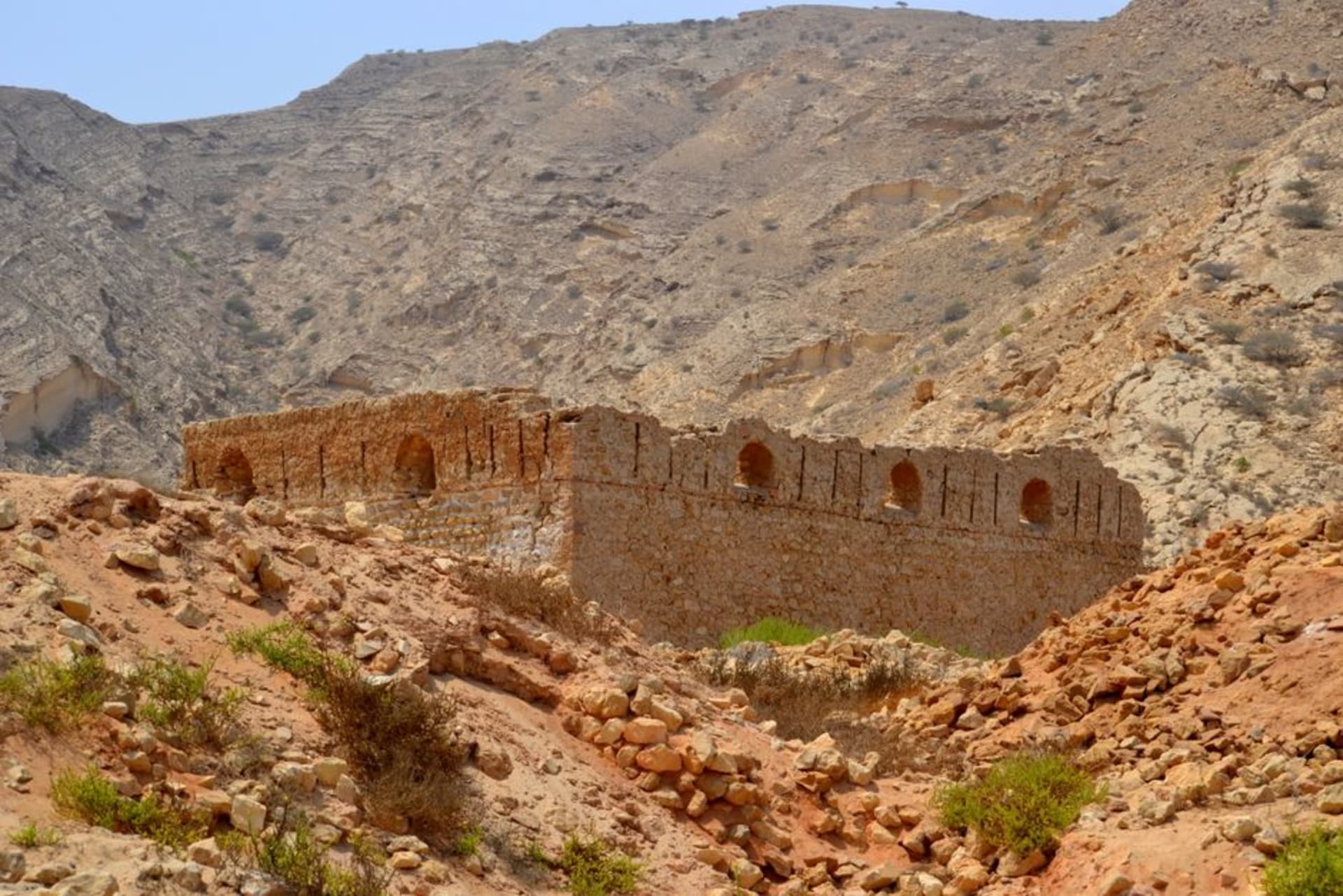
Al Ayn Beehive Tombs
"Twenty-one tombs in a straight line, and a mountain that looks like a shark's jaw behind them."
The best-preserved cluster of Bronze Age beehive tombs in Oman, lined up along a ridge against the jagged backdrop of Jebel Misht like a row of stone teeth.
We drove to Al Ayn on the strength of a single photograph Lia had found while researching the Bat necropolis — a row of stone beehive tombs silhouetted against a mountain so jagged it looked digitally altered. It wasn’t. Jebel Misht, the “comb mountain,” really does rise in that serrated wall of pale limestone, and the tombs really do line up in front of it with an almost theatrical sense of composition that no Bronze Age builder could possibly have intended for an audience five thousand years later.
The Best-Preserved Row in Oman
Al Ayn’s cluster of roughly 21 beehive tombs, part of the same UNESCO-listed complex as Bat and Al Khutm, is generally considered the best preserved of the three sites — the stacked stone construction here has survived in noticeably better condition, with several tombs retaining nearly their full original dome shape. Unlike Bat, the tombs sit close together on a single low ridge just a short walk from a small parking area, which makes it easy to take in the whole row at once rather than piecing the site together tomb by tomb.
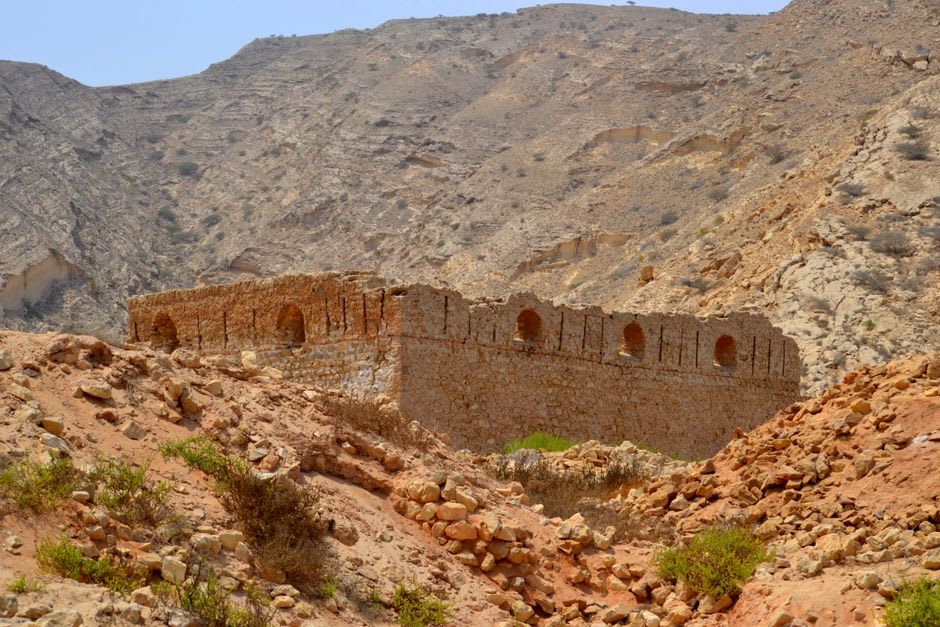
I climbed up to the ridge in the last hour of daylight, and the light did exactly what I’d hoped — turned the pale stone of both the tombs and Jebel Misht behind them a deep orange-pink, the kind of color that makes you understand instantly why someone chose to bury their dead facing this particular mountain.
Jebel Misht Changes the Whole Feeling
What the photographs hadn’t prepared me for was the scale of Jebel Misht itself once you’re standing beneath it — a near-vertical wall of exposed rock climbing well over a thousand meters, streaked and folded in a way that makes it look almost combed, hence the name. It dwarfs the tombs completely, and yet somehow makes them feel more significant rather than less, like whoever chose this burial ground five millennia ago understood exactly what kind of backdrop they were working with.
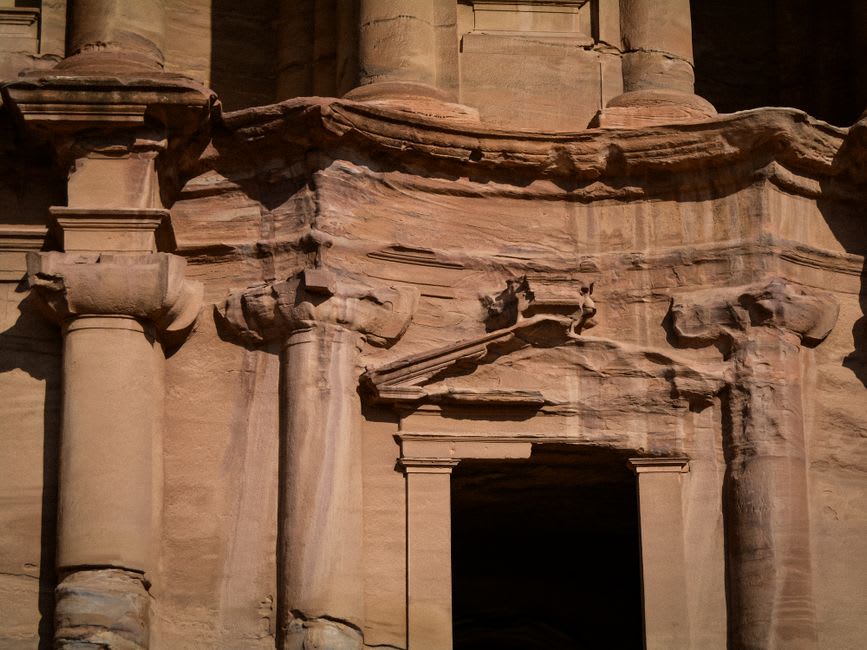
We stayed until the light went fully orange and then grey, the only other people around a pair of local teenagers on a motorbike who’d stopped to watch the same sunset from the parking area below.
When to go: Late afternoon, any time between October and March, for the best light on both the tombs and Jebel Misht. The unpaved access road can be rough after rain, so a higher-clearance vehicle helps.
Keep exploring
More from Oman
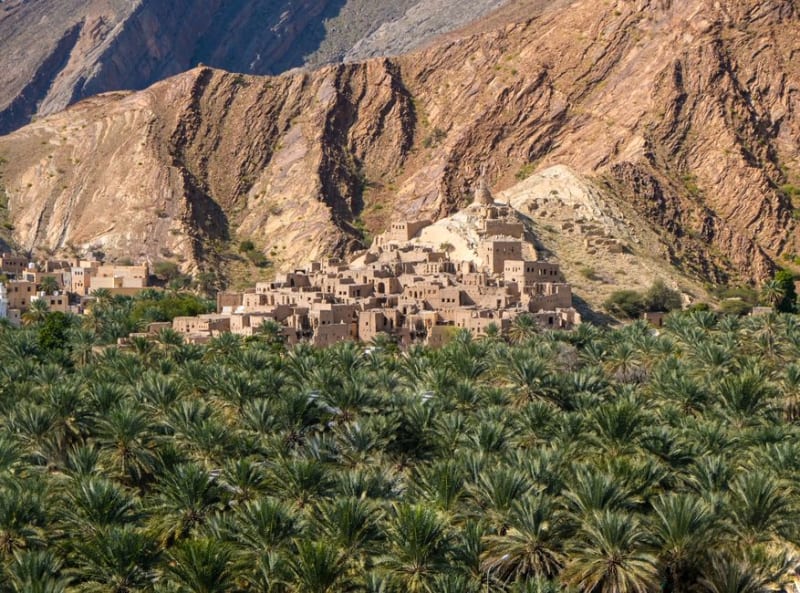 oman
oman Al Baleed and the Frankincense Land Museum
The ruins of a medieval trading port and a museum that explains, finally, why frankincense was ever worth fighting over.
Explore oman
oman Al Fazayah Beach
A crescent of white sand reached by a single hairpin road through the mountains, with almost nothing on it but coconut palms and camels.
Explore oman
oman Al Hamra
A 400-year-old mud-brick town at the foot of the Al Hajar mountains, where two-story merchant houses stand empty and unlocked, waiting for nobody in particular.
Explore oman
oman Al Hazm Fort
A fortress built without a single supporting pillar in its main hall, hidden in plain sight in the quiet Batinah town of As Suwayq.
Explore oman
oman Al Hoota Cave
A vast limestone cave system beneath Jebel Nakhal, with an underground lake, blind fish found nowhere else on earth, and a small train to get you there.
Explore oman
oman Al Jazir
A remote fishing village on Dhofar's eastern coast where lobster boats outnumber cars and the Arabian Sea does most of the talking.
Explore