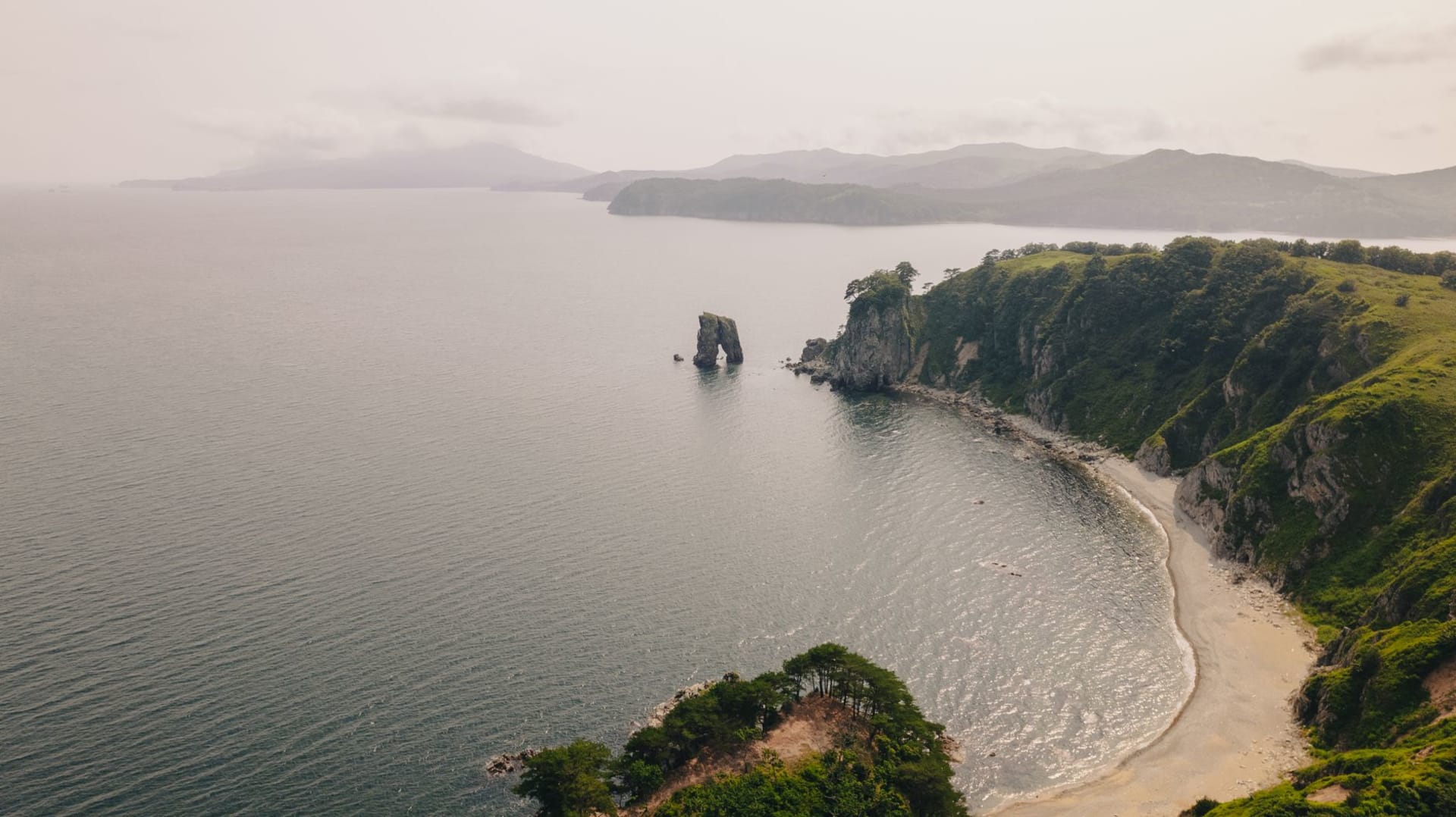
Motobu Peninsula
"A whale shark the length of a city bus drifted past the glass, and every child in the room went completely silent."
The Motobu Peninsula pushes out into the East China Sea from Okinawa’s northern coast, and the drive up from Naha takes about two hours through a landscape that gradually empties of traffic and fills with subtropical forest, pineapple farms, and the kind of roadside stands selling fresh-cut pineapple that you stop at because you have no choice. By the time I reached Motobu town, the road had narrowed to something more like a suggestion, and the light was horizontal and gold, doing what afternoon light does when there’s ocean on three sides of you.
The Okinawa Churaumi Aquarium is the peninsula’s main draw, and I went with low expectations because aquariums are aquariums. I left with revised opinions. The Kuroshio Sea tank — the aquarium’s centrepiece — is one of the largest in the world, holding two whale sharks and several manta rays alongside thousands of other fish in water that genuinely replicates the deep-water conditions of the Kuroshio Current flowing north of the islands. There’s no way to prepare for the size of whale sharks until you see them in person. They are not fish. They are geography. The children in the room understood this instinctively and fell silent, which is the correct response.
Further west on the peninsula, the ruins of Nakijin Castle predate Shuri and occupy a hill with sweeping views over the East China Sea and the Yanbaru forest behind. The stone walls are the original Ryukyuan gusuku fortification style — dry-stacked limestone in irregular horizontal courses, the technique suggesting a people who understood their material at a cellular level. The UNESCO World Heritage designation is deserved and, in my experience, not overcrowded. I had the main courtyard to myself at nine in the morning, and the wind through the castle ruins was the only sound.
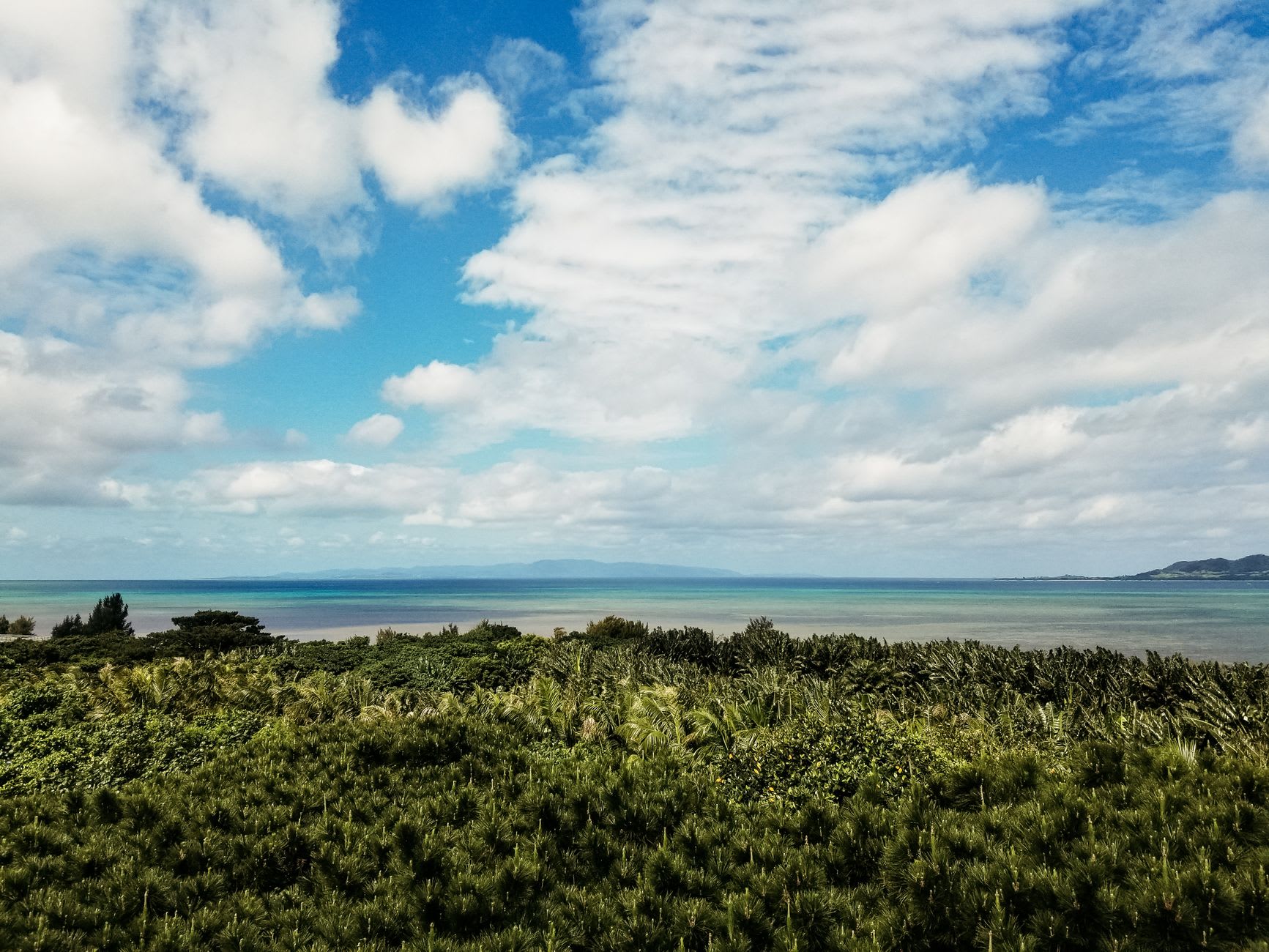
The peninsula’s food is the food of the north — simpler, more dependent on what the surrounding sea provides. The ferry port at Motobu sends boats to Ie-jima, a flat island with lily fields and a volcanic hill called Gusuku, which is worth the detour if you have an extra day and an interest in a place where time seems to have settled and stayed.
When to go: April through June and October through December — outside of summer when the aquarium in particular gets crowded with school children and mainland tourists. The castle ruins at Nakijin are best in January and February when they’re surrounded by cherry blossoms — Okinawan cherry blossoms bloom earlier than anywhere else in Japan.