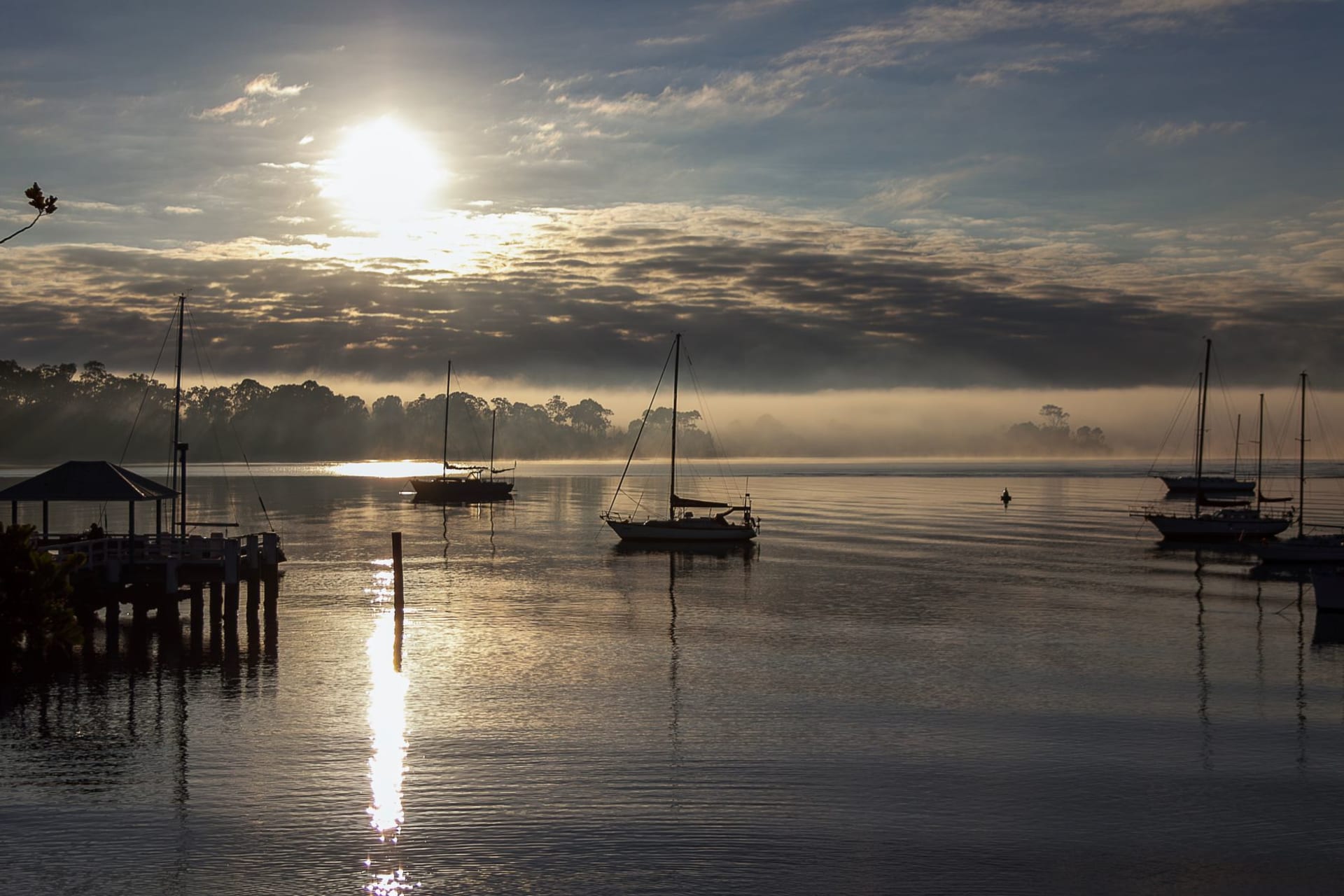
Mahone Bay
"I had prepared myself to be disappointed by the famous reflection. There was no gap between image and reality."
The three churches appeared across the water in the early morning stillness, their white clapboard reflections doubled perfectly in the bay, and for a moment I just sat at the water’s edge and refused to move. Mahone Bay has a reputation for that reflection — it’s photographed obsessively, used in every tourist brochure for the South Shore — and I had prepared myself to be disappointed by the gap between image and reality. There was no gap. The image is accurate. The water was that still, the sky was that pale grey-white, and the three churches sat on the far shore with the calm of objects that have been exactly where they are for over a century and see no reason to change that arrangement.

Trinity Lutheran, St. John’s Anglican, and St. James United Church stand within a few hundred metres of each other along the waterfront, built by the town’s various Protestant denominations in the nineteenth century, and they create a composition that looks deliberately designed rather than historically accumulated. On still mornings — and Mahone Bay gets genuinely still mornings, the fog holding the water flat — the reflection makes six churches out of three, and the effect is almost Japanese in its restraint. I took approximately forty photographs and know that none of them will be as good as the thing itself.
The town behind the waterfront is excellent in its own right, the kind of small Nova Scotian settlement that has found a sustainable relationship between its own character and the visitors who come for it. The antique shops along Main Street are the real kind — old furniture, maritime charts, local paintings, barometers made in England in 1890 — not the manufactured-nostalgic kind you find in tourist trap towns. The pottery studio on the hill above town has work that would look at home in Halifax’s better galleries. There is a quality of curated authenticity that manages not to feel curated at all, which is the hardest trick in the book for a small tourist town.

The sailing culture here is serious and unpretentious. Mahone Bay was a centre of boat-building for generations and the tradition continues — several boatyards are still active, and the harbour fills in summer with vessels ranging from day sailors to serious blue-water cruisers making for the Caribbean in September. On Saturday afternoons the race committee sends out a course and a dozen or twenty boats put their sails up and play. Watching from the wharf while eating a bowl of chowder from the café across the road is, I am prepared to say, close to the ideal afternoon.
When to go: July and August are when the sailing scene peaks and the town is at its most active. The Mahone Bay Classic Boat Festival in August draws wooden vessels from across the province. September is my recommendation: the regatta season winds down, the crowds drop by half, the morning reflections are at their best with the September fog, and the light in the afternoons goes golden in a way that makes the painted clapboard churches glow.