A rebuilt 18th-century French fortress town on Cape Breton, where costumed interpreters make colonial life feel startlingly present.
Lia and I almost skipped Louisbourg. We’d been told “it’s just a reconstruction,” said with a shrug, as if that made it less worth the drive out to Cape Breton Island. I’m glad we ignored that. The fortress the French built here between 1713 and the 1740s was meant to guard the entrance to the Gulf of St. Lawrence, a fortified port and fishing colony that became one of the busiest harbors in North America before it was ever finished. Standing at the King’s Bastion on a grey morning, fog still sitting low over the water, I understood immediately why the French chose this spot and why everyone else wanted to take it from them.
What gets me about Louisbourg isn’t just that it’s big — though it is, the largest historical reconstruction on the continent — it’s how specific it is. About a quarter of the original town has been rebuilt since the 1960s using the actual French plans, period-accurate materials, the whole thing. We spent an hour just in the Duhaget house, mesmerized by wood-fired ovens and hand-forged nails. A costumed interpreter named Marc, playing a soldier of the Compagnies franches de la Marine, walked us through the barracks and answered questions in character with a straight face for a solid ten minutes before finally laughing when Lia asked if he had wifi.

The history here has real teeth to it. New England colonial forces captured the fortress in 1745, France got it back by treaty in 1748, and then the British took it for good in 1758 and tore much of it down deliberately, so it could never again threaten their control of the region. We sat on the grass near the quay, eating soft bread bought from the King’s Bakery, and I kept thinking about how much of what we were looking at was built to be destroyed twice — once by cannon, once by peace treaty, once more by demolition crews. It’s a strange feeling, admiring something so carefully rebuilt precisely because it was so thoroughly erased.

We left in the late afternoon, the interpreters starting to drift back toward the visitor center, the fortress slowly emptying of its 18th century again. Lia said it felt less like a museum and more like we’d interrupted something ongoing. I think that’s exactly right.
When to go: Aim for June through September, when Parks Canada has the site fully staffed with interpreters and nearly every building open — outside that window, Louisbourg goes quiet and a lot of the magic goes with it.
Keep exploring
More from Nova Scotia
 nova-scotia
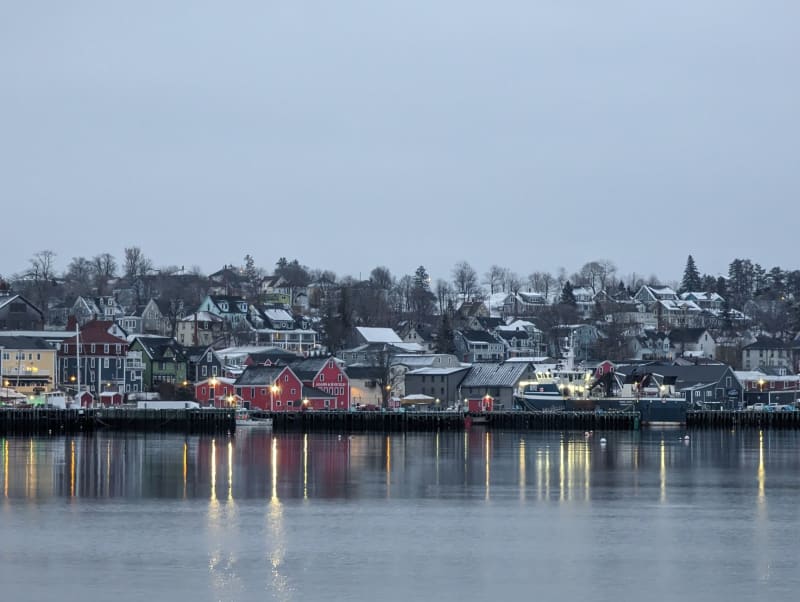
 Lunenburg
A UNESCO fishing town of improbable colours where German settler architecture meets the Grand Banks schooner tradition.
Explore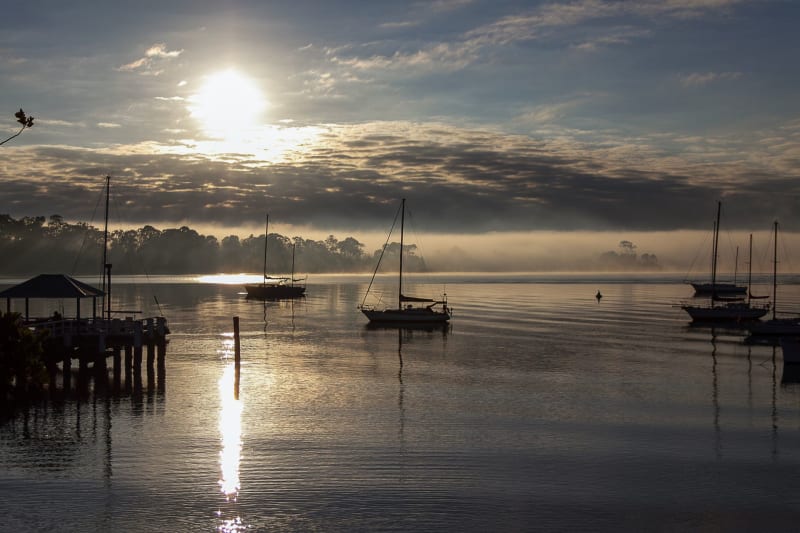 nova-scotia
 Mahone Bay
Three historic churches doubled in still water, a sailing harbour, and the South Shore at its most quietly perfect.
Explore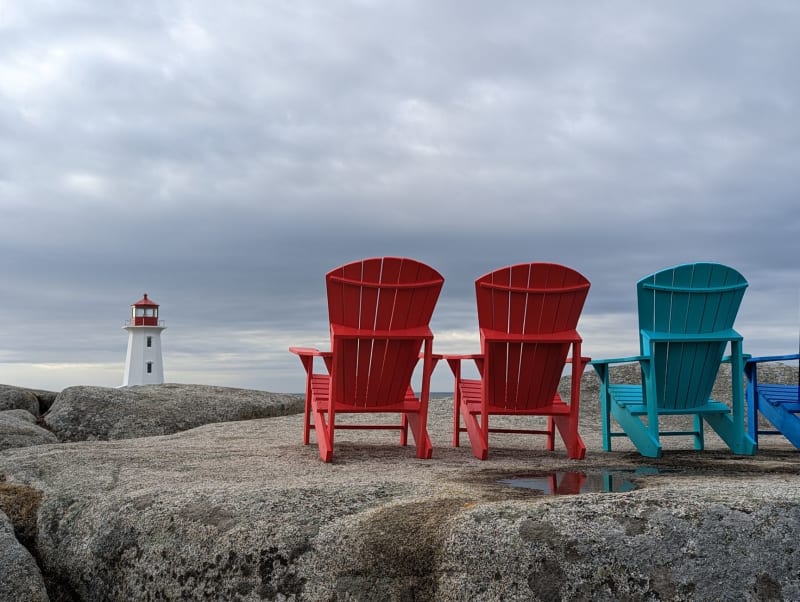 nova-scotia
 Peggy's Cove
A lighthouse on wave-polished granite where the Atlantic looks ancient and the fog arrives like punctuation.
Explore nova-scotia
 Wolfville
A small university and wine town in the Annapolis Valley, perched above the world's highest tides, where the Bay of Fundy drains a whole bay twice a day.
Explore nova-scotia
 Annapolis Royal
Canada's oldest settlement wears its 400 years lightly — Georgian streets, tidal gardens, and the earthworks where empires argued.
Explore nova-scotia
 Baddeck
A village on an inland sea where Alexander Graham Bell spent his best years and the Cape Breton fiddle still plays after midnight.
Explore