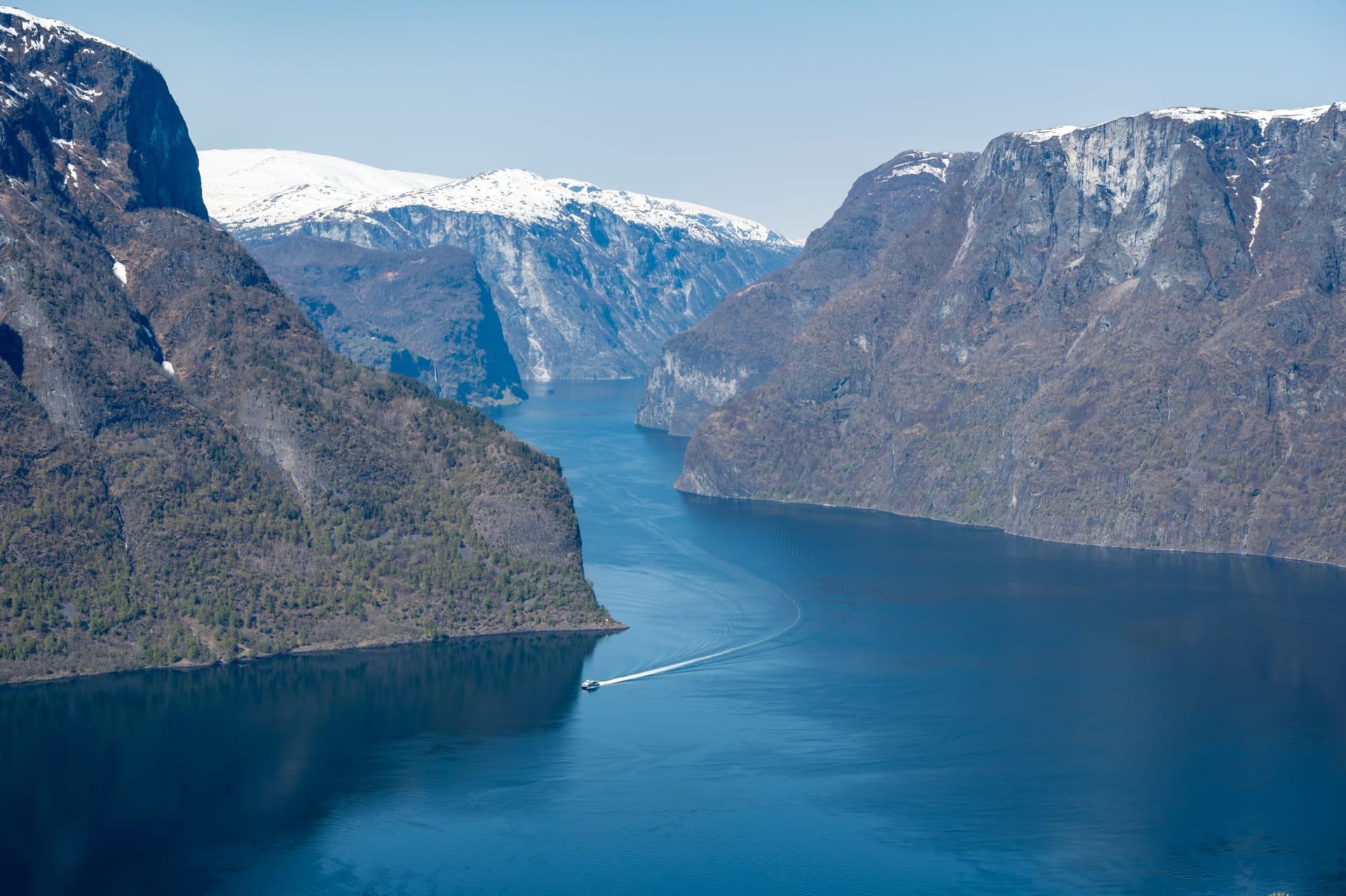
Sognefjord
"Sognefjord doesn't end — it just keeps going until you accept that the scale is the point."
I had been in Norway for a week before I got to Sognefjord and I thought I had already adjusted to the scale of these places. I had not. The ferry from Balestrand to Gudvangen crosses the Sognefjord at its widest — the water extends so far in both directions that the far shores are not shores but a suggestion of land, a blue-grey smudge at the edge of vision. The fjord is 205 kilometres long and in places over a kilometre deep, deeper than the North Sea. Standing on the ferry deck, I tried to hold that fact against what I was looking at and could not make them connect.
The small town of Balestrand on the north shore has been receiving visitors since the nineteenth century, when English tourists discovered it as a base for exploring the fjord arms. There is a Victorian-era hotel that has been receiving guests since 1877, white-painted with a garden running down to the water. I sat in that garden in the late afternoon and drank coffee and read and watched the ferry crossings and thought very little about anything in particular. A brass band was practising somewhere in the town — I could hear it faintly, a march with a lopsided beat, through the apple trees.
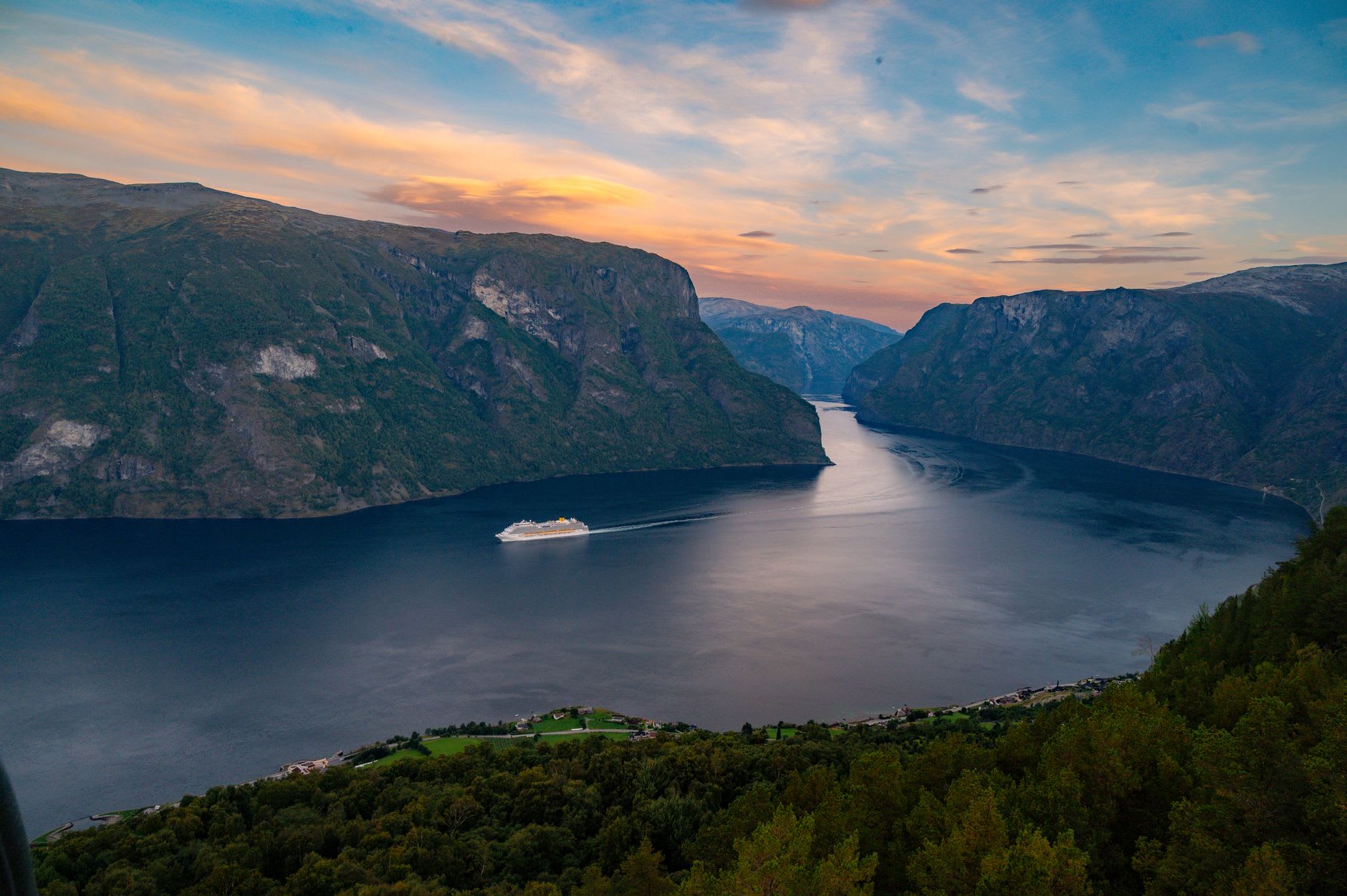
The Sognefjord arms are the real variety here. The Lustrafjord arm in the north is glacier-fed and the water turns an improbable turquoise where the glacial silt enters — a colour that looks like something from a Caribbean brochure had no business being this far north. The stave church at Urnes, on the east shore of Lustrafjord, is the oldest surviving stave church in Norway, from around 1130, and it sits on a hillside above the water in a state of extraordinary preservation. The wood has gone black with age. The carvings on the north portal are so intricate and alive with interlocking animals that you could stare at them for an hour without finding the beginning or the end.
At the very end of the Nærøyfjord arm — the arm that narrows into that famous corridor — the character changes entirely. But the main Sognefjord itself, at its widest and deepest, has a quality none of the arms quite match: a sense of sustained vastness, of a body of water that has been making up its own mind about things for ten thousand years. I rented a bicycle in Leikanger and rode along the south shore for a full day, the fjord always to my left, changing colour as the cloud cover shifted — cobalt, then slate, then a deep green where a river was entering from the hills.
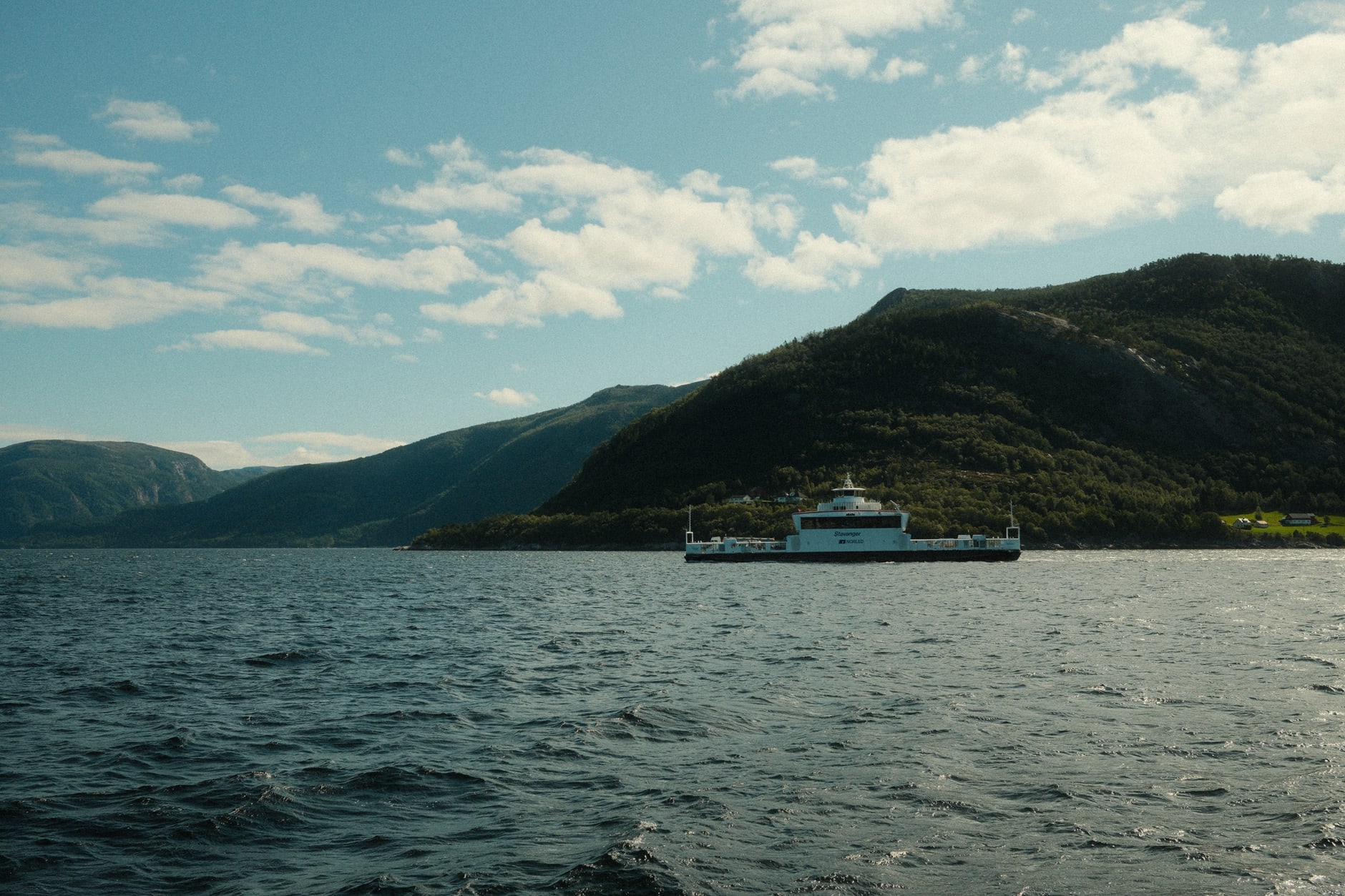
The small ferry services that cross the fjord between villages operate on schedules that have the quality of suggestions rather than commitments. I missed one connection by three minutes and spent two hours at a wooden jetty reading, eating the last of my bread and the local brown cheese — brunost — which is sweet and fudge-like and tastes nothing like cheese and everything like itself. An older man arrived to wait for the same ferry. We sat in compatible silence and watched a sea eagle work the thermals above the water until the boat appeared as a white dot on the far shore.
When to go: Late May through early July is ideal — the Lustrafjord turns turquoise with glacial melt, the stave church is open, and the cycling routes along both shores are at their best. September offers excellent clarity and lower ferry traffic. The fjord is accessible year-round for the main crossings, but the arms and cycling roads require summer conditions.