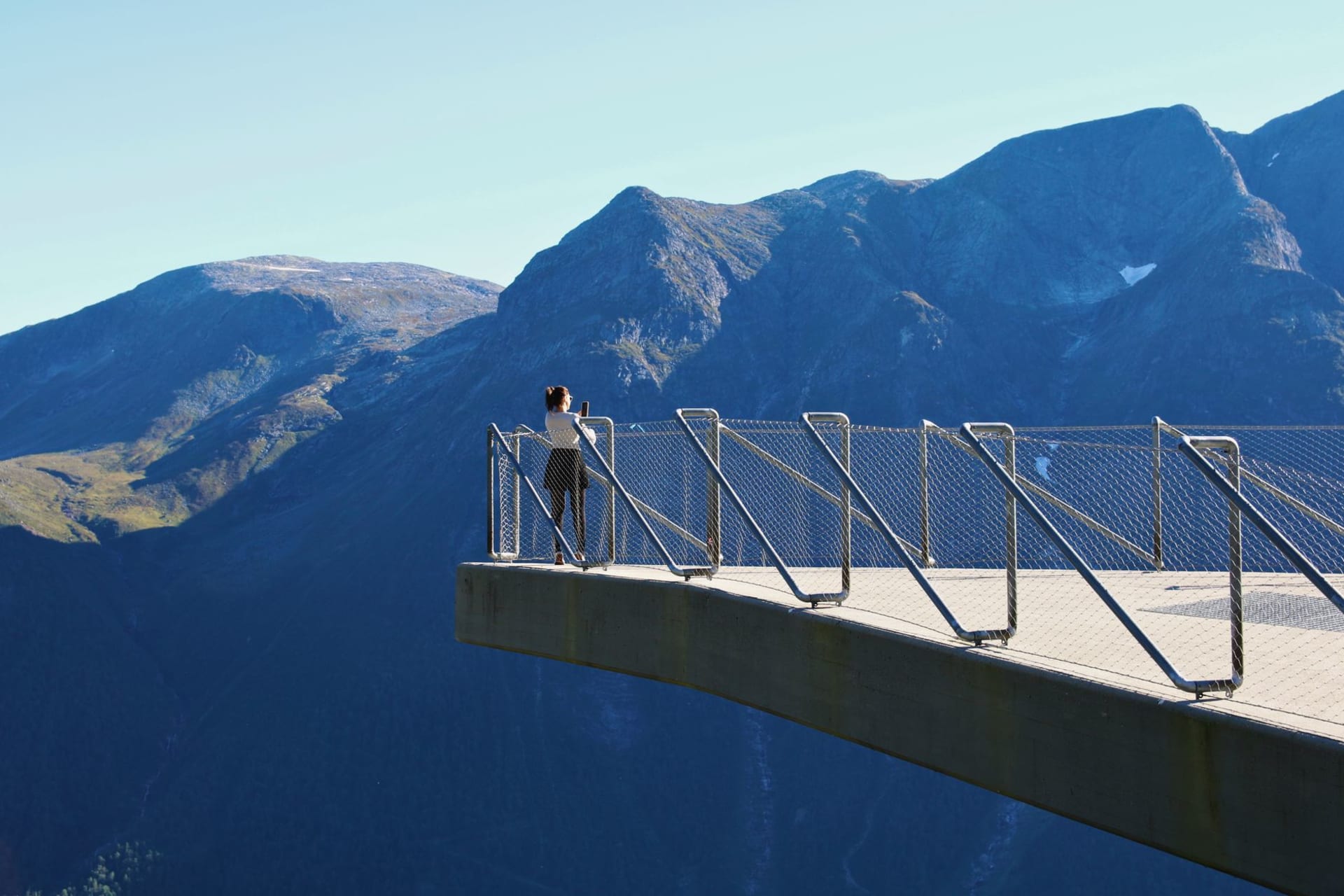
Kjerag
"A thousand metres of air beneath your boots, and a rock the size of a car holding you up. Trust issues, resolved."
I had told Lia, repeatedly, on the drive in, that I would not be standing on the boulder. Kjeragbolten is a chunk of stone roughly five cubic metres in size, jammed into a crevice by some retreating glacier ten thousand years ago, and it hangs there with nothing beneath it but a thousand metres of empty air down to the Lysefjord. People queue to stand on it. I had decided, from the safety of the car, that this was idiotic. Then we did the hike, and I will tell you what happened to that resolution.
The hike is the real test
Everyone talks about the boulder, but the trail to reach it is the part that actually breaks people. It is around ten kilometres round trip from the Øygardstøl car park, and it does not so much climb as lurch — three steep ascents and descents over bare rock, with fixed chains bolted into the granite to haul yourself up the worst pitches. The rock was wet when we went, in early June, and the chains were the only thing between me and a graceless slide backward. Lia, irritatingly surefooted, was waiting at the top of each section while I clung to the metal and reconsidered my life choices.
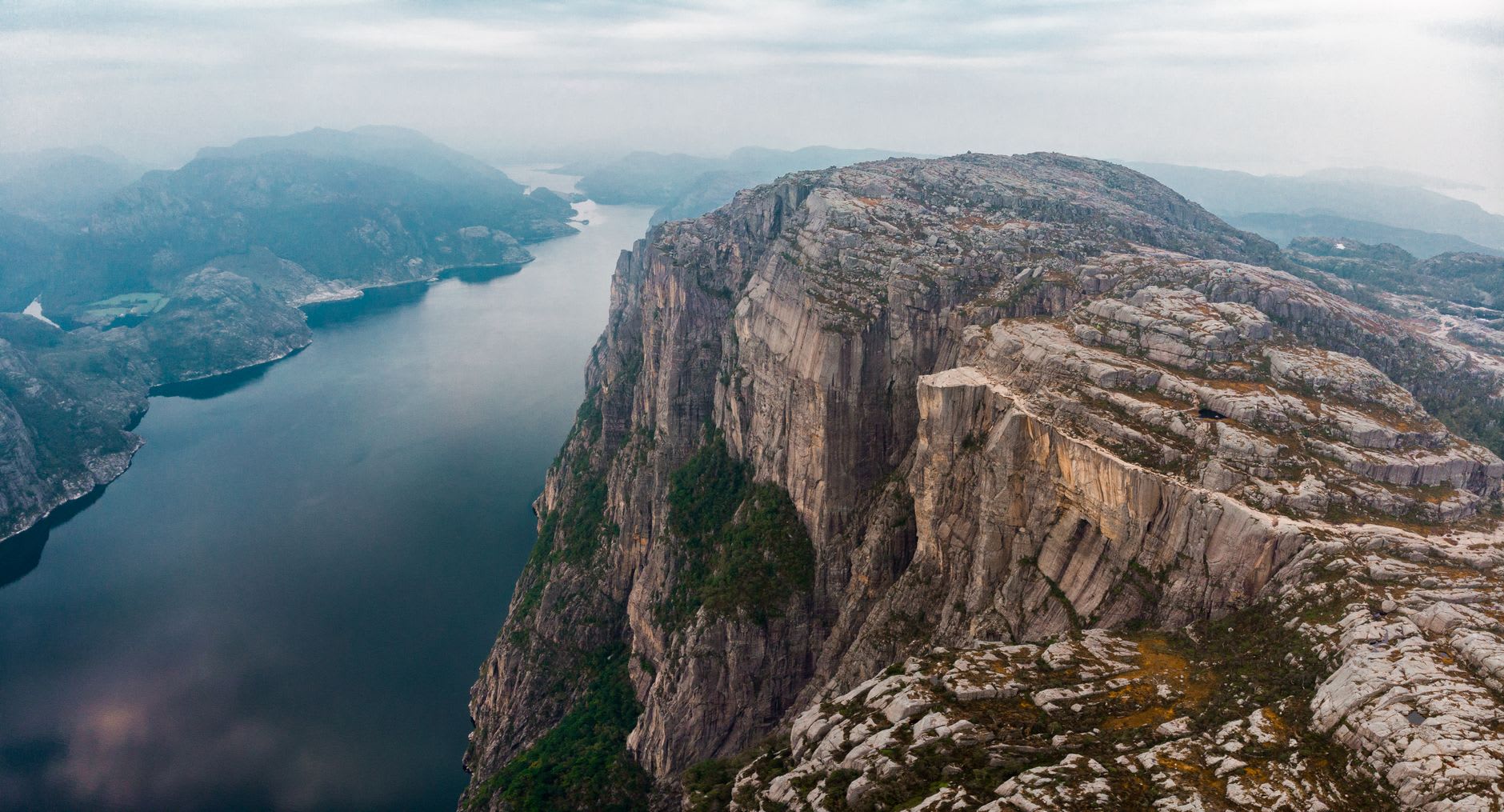
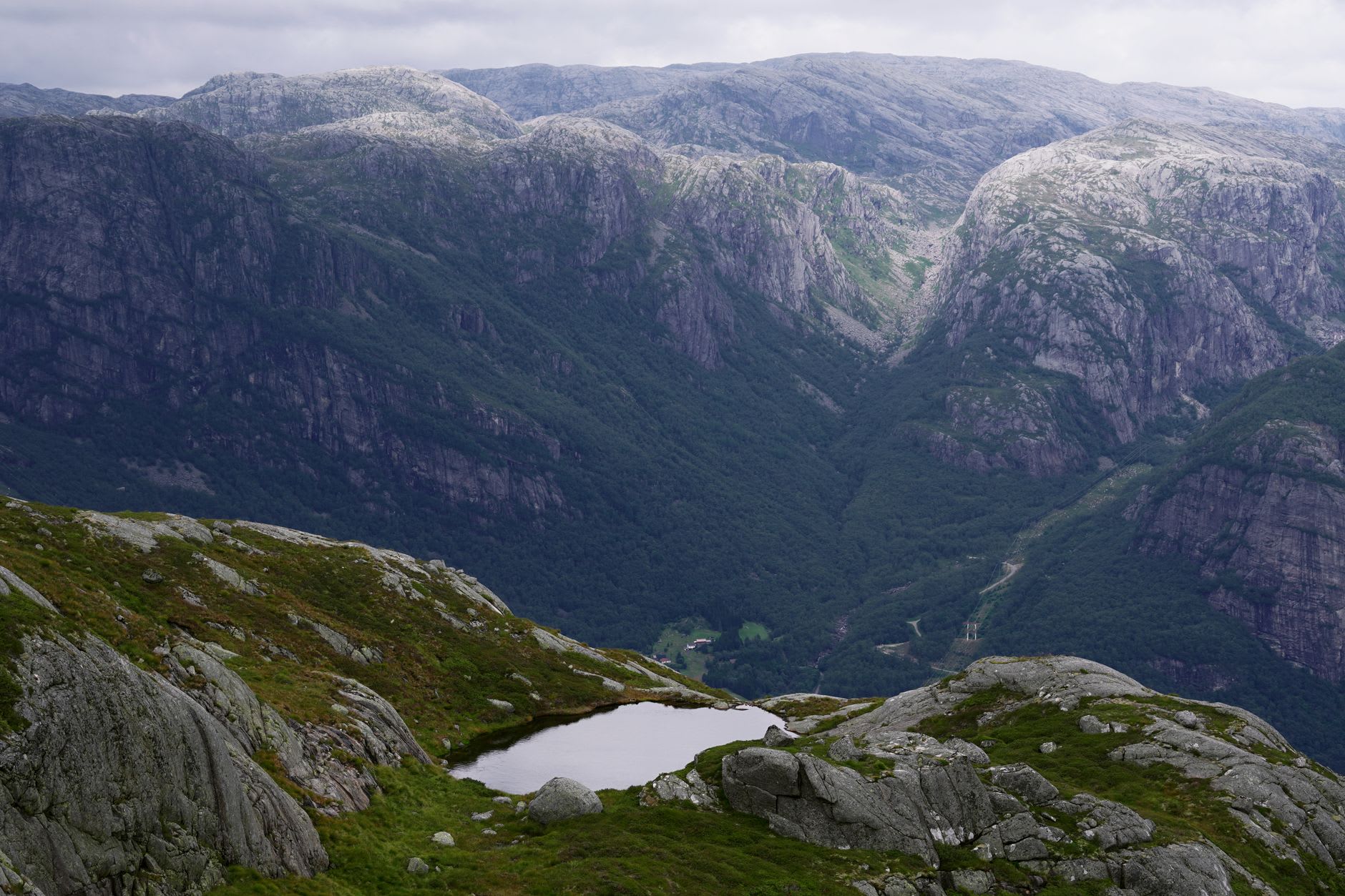
But then the plateau opens out. After the third climb the landscape goes wide and lunar — a high, rounded expanse of pale granite scoured smooth, patched with snow even in summer, with little tarns of meltwater reflecting a sky that felt enormous up there. We had been sweating and swearing for two and a half hours, and suddenly there was nothing to do but walk across this strange, silent moonscape toward the edge.
The boulder, and the edge
The Lysefjord drops away from Kjerag in a single vertical wall of over a kilometre. I have stood on Preikestolen, which is justly famous, but Kjerag is higher and far less crowded, and the drop has a purity to it that Preikestolen’s broad ledge softens. We sat at the lip with our legs dangling — Lia first, me eventually, after some negotiation with my nervous system — and ate our sandwiches looking straight down at the green thread of the fjord and the toy-sized cruise ship gliding along it.
And the boulder. There was a short queue, which is its own absurd comedy: a line of people waiting their turn to step onto a wedged rock over a lethal void. I watched a dozen of them do it, perfectly fine. So I did it. Two steps out, a half-second where my whole body registered the nothing beneath the stone, Lia’s camera clicking, and then back, heart going like a drum. It is genuinely safe — the boulder has not moved in ten millennia and is not about to start. It does not feel safe. That is the entire point.
When to go: Mid-June to early September only — the trail is dangerous and often impassable with snow outside this window, and the road to Øygardstøl is closed in winter. Go early in the day to beat both the crowds and the afternoon cloud, which can swallow the plateau without warning. Proper boots are not optional.