
Ålesund
"Every Norwegian city promises sea air. Ålesund delivers it differently — through a gap between two art nouveau towers at 11pm in June."
I came to Ålesund meaning to use it as a base for Geirangerfjord and stayed three days longer than I had planned. The city caught me, which I had not anticipated. I had been briefed on the art nouveau architecture — the whole city centre was rebuilt after a fire in 1904, in a single style, all at once, which is not something that happens to cities — but I had not been prepared for how completely that consistency reshapes the experience of walking. Everywhere you look the roofline does something unexpected: a turret, a dragon head carved in stone, a curved cornice, a tower with a copper cap gone green. The architecture is theatrical but not pompous, built with a kind of northern exuberance that takes the light seriously.
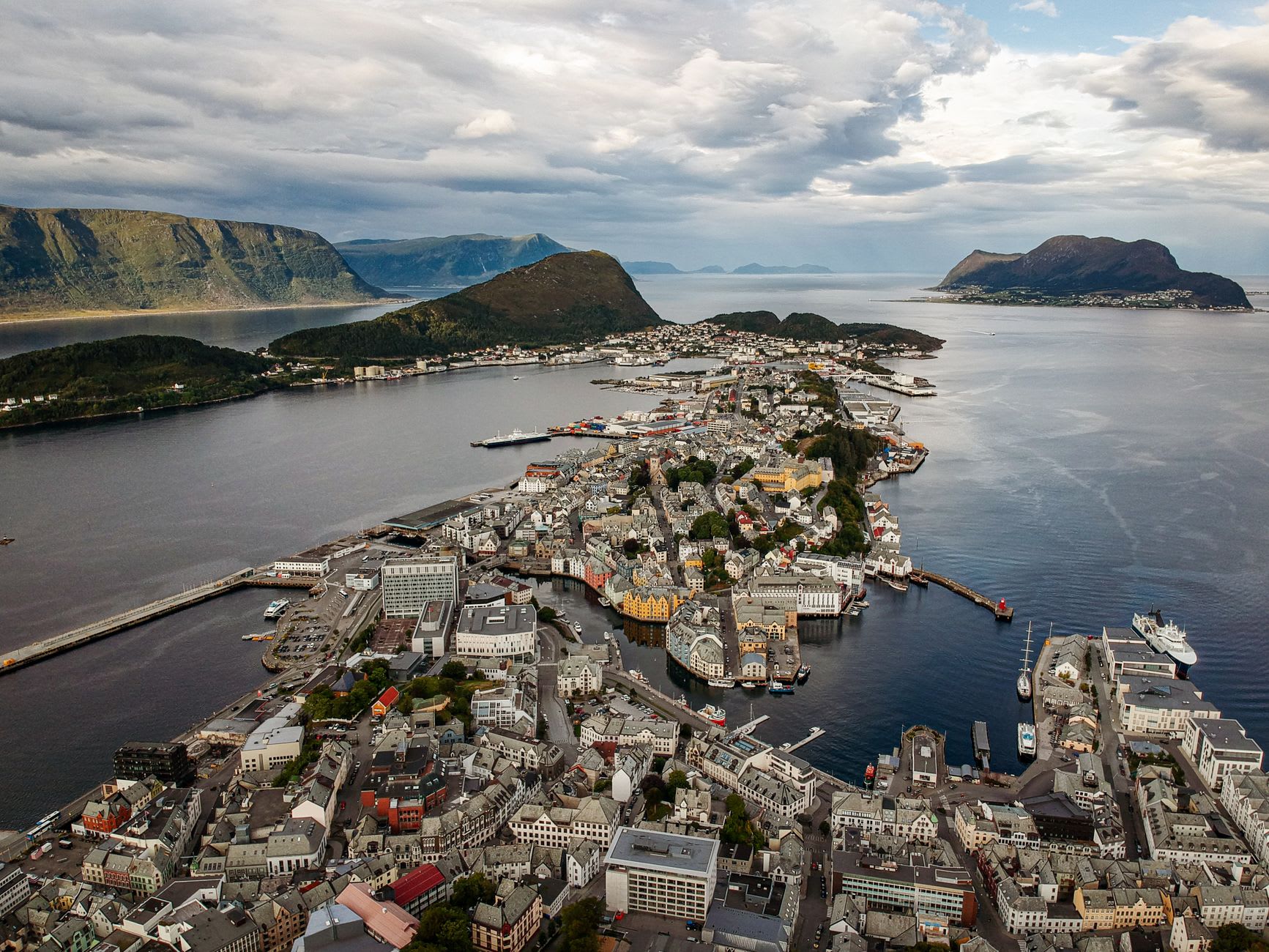
The light is everything in Ålesund. The city sits on a cluster of islands at the mouth of the Borgundfjord, and in every direction there is water. The fjord channels catch the reflection of the facades at dusk and the buildings double themselves in perfect symmetry. I walked the Brosundet canal in the early evening while the restaurants were filling up and the swifts were hunting low over the water, and the whole thing had the quality of a stage set — too beautiful to be believable, and yet completely functional. A man unloaded fish from a small boat. Children rode bicycles on the quayside. The beauty was not interrupting anyone’s evening.
The food culture here surprised me. Ålesund is Norway’s largest fishing harbour for deep-sea fish — cod, skrei, klipfish — and the restaurants know what to do with it. I ate salt cod croquettes at a tiny place on Kongens gate that had six tables and no menu, just whatever they had caught. The next night I found bacalao — the Norwegian-Portuguese salt cod stew that came here through centuries of trade with Portugal — served with roasted potatoes and a vinegary garnish that cut through the richness perfectly. That dish, in this northern city, tells an entire story about how food moves through the world.
I climbed the 418 steps to the Aksla viewpoint above the city in the late evening, when the light was going gold and long. The entire archipelago spreads below: islands and waterways and the open sea beyond, the city a cluster of coloured towers at the centre. The Sunnmøre Alps rise to the east, snow still on the higher peaks in June, and behind them somewhere is the approach to Geirangerfjord. You can understand, from that hilltop, why this place exists — why anyone would build here, on these specific islands, at the mouth of these specific waters.
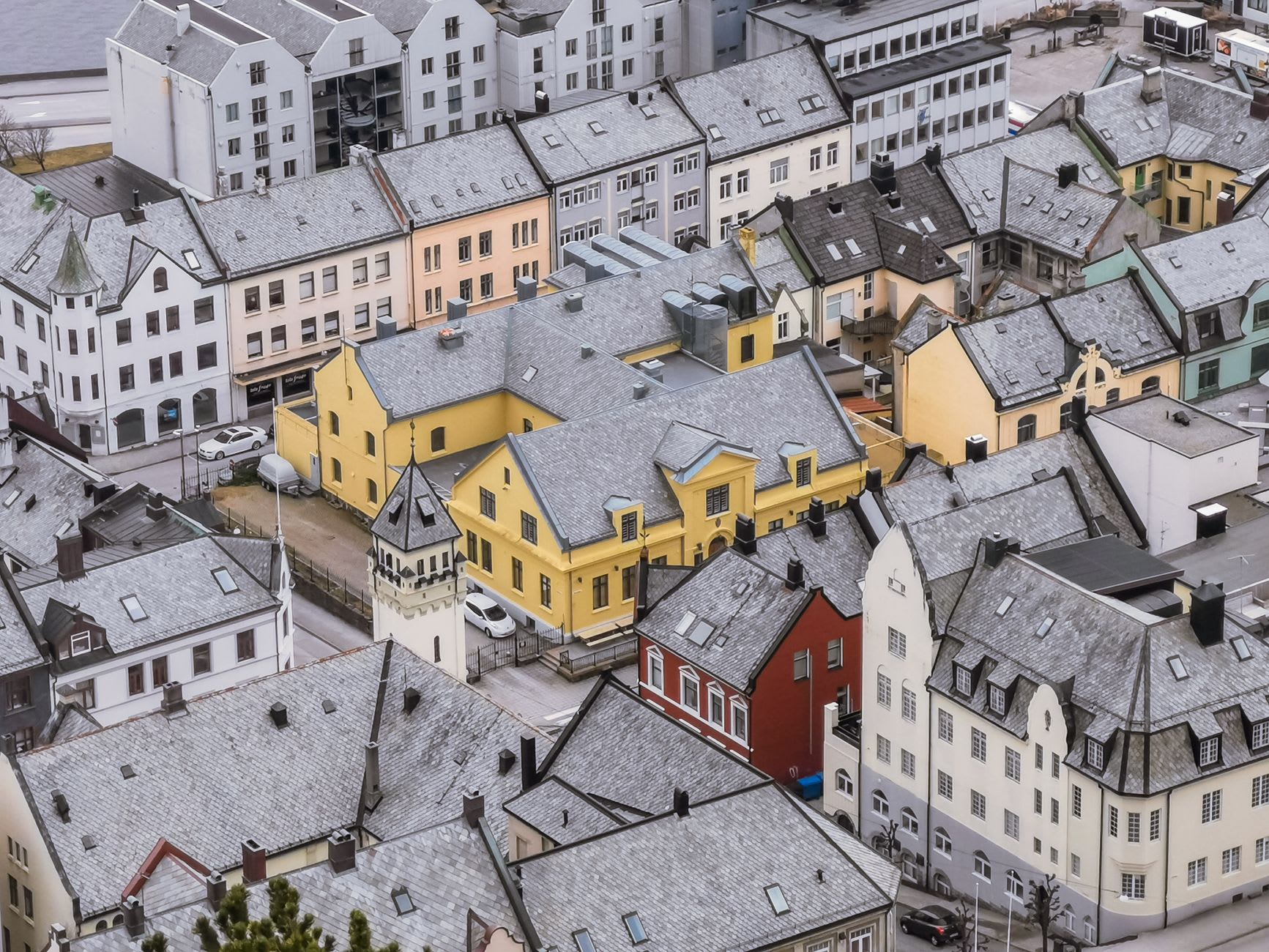
The Art Nouveau Centre in the old town has a well-designed exhibition on the 1904 fire and the rebuilding — before and after photographs that make the transformation feel almost miraculous, from rubble to a coherent city in two years. The guide told me that the rebuilding was partly funded by Germany, which sent materials and craftsmen, and that Kaiser Wilhelm II was a regular visitor to these waters on his yacht. A detail that makes Ålesund’s Germanic-influenced spires suddenly legible in a new way.
When to go: June is ideal — long evenings, the fjords to Geiranger fully open, and the midnight light doing strange and beautiful things to the art nouveau facades. September is quieter with excellent clarity of light. The city functions well in winter too: cod season peaks between January and April, and the illuminated waterfront takes on a different but equally compelling quality in the dark months.