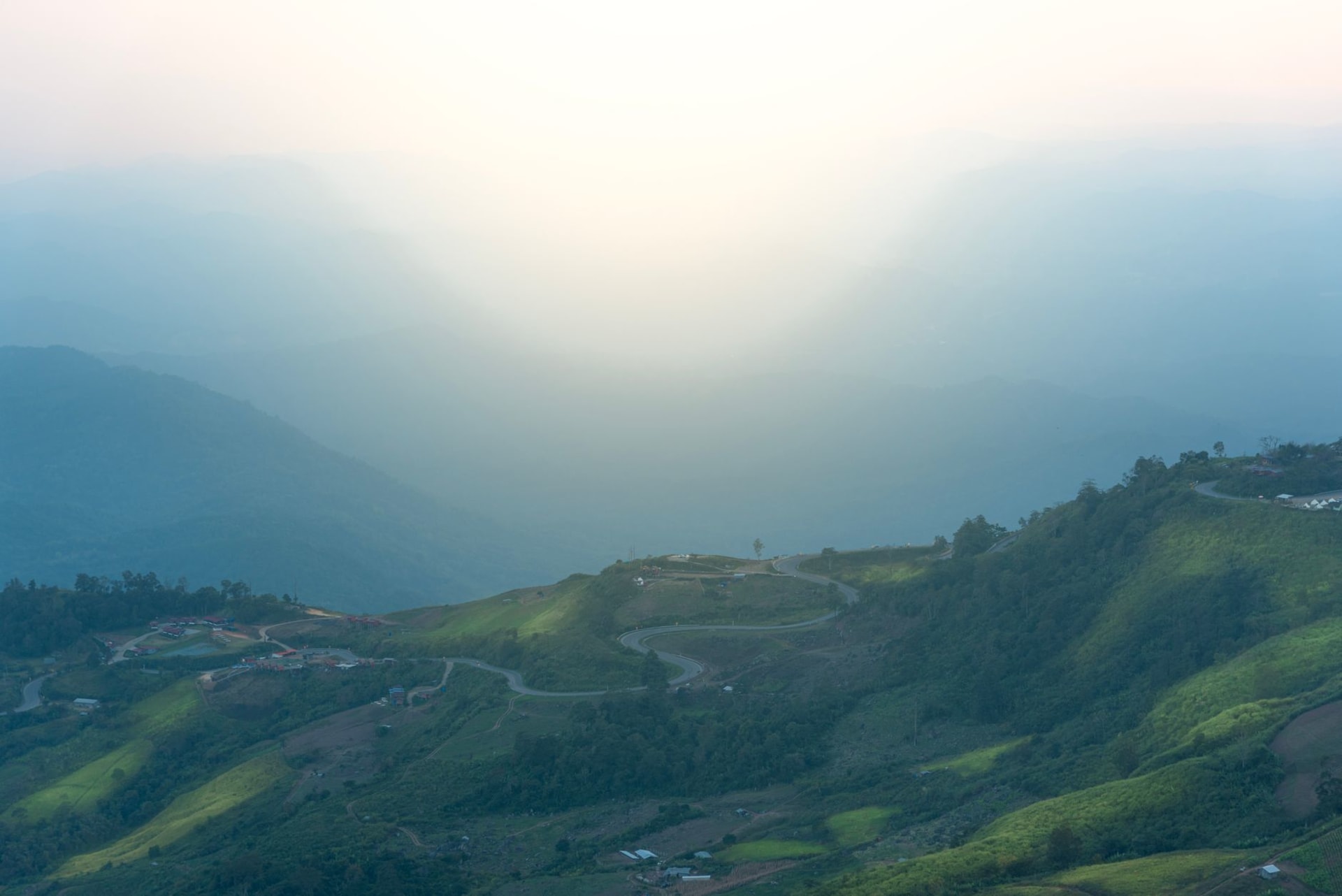
Doi Inthanon
"At 2,565 meters, I needed a jacket in Thailand. I have thought about that sentence many times since."
I rented a motorbike in Chiang Mai and headed south toward Doi Inthanon without having planned it particularly, which is usually when these things work out best. The mountain announces itself gradually — the road climbs and the air changes in increments, the roadside banana trees giving way to pine, then to the temperate forest that closes in at around 1,500 meters, the light going green and damp and smelling of moss and cold earth. By the time I reached the summit at 2,565 meters, I was wearing every layer I had packed and still slightly cold, which in Thailand is an extraordinary sentence to be able to write.
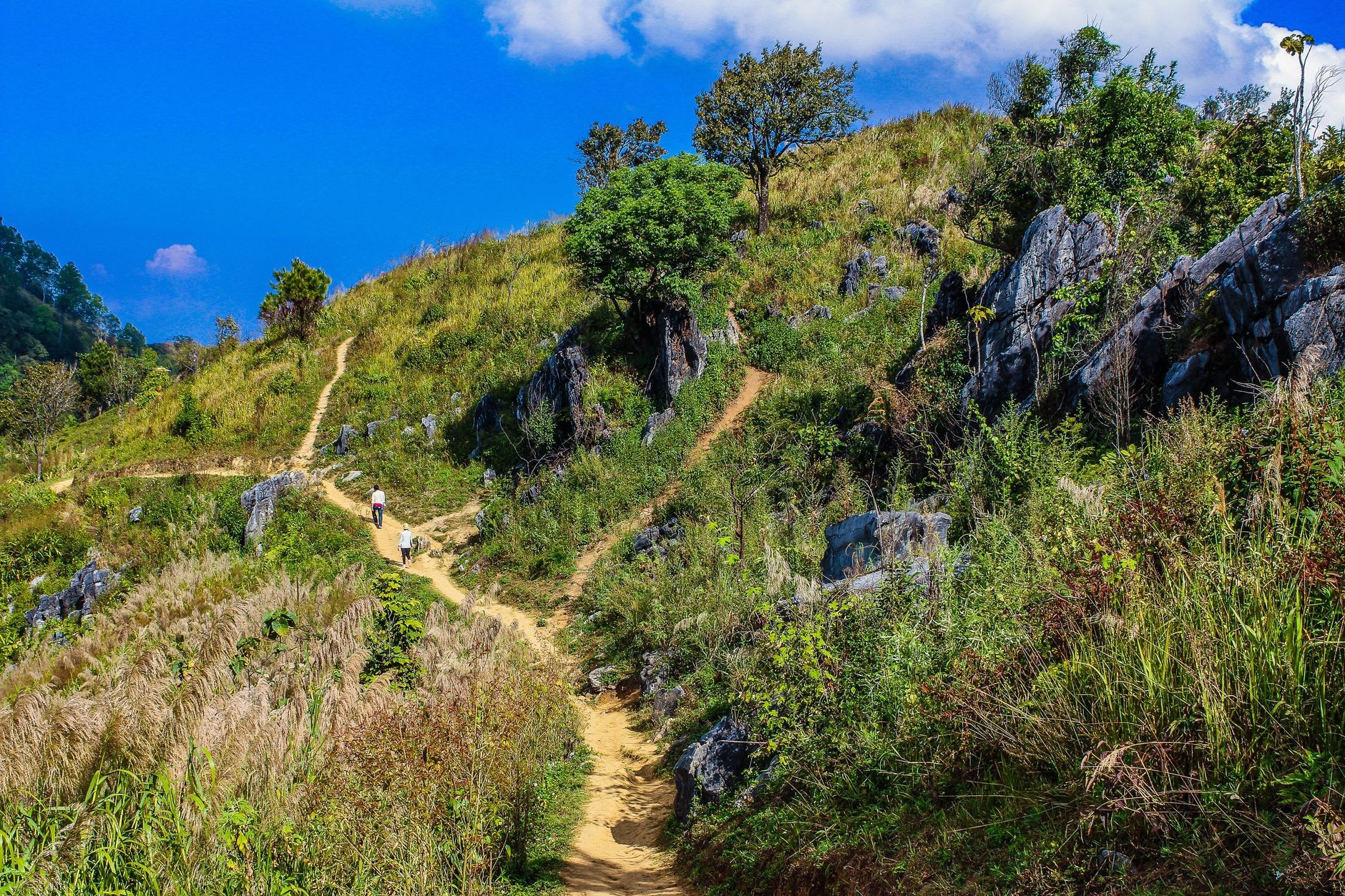
The twin royal chedis near the summit were built to honor the king and queen’s birthdays and are surrounded by gardens that feel surreally formal at this altitude — manicured flower beds, Belgian-style walkways, a precision that contrasts sharply with the wild cloud forest pressing in on all sides. A fog bank rolled across the gardens while I stood there, reducing visibility to about fifteen meters, and for a moment the chedis looked like they were floating in nothing. The ashes of King Inthawichayanon — the last independent ruler of Chiang Mai — are interred in a small chedi at the actual summit, and his memorial has a gentler quality than the royal gardens below: a quiet clearing in the trees, a few offerings, the wind moving through the bamboo.
The waterfalls on the park road are worth the stops. Mae Klong Noi and Mae Klong Yai fall into shallow granite pools that people wade in despite the cold. Wachirathan is the dramatic one — enormous, powerful, so loud you feel it before you hear it, and the spray drifts as far as the car park. A checkpoint guards the park entry and there’s a fee, but the money funds a conservation program that has protected the watershed supplying water to much of northern Thailand. That context makes the entry fee feel like something other than an inconvenience.

The birding community knows Doi Inthanon as one of Thailand’s best sites — the cloud forest supports species found nowhere else in the country, including the Doi Inthanon flycatcher endemic to this single mountain. I know nothing about birds but spent an hour near the summit watching a small, very serious group with enormous lenses pointing at a tree, and even without knowing what they were looking at, their collective intensity was affecting. The mountain has that quality: it makes people pay attention to whatever is in front of them.
When to go: November to February for clear days and the full cold experience at the summit — temperatures can drop below 4°C at the top in December, which Thai visitors treat as a winter wonderland event worth driving up for. Go on a weekday to avoid weekend crowds. The rainy season fills the waterfalls dramatically but cloud cover can obscure the gardens and views entirely.