
Chiang Rai
"The White Temple is the only place I've ever felt I was walking into someone else's fever dream — and I mean that as a compliment."
Chiang Rai sits close enough to the Myanmar and Laos borders that the town has a different character from anywhere else in Thailand — looser, more mixed, with Shan and Akha and Yao people moving through the morning market alongside Thai merchants, and a general sense that the rules governing behavior in Bangkok have not quite made it this far north. I arrived by minivan from Chiang Mai and checked into a guesthouse on a lane near the night bazaar, where reception was staffed by a teenager who handed me my key and went back to watching something on his phone. That transaction took thirty seconds. Nobody was trying to sell me anything. I found this remarkable.
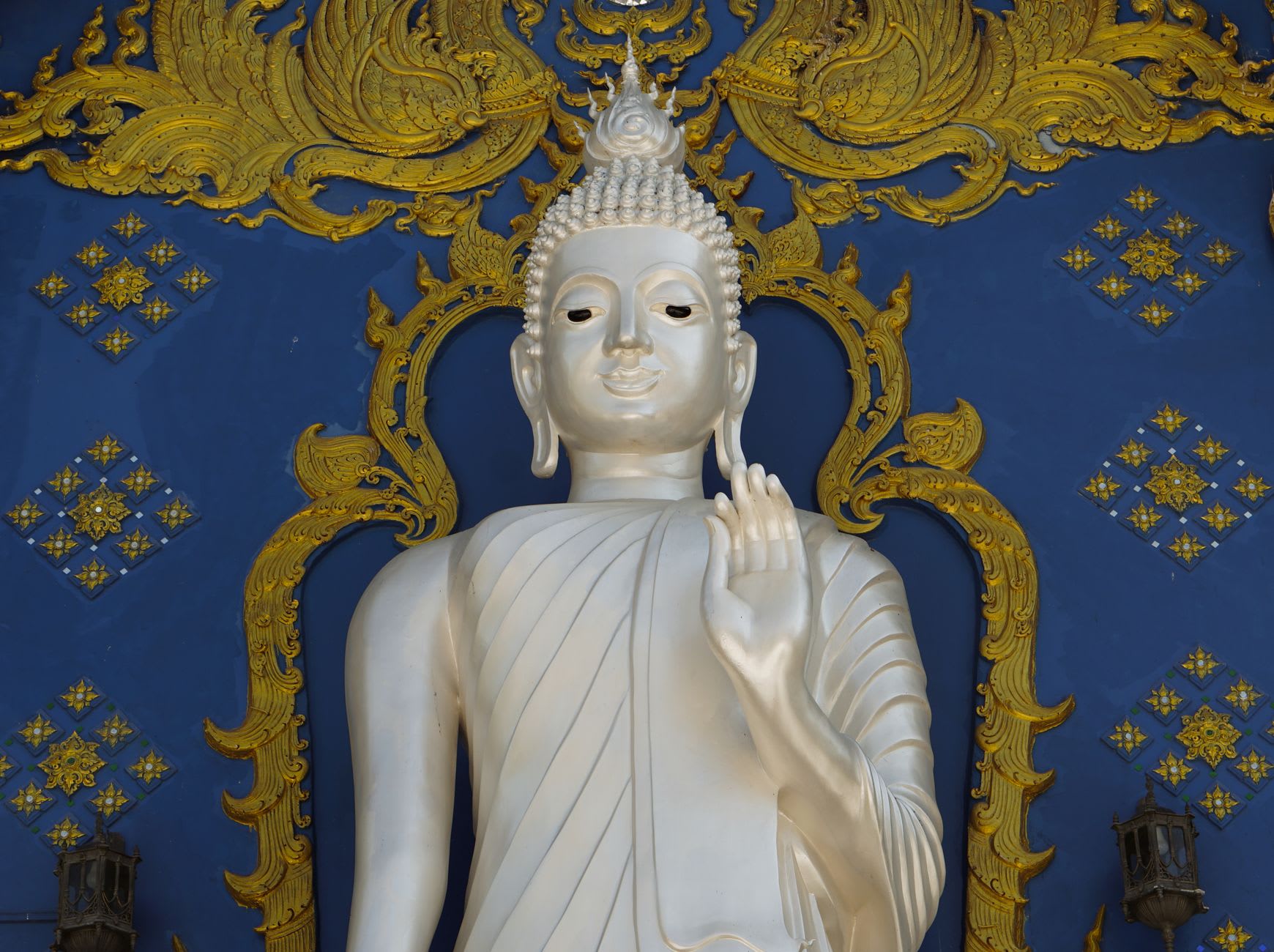
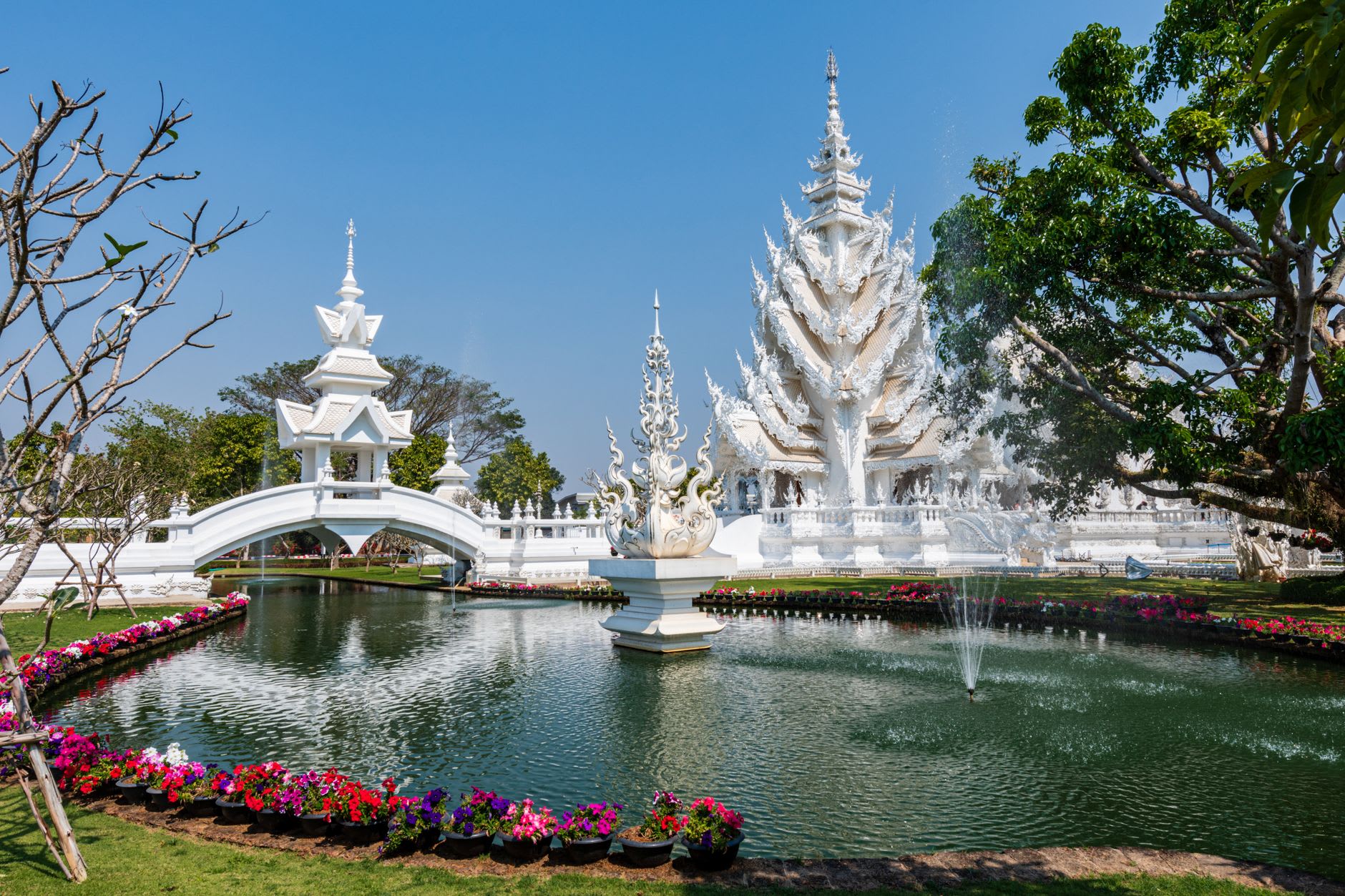
Wat Rong Khun — the White Temple — is the reason most people come, and it is not a disappointment precisely, but it is a different thing from what you expect. The artist Chalermchai Kositpipat began building it in 1997 and it remains unfinished, a private temple that is also a monument to Buddhist cosmology and whatever was on Thai television in the early 2000s: the bridge over the sea of hands reaching from hell, the prayer hall interior painted with Superman and Neo from The Matrix alongside traditional murals. It is excessive and brilliant and unlike anything I have seen in decades of temple-going. The Blue Temple (Wat Rong Suea Ten) two kilometers east is smaller but in some ways more arresting — deep cobalt interior, white Buddha figure luminous in the dim, the whole effect calmer and stranger than the spectacle up the road.
But Chiang Rai’s best hours are early morning, before any temples open. The fresh market near the bus station fills with hill tribe vendors from two in the morning, and by six it is at full roar — smoked meats hanging from hooks, vegetables I had no names for, women in full Akha headgear selling bundles of bitter herbs. I bought a bag of freshly roasted coffee beans from a woman whose farm was apparently twelve kilometers up the mountain and drank what she brewed me in a paper cup, standing at her stall in the cold dawn air, thinking: this is it. This is the actual thing.
North of the city, the road to Doi Mae Salong climbs into Yunnan Chinese tea country — former KMT soldiers settled here after 1949 and their descendants now grow oolong at altitude. The village has the startling atmosphere of a Chinese mountain town dropped into Southeast Asia: Mandarin spoken, dumplings available, tea shops with clay pots and elaborate ceremony. I drank tea for two hours with an old man who spoke no language I knew, and we communicated entirely through the sequence of what he poured me. It was one of the better afternoons I can remember.
When to go: November to February for clear skies and comfortable temperatures — Chiang Rai sits at 580 meters and evenings can feel genuinely cold by Thai standards. The burning season in March turns the air hazy but the light goes spectacularly orange at sunset. Avoid July and August if motorcycling into the hills, as roads to the border area can become unpredictable.