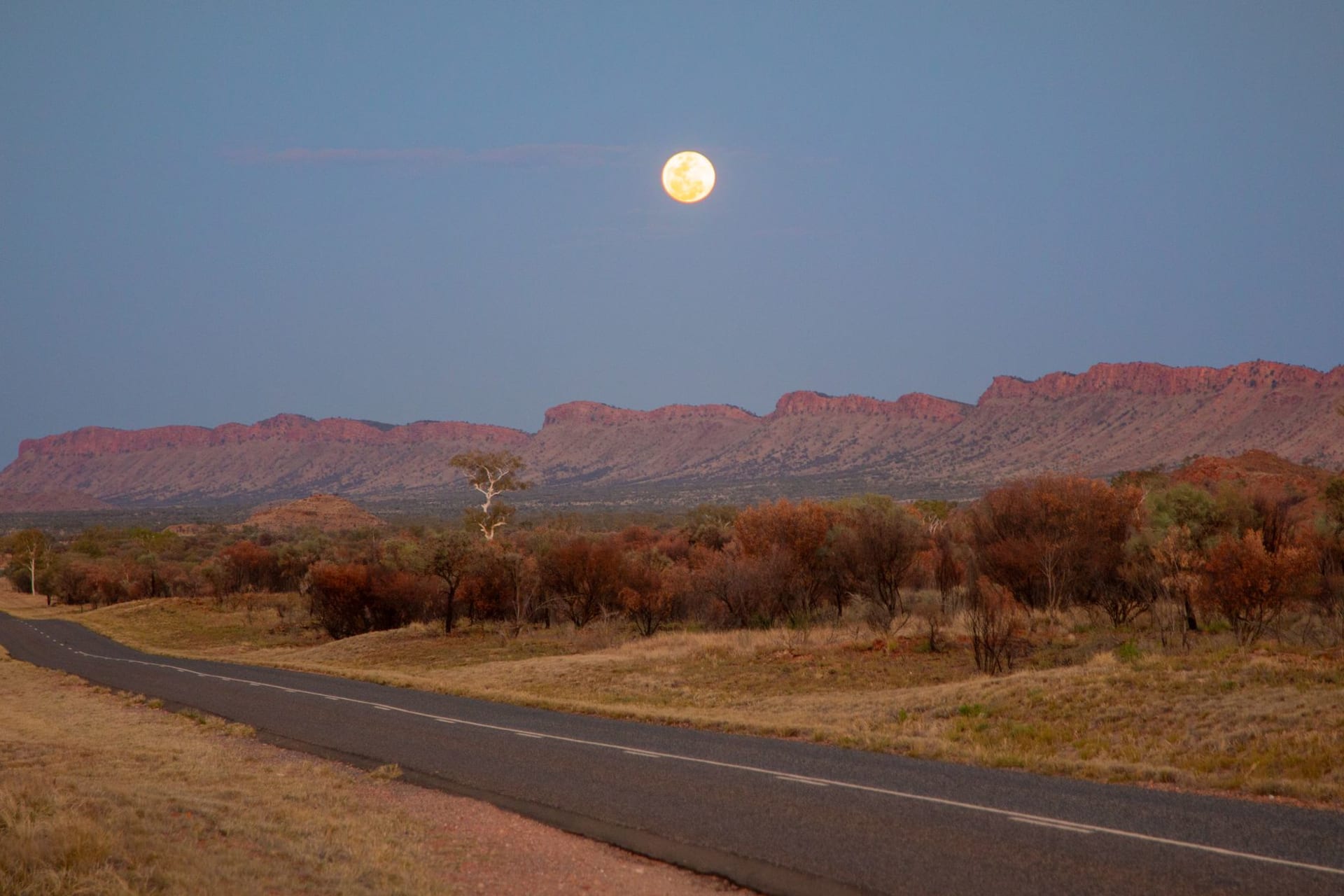
There is a moment on the Stuart Highway, driving south from Tennant Creek, when Alice Springs appears below you. You crest a rise in a landscape that has been flat for so long it has begun to feel like the world’s natural state, and then the MacDonnell Ranges materialise ahead — a long, low, purple ridge — and below them, in the gap in the ranges where the Todd River cuts through, the town. It is small. From this distance it looks improbable, a collection of buildings in red country surrounded by nothing for a thousand kilometres in every direction. This is, I have since read, almost exactly the geographical reality.
I arrived in June and the morning temperature was cold enough for a jacket, which no description of the outback had prepared me for. The light was extraordinary — that particular quality of inland Australian light in the dry season, which is high-contrast and clean in a way that makes everything look slightly more itself. The MacDonnell Ranges behind the town shifted from pink to red to deep ochre as the sun rose. I drank coffee outside my motel room and watched the range change colour for twenty minutes without checking my phone.
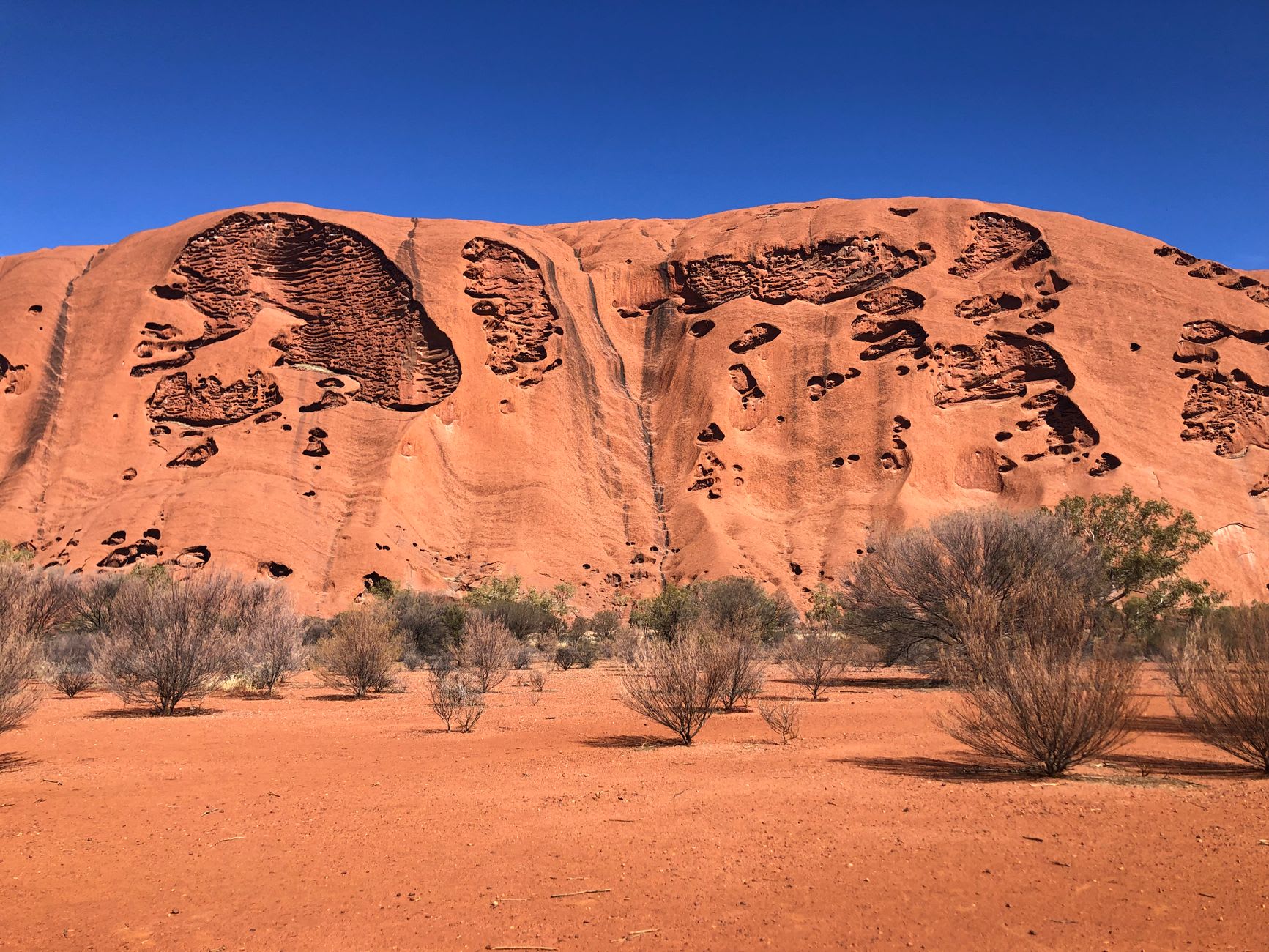
The Todd River runs through the centre of town and is dry most of the year. A concrete riverbed, ghost gum trees growing from the sand, the occasional wading bird looking confused. The Arrernte people have been here for at least 30,000 years, and the river — called Lhere Pirrte in Arrernte — has its own relationship to country that the dry bed does not diminish. What happens twice a year, when the rains come and the river runs briefly full, is apparently spectacular enough that locals gather to watch. I was there in the dry season and did not witness it, but I believed them entirely.
The Alice Springs Desert Park is one of the most thoughtful natural history sites I have visited in Australia. Set against the western MacDonnell Ranges, it holds more than 300 native plant species and the full range of Central Australian fauna in habitats that recreate the different ecosystems of the region. The walk-through nocturnal house — where the lighting schedule is inverted so that the animals that are active at night can be observed during the day — contains bilbies, bettongs, and marsupial moles that you will almost certainly not encounter in the wild. I spent two hours there when I had budgeted forty-five minutes.
The Aboriginal art galleries on Todd Mall are another matter. Alice Springs is one of the most important markets for Aboriginal art in the world, and the distinction between the genuine galleries — those with direct relationships to artists and communities — and the souvenir shops selling mass-produced designs is not always immediately visible. The Araluen Arts Centre and the Mbantua Gallery are reliable starting points. The works from the Western Desert tradition — the dot paintings that emerged in the 1970s from Papunya and spread to become internationally recognised — carry a spatial intelligence in their aerial mapping of sacred sites that rewards sustained looking.
The flies are real. Every piece of writing about the Red Centre mentions them and every piece is correct. In the warmer months especially, the flies pursue your face with a single-mindedness that requires either a fly net, practiced philosophical acceptance, or both. I bought a net at the service station at the northern edge of town and felt immediately less persecuted.
When to go: May through August is the sweet spot — cold nights, warm days, low humidity, all the attractions open and accessible. September and October are still manageable but temperatures climb quickly. November through March brings heat that regularly exceeds 40°C and can be genuinely dangerous for anyone not acclimatised. July and August are peak tourist season for good reason: the light is spectacular, the air is clear, and the temperature range between morning and afternoon gives the town its most theatrical character.