Oceania
Northern Territory
"Standing at Uluru, I finally understood what it means to be a guest on someone else's land."
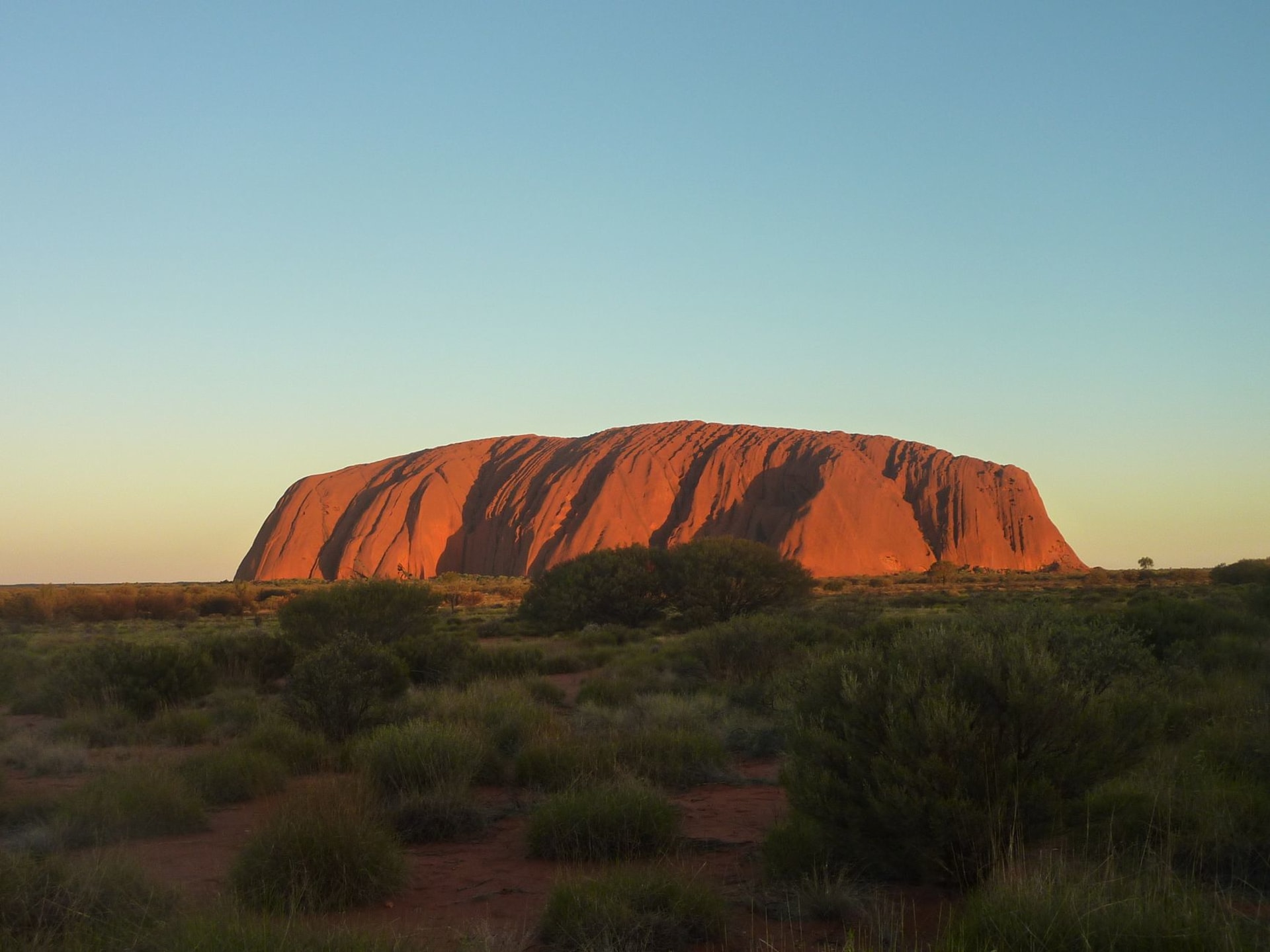
The first thing that hits you is not Uluru — it’s the silence around it. I arrived at the Uluṟu-Kata Tjuṯa National Park in the hour before sunrise, stumbling out of a hire car that smelled like stale air conditioning into air so dry and cold it felt like breathing paper. Then the light started. The rock does not so much catch the sunrise as it seems to produce it — that deep ochre shifting to amber to blood orange, as if Uluru were not reflecting the sun but competing with it. Fifteen minutes of colour so unreasonable I forgot to take photographs, then remembered, then put the camera down again. Some things resist documentation.
The Northern Territory is not a single experience. It is at minimum three. Uluru and the Red Centre are the heartland — the country of the Anangu people, who have been reading this landscape for at least 60,000 years through the Tjukurpa, their law, their cosmology, their way of understanding everything. Do not climb the rock. Not because it is technically prohibited since 2019, but because the Anangu have asked you not to, gently and persistently, for decades. The walk around the base takes three hours and reveals more geology, more sacred detail, more actual content than any summit view could offer. Take a guided walk with an Anangu guide and the rock becomes a library.
Then there is Kakadu. Six hours north by road, and you feel the shift before you see it — the air thickens, the eucalypts give way to pandanus palms, the sky gets bigger. Kakadu National Park is UNESCO-listed twice over, for both natural and cultural heritage, and it earns that double billing. The Yellow Water wetlands at dawn are a different kind of spectacle from Uluru — chaotic, alive, operatic with birds and saltwater crocodiles drifting with a patience that reads as menace. The rock art at Ubirr, some of it 20,000 years old, is displayed in a way that no museum could match: in situ, on the same stone walls where the artists stood, with the same floodplain stretching out below them.
When to go: The dry season, May through September, is the only realistic window for most visitors. June and July bring daytime temperatures around 30°C in the Red Centre and the Top End becomes navigable — many roads flood completely between November and April. October and November are beautiful but hot and building toward wet. If you must visit in the wet season, Kakadu transforms in ways that are genuinely spectacular, but access is severely limited.
What most guides get wrong: They treat the Northern Territory as a bucket-list tick rather than an education. Uluru is not just a rock formation. Kakadu is not just a wildlife reserve. Both are places where a living, unbroken culture is actively operating, and a visitor who arrives with curiosity about that culture rather than just their camera will leave with something more durable than a photograph. The best thing you can do before you arrive is read some Bruce Chatwin, then immediately question everything he got wrong. The Territory will correct the record in person.