
Strangford Lough
"The tide here moves so fast through the narrows that the Vikings called it the violent fjord — strann fjord."
I arrived at the village of Strangford in late afternoon, just as the tide was making its run through the narrows. Strangford Lough is the largest sea inlet in the British Isles — a landlocked body of water connected to the Irish Sea by a channel barely half a mile wide — and at every tidal change something close to four hundred million tonnes of water squeezes through that gap. Standing on the shoreline, watching the current run visible and powerful between Strangford and Portaferry on the opposite bank, you feel the tidal machinery working. The Vikings knew this force. They called the place strann fjord — violent fjord — which gave the lough its name.
The car ferry crossing from Strangford to Portaferry takes eight minutes and runs continuously, which says everything about the narrowness of the narrows. I took it for the crossing itself — to be suspended on that current between two shorelines, watching the water surge, gulls riding the upwellings. On the Portaferry side, the Exploris aquarium holds a seal sanctuary where orphaned common and grey seals are rehabilitated before release. I saw three pups in outdoor tanks being trained to catch fish on their own. One of them was watching me with an expression of complete and mutual judgment.
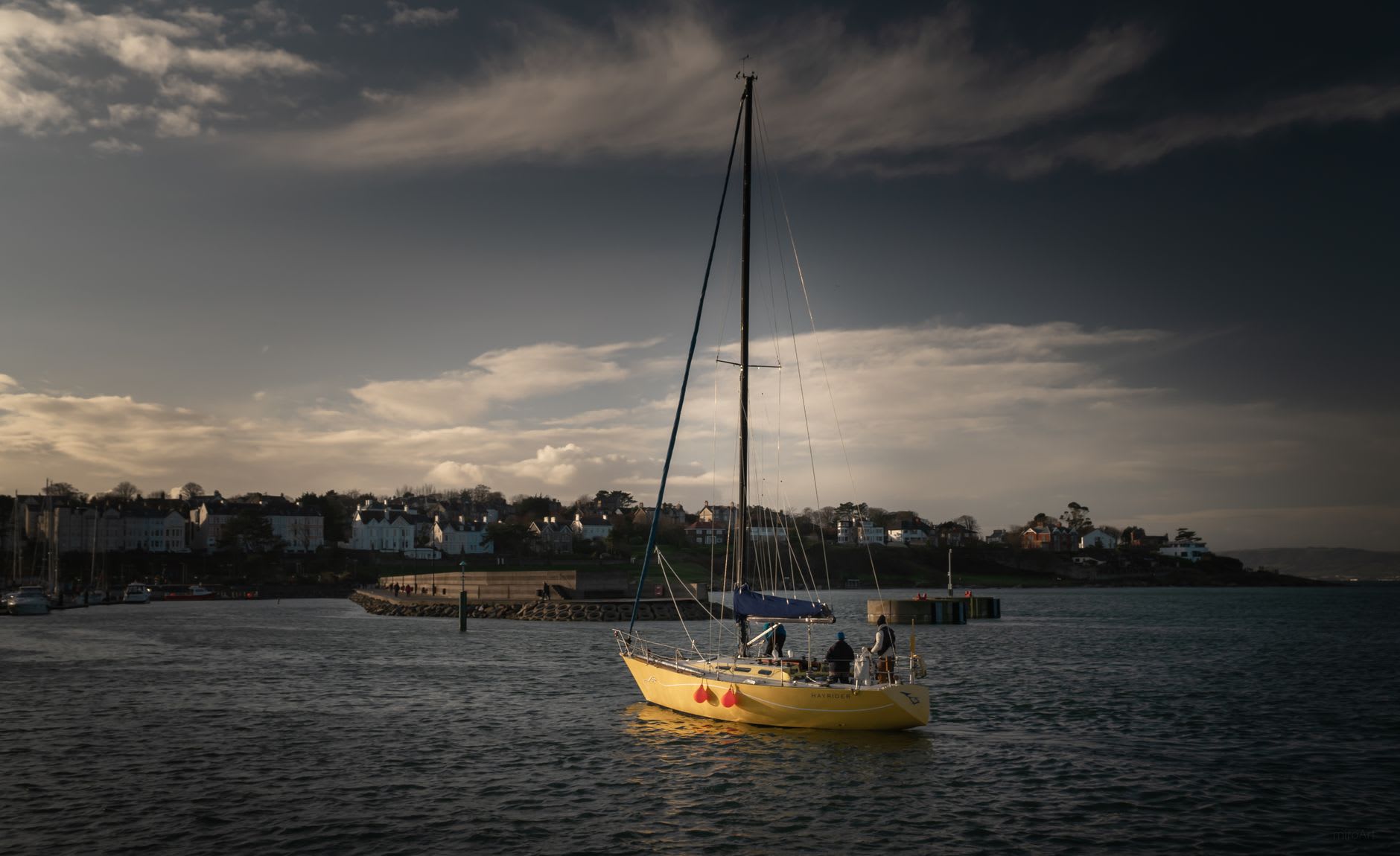
The lough’s southern end opens into the drumlin landscape of County Down — low, rounded hills left by glaciers, each one an island when the tide is full, connected by mudflats when it falls. Mahee Island sits in the western shallows, connected to the mainland by a causeway, and on it are the ruins of Nendrum Monastery — a sixth-century monastic settlement with a tidal mill, one of the oldest known in Ireland. The monastic site has concentric earthwork rings enclosing the church and round tower stump, and the whole thing sits in a silence so complete on a weekday afternoon that I could hear the oyster-catchers working the mud two hundred metres below. The tidal mill is extraordinary: a stone-built mechanism that used the rise and fall of the lough itself to grind grain. It is simultaneously very old and very ingenious and I stood beside it for a long time thinking about water and time.
The lough holds one of Ireland’s largest colonies of grey seals — around five hundred animals — and in the southern bays they haul out on mudflats at low tide in groups of thirty or forty. I watched them from a causeway at Greyabbey, the seals spread in the middle distance like grey logs, occasionally raising heads to scan. A curlew called. A group of brent geese moved overhead in the particular disorganised formation that brent geese favour. The light on the water was silver and the landscape asked nothing from me, which is a quality I have come to value highly.

Castle Ward, a National Trust estate on the western shore, occupies a peculiar position in architectural history: the eighteenth-century house is built in two distinct styles — classical on one facade, Gothic on the other — because the Earl and Countess of Bangor had irreconcilable tastes and apparently irreconcilable wills. It was used as a filming location for Game of Thrones and I mention this only because it explains certain crowds on certain days.
When to go: Autumn and winter are the finest seasons ornithologically — thousands of migratory waders and wildfowl descend on the lough from October onward. Brent geese from Arctic Canada arrive in their thousands in October and stay through April. The seal colony is present year-round. Spring and summer are quieter birdwise but the lough is at its most accessible and the drumlins are green and sharp-edged.