
Mourne Mountains
"The Mourne Wall runs over twenty-two miles of ridge and you think whoever built it must have had something to prove."
I came at the Mournes from the coast, driving south from Strangford along the shore of Dundrum Bay as the mountains came into view in stages — first as a dark profile against the sky, then as individual peaks as I got closer, granite tors and heather slopes steepening toward the horizon. By the time I reached Newcastle, a small coastal town where the mountains arrive at the sea almost without preamble, I had understood why C.S. Lewis, who grew up watching these peaks from his bedroom window in Belfast, said they had taught him the sensation of longing.
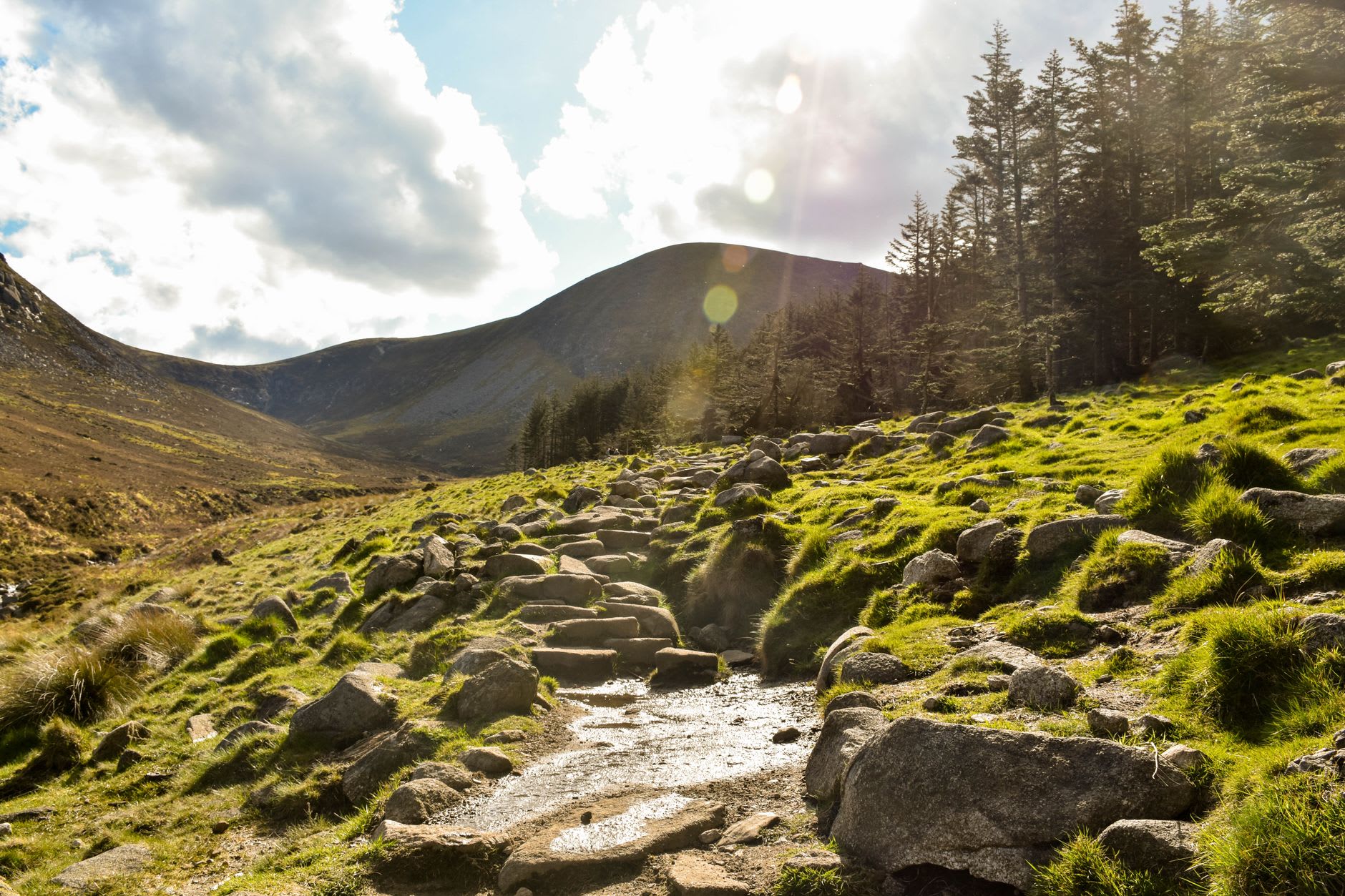
Slieve Donard is the highest summit in Northern Ireland at 850 metres — not a dramatic altitude by Alpine standards, but the mountains rise from near sea level and the angle of ascent is honest. I started from Donard Park in Newcastle, following the glen of the Bloody River upstream through forest that opens gradually into heather moorland, the path clear but the gradient not relenting. It took two and a half hours to the summit on a calm August day and I arrived in mist that reduced the view to perhaps twenty metres in every direction. I sat on the cairn and ate a cheese sandwich and felt entirely content in the opacity.
The Mourne Wall is one of the more extraordinary structures in the Irish landscape: a dry-stone wall running for twenty-two miles over fifteen peaks, built between 1904 and 1922 to enclose the Silent Valley reservoir catchment. It is three feet thick at the base and over five feet high in places, and to follow its line across the ridges is to feel both the scale of the engineering and the scale of the labour — thousands of men quarrying and carrying granite at altitude, year on year, in Atlantic weather. The wall now serves as a navigational aid for walkers and looks, from a distance, like something a civilisation left behind.
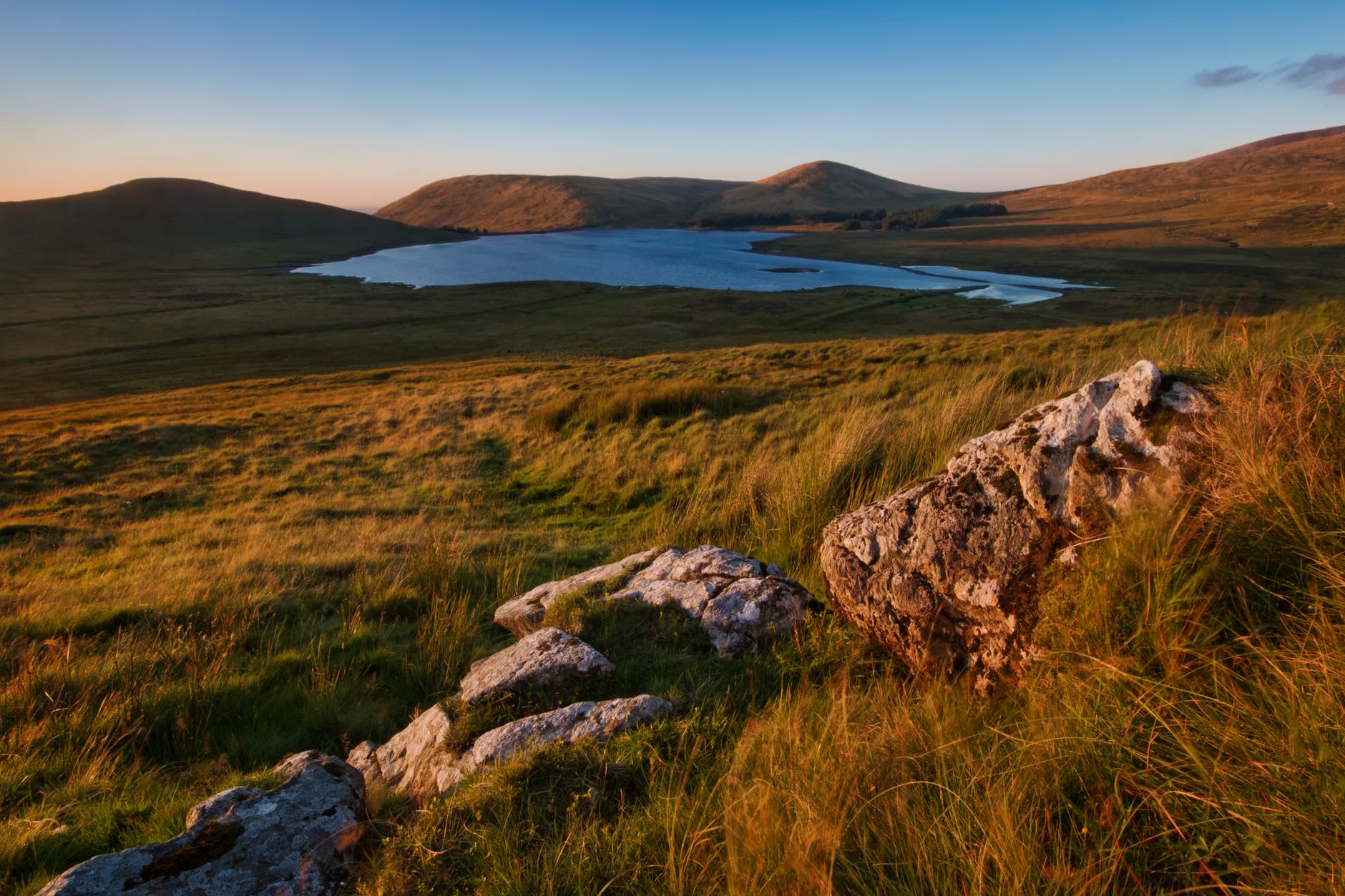
The Silent Valley itself is a reservoir in the heart of the mountains, its surface often glassy and reflecting the surrounding peaks. The drive in through the estate is through mature woodland that suddenly releases into a mountain valley with the dam wall closing the far end. I had packed lunch and ate beside the water in a silence that was only interrupted by a single meadow pipit ticking away in the heather above me.
The village of Rostrevor on the south side of the range sits at the head of Carlingford Lough, sheltered from the west by the mountains, and has a climate mild enough to support unusual plant growth — its wooded valley has stands of sessile oak and holly that lean over a fast-running stream. I had a pint at a pub there called Mick’s Bar that was precisely as unglamorous and correct as its name suggested, and talked to a man who had walked every peak in the Mournes over forty years and was still finding routes he had not tried.
When to go: May and June are excellent — long light, the heather not yet high, wildflowers on the lower slopes. September brings the heather to its purple peak and the light is photographic gold at both ends of the day. Winter ascents require experience and proper equipment but the mountains in snow and frost have a severity that rewards the preparation. Newcastle has good bases year-round.