
Giant's Causeway
"Stand here at eight in the morning with spray in your face and you understand why people needed a giant to explain it."
I had been warned about the crowds, so I set an alarm for six-thirty and was at the Causeway before eight. The coach park was empty. The path down from the visitor centre was still damp with dew. And when I came around the headland and saw the columns for the first time — that vast interlocking pavement of hexagonal basalt descending into the grey-green Atlantic — I stopped walking and stood still for a full minute. Some landscapes earn their legend status. This is one of them.
The columns are the result of volcanic cooling sixty million years ago — molten basalt contracting as it cooled, fracturing with mathematical precision into six-sided pillars. Science has the answer and it is extraordinary in its own right, but I understand why the people who first encountered this place invented Finn MacCool, the Irish giant who supposedly built the Causeway to walk to Scotland. The columns are so regular, so packed, so geometrically deliberate that the human mind reaches for an architect. Standing on them — they hold your weight, they are real solid basalt underfoot — you feel the need to explain.
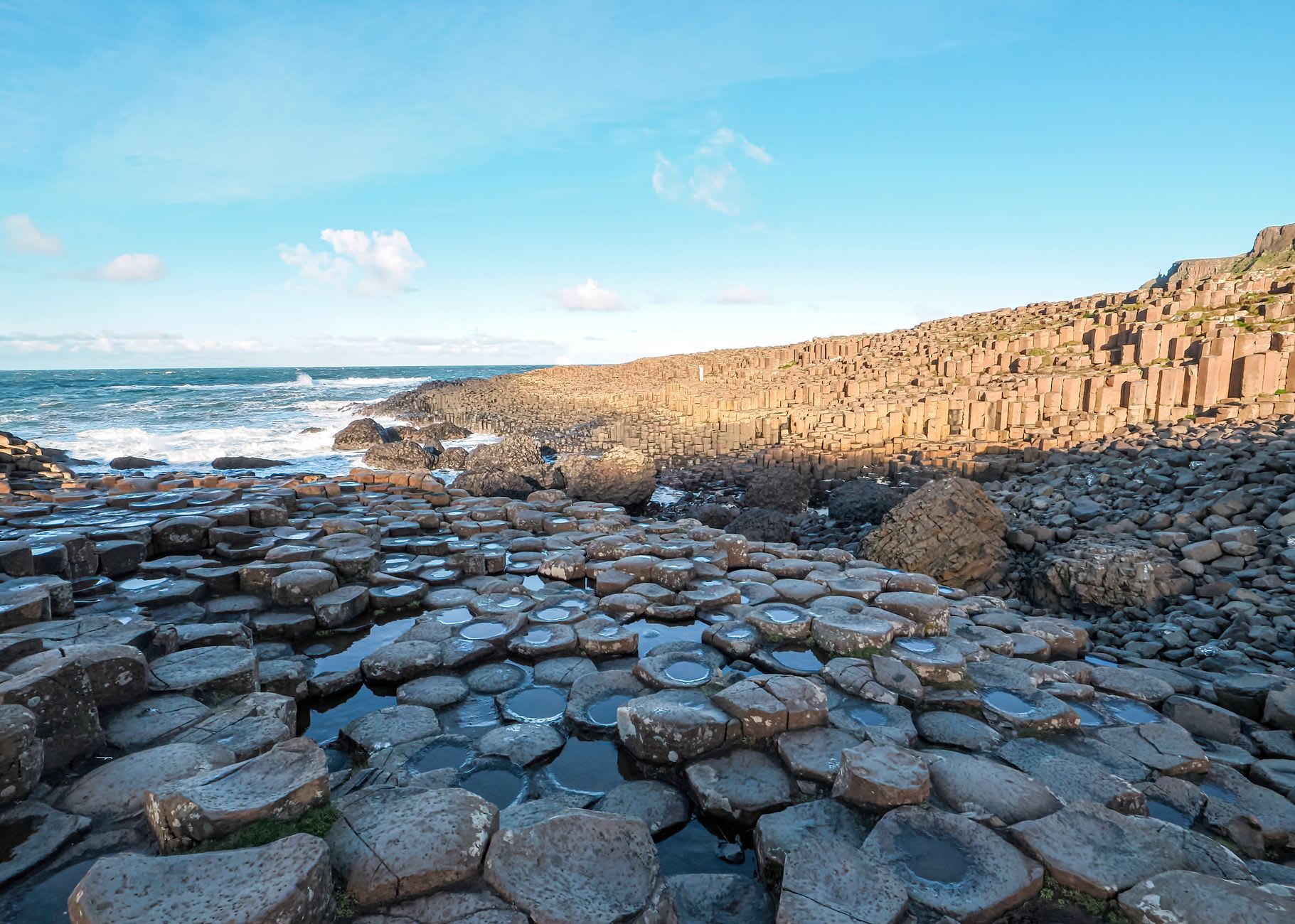
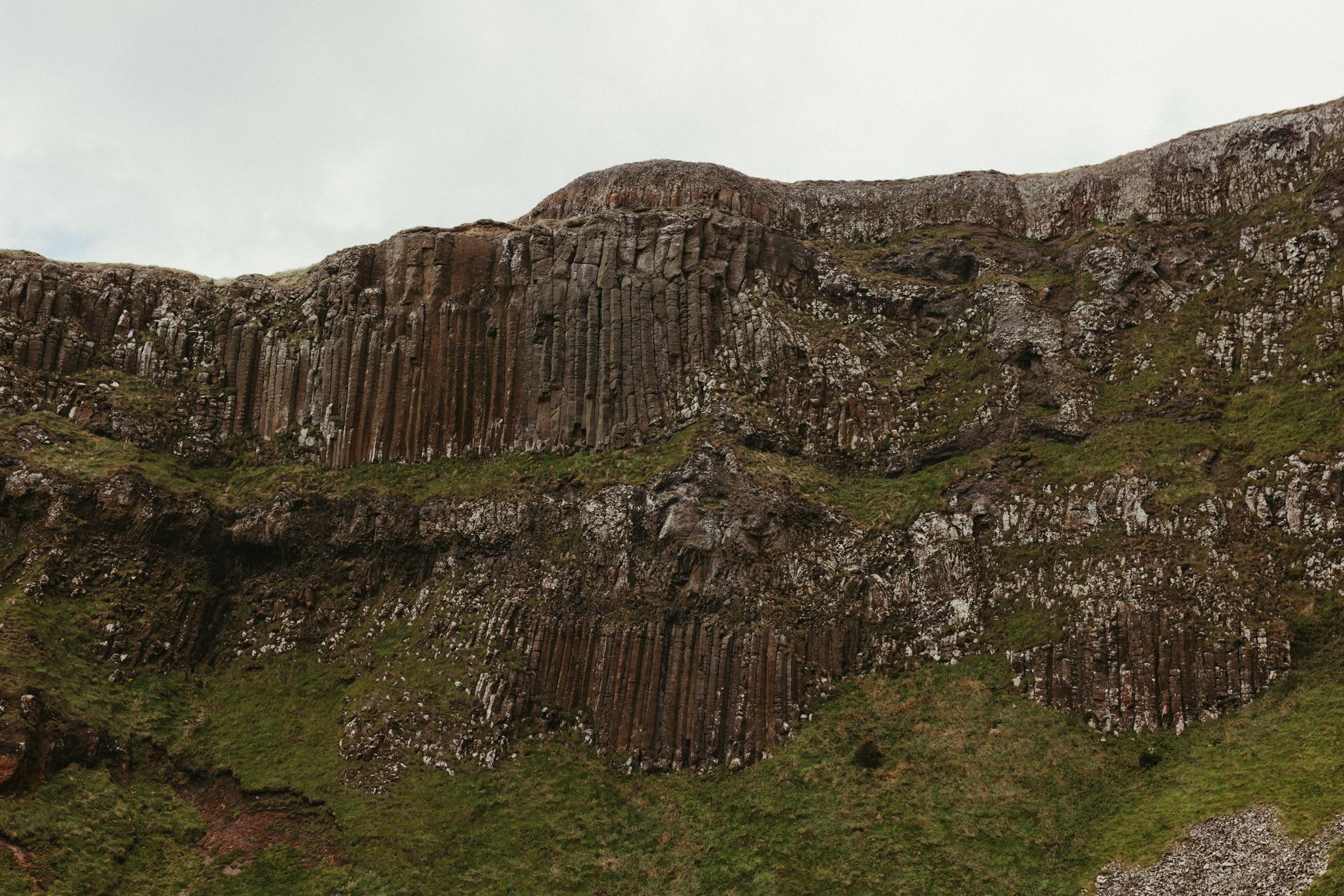
The full Causeway headland walk takes you beyond the main causeway platform — past the columns called the Organ, a curved cliff face of vertical basalt pipes that really does look like the largest pipe organ ever built, past the Chimney Tops, pointed pinnacles of basalt rising from the sea, to the cliff path that runs high above everything and gives you the Causeway from above. From up there you see the full scale of the thing: the coastal shelf stretching for miles, the basalt headlands, the white Atlantic chop. The coast here is violent and beautiful in the way of places that do not particularly care whether you appreciate them.
The village of Bushmills sits two miles inland, and after the Causeway I needed something warm and solid. The Black Bush Irish whiskey is made here, the world’s oldest licensed whiskey distillery still operating behind its stone walls. I took a tour partly for the whiskey at the end of it and partly because I wanted to understand what malt smells like when it first comes off the kiln — like bread, it turns out, with something smoky underneath.
The visitor centre, operated by the National Trust, is tastefully done and largely invisible against the landscape — which is exactly correct. What they cannot control is the crowds that arrive from ten onwards in summer, filling the path down to the columns. This is the operational detail that matters most about the Causeway: timing is everything. Go early or go in September or go in February when the Atlantic wind makes you reconsider everything and the columns have the dramatic emptiness they deserve.
When to go: May and June for long light and manageable crowds. Early mornings in July and August if you cannot avoid peak season — before nine, the path is yours. September brings lower light that does remarkable things to the basalt’s colour, shifting it from grey-black to almost purple. Winter visits require proper waterproofing but reward you with the columns in their proper solitude.