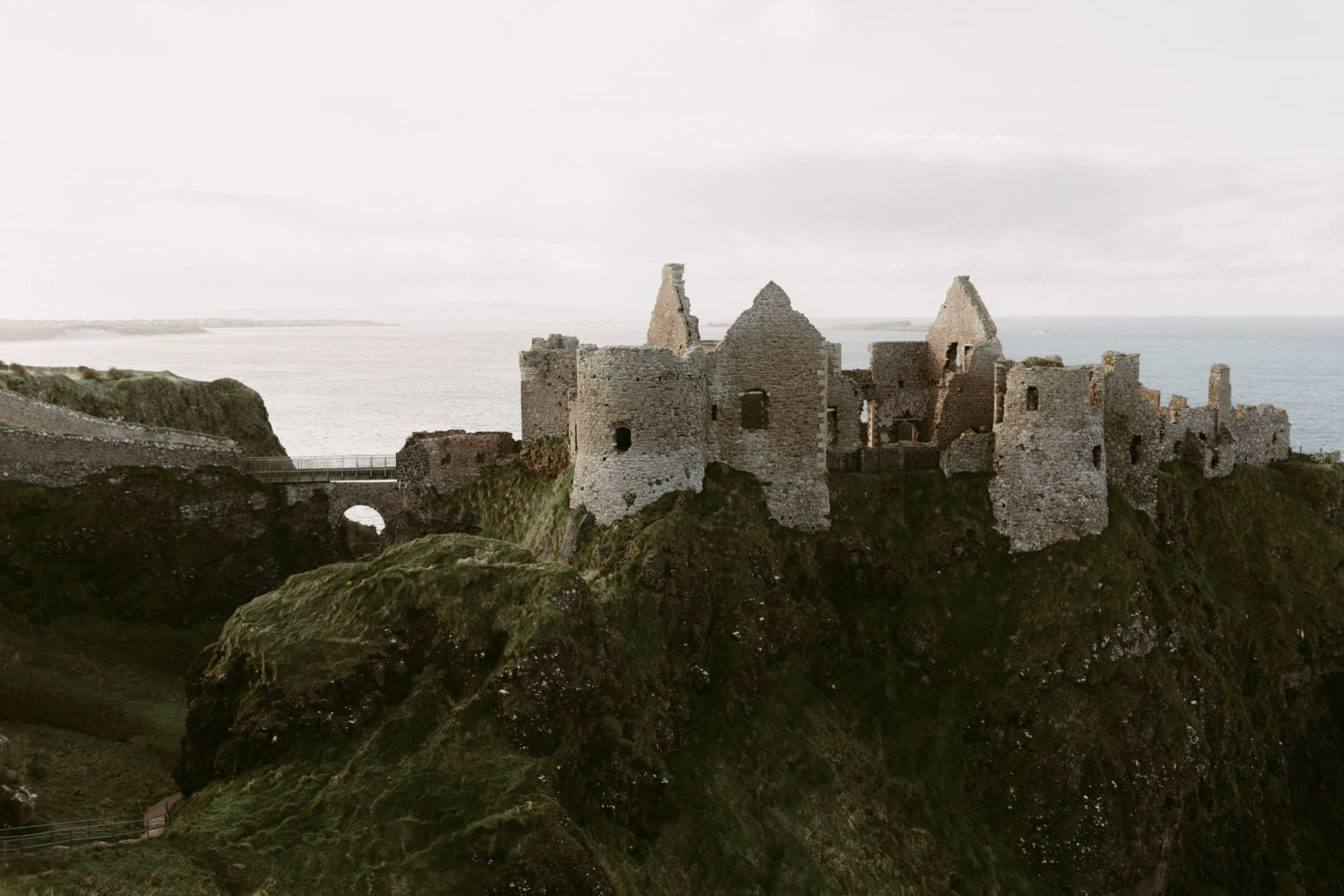
Dunluce Castle
"One night in 1639 the kitchen fell into the sea mid-dinner. I think about the cooks often."
The first time I saw Dunluce Castle I was doing fifty on the coastal road and nearly braked into the car behind me. It appears around a bend with no warning — a jagged crown of medieval stonework balanced on a black basalt stack sixty feet above the ocean, connected to the mainland by a narrow bridge over a chasm. The sea was running hard that afternoon, green and white under a sky the colour of pewter, and the ruins looked less like something human-built and more like the cliff had simply decided to grow a castle.
Dunluce was the power seat of the MacDonnell clan, the most significant Gaelic lordship on the north Antrim coast in the sixteenth century. They fortified a site the Vikings had used before them — the name possibly derives from the Old Norse for “Lime Fort” — and at the height of their power were allies of the Scottish lords across the water, trading, marrying, fighting across the twelve miles of the North Channel as if it were a road. The ruins cover two defensive sites: the outer courtyard on the mainland side and the inner ward on the stack itself, reached across a narrow bridge above the sea chasm.
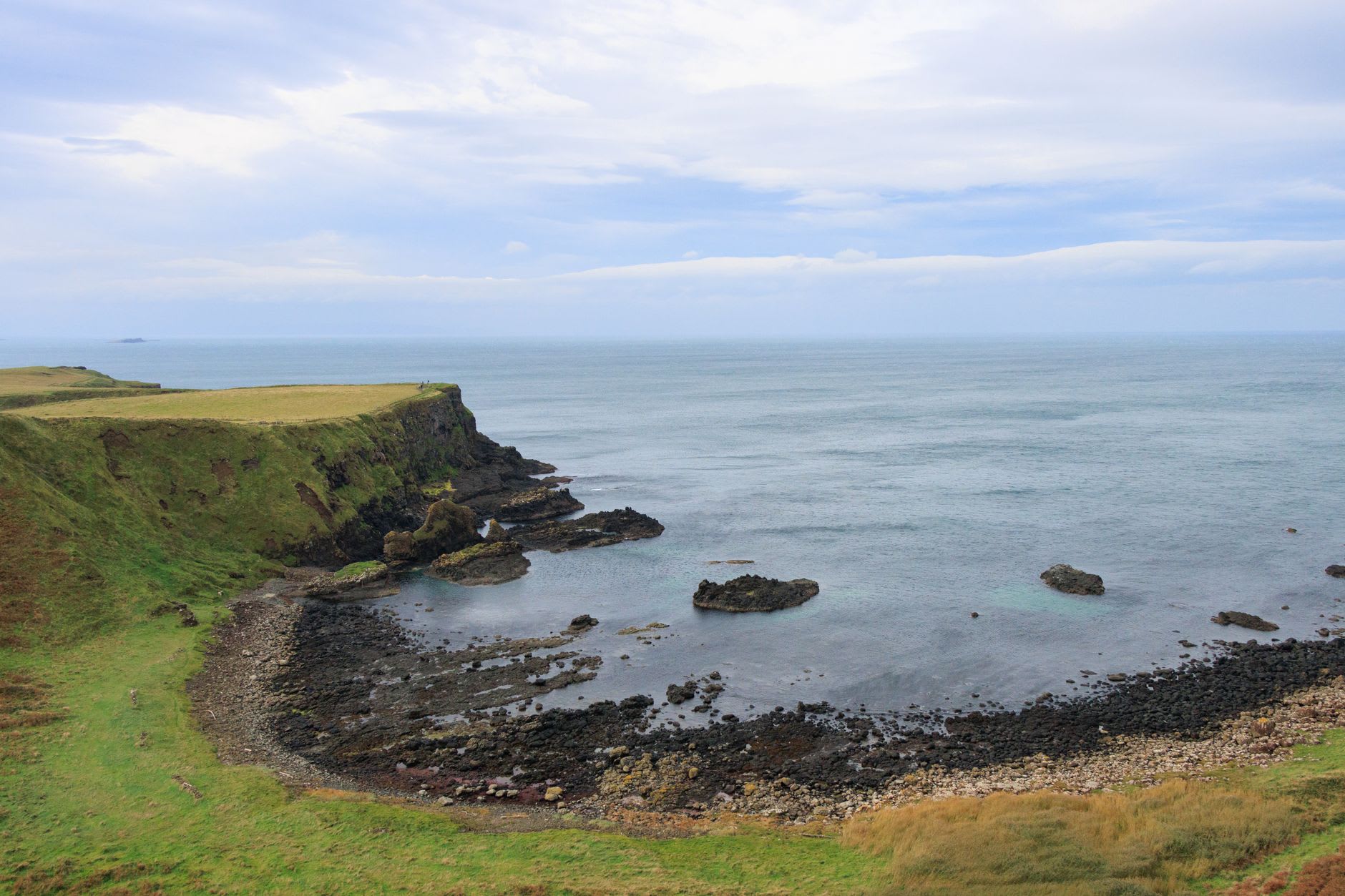
I spent two hours inside the ruins on a weekday in September — almost alone, just one other couple reading the interpretation panels at the gate. The walls are roofless and in places collapsing, but you can trace the rooms: the great hall, the loggia that once looked out toward Scotland, the circular towers at the corners. The atmosphere is not melancholy, exactly — more like the particular quality of a place that has decided its own aesthetic, which is dramatic ruin without apology. Down in the sea chasm, if you walk around to the coast path, you can see the cave that runs beneath the promontory. In winter storms, the sea fills it and the castle shakes.
The kitchen story is real, not legend: in 1639, during a feast, a portion of the kitchen building collapsed into the sea. Accounts vary on how many servants were lost — some say several, some say none except a single boy who caught himself on a spit. What is certain is that the countess of Antrim left Dunluce shortly afterward and the castle began its long decline into the photogenic ruin it is today.

The Giant’s Causeway is nine miles east and most people combine the two in a single coastal day. I would argue for reversing the order — Dunluce first in the morning quiet, then the Causeway before the coach parties arrive — and eating lunch at the Bushmills Inn between them, which has an open fire and a whiskey list that rewards the planning.
When to go: Autumn is the finest season — September and October bring low light that turns the basalt almost red and the sea a deep greenish-black. Winter is brutal and magnificent, the castle battered by Atlantic storms, the walls wearing their damage with full commitment. Summer is fine but crowds on the Causeway Coast road mean parking can be difficult midday. Morning visits at any time of year beat the afternoon.