
Quản Bạ
"Lia read the legend out loud, deadpan, and we both stood there looking at two hills that are, in fact, exactly what the name says."
Quản Bạ is where the Hà Giang loop stops being a road trip and starts being the thing people promise you it will be. We’d left Hà Giang city after a slow breakfast, the bikes still feeling unfamiliar under us, and within an hour the highway began climbing into the karst in long switchbacks. The town itself, Tam Sơn, is small and unglamorous — a strip of shops, a market, the usual roadside pho — but it sits in a bowl of mountains that makes the unremarkable architecture beside the point. This is the gateway to the Đồng Văn Karst Plateau, the geopark that the rest of the loop unfolds across, and you feel the elevation and the strangeness of the landscape arrive almost at once.
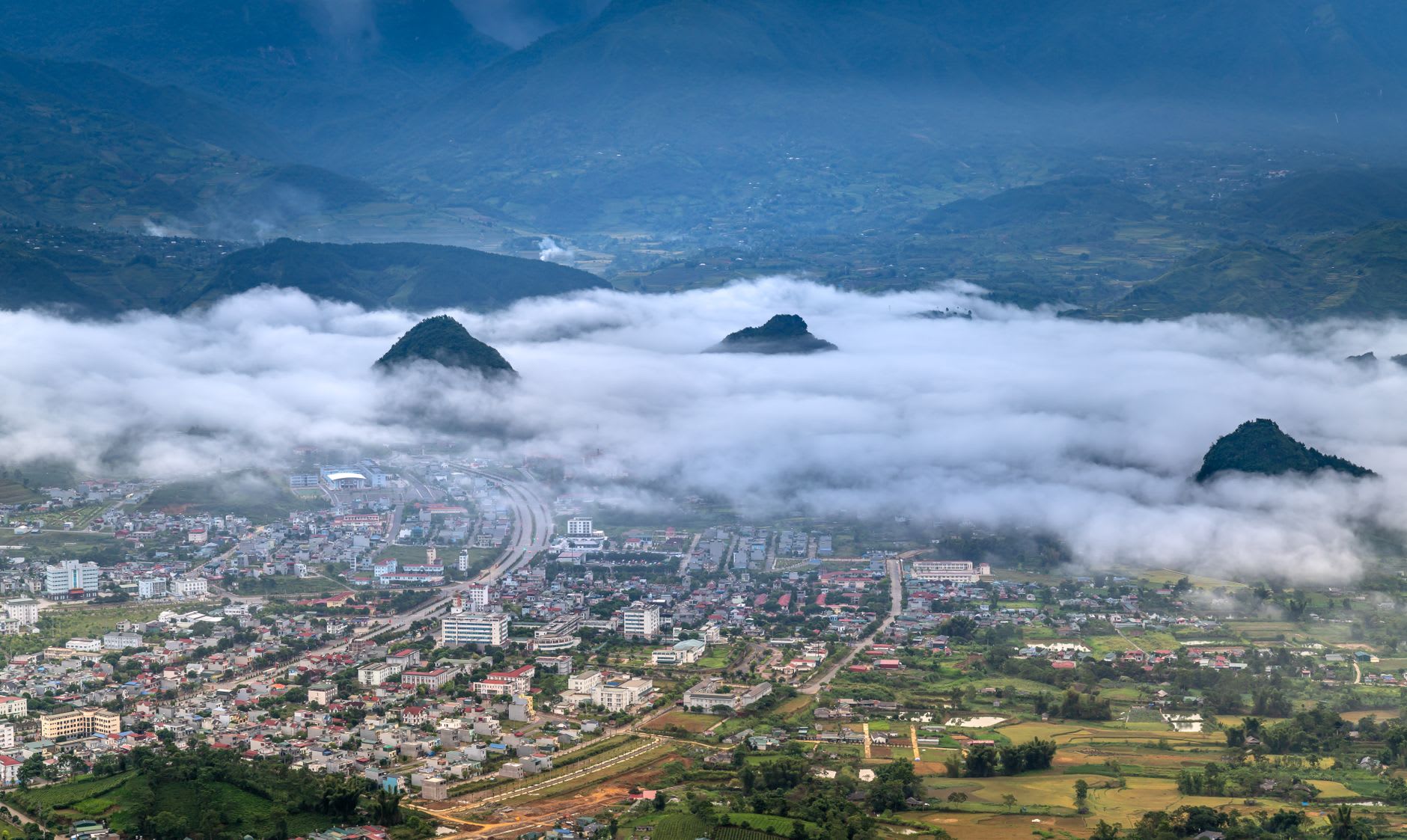
Heaven’s Gate and the Twin Mountains
The viewpoint everyone comes for is Cổng Trời Quản Bạ — Heaven’s Gate — a pass at around 1,500 metres where the road crests and the whole valley drops away below you. On a clear morning you can see the Tam Sơn basin laid out in rice paddies, and rising out of it, two small, almost comically symmetrical hills. They’re called Núi Đôi, the Twin Mountains, and the local Hmong legend gives them a more direct name: the breasts of a fairy who fell in love with a mortal flute player, stayed behind when she was called back to the heavens, and left these behind to feed her children. Lia read the legend off a battered signboard in a flat voice, and then we both just stood there, because the hills are, in fact, exactly what the name says, and there’s something disarming about a landscape committing that fully to a joke.
The pass is also where a lot of riders have their first proper moment of doubt about the loop, because the fog rolls in fast up here and the drop on the valley side is real. We waited out a cloud bank with a coffee from a woman running a stall built from corrugated metal, and when it lifted the view came back piece by piece, paddies first, then the hills, then the far ridges.
Worth more than a photo stop
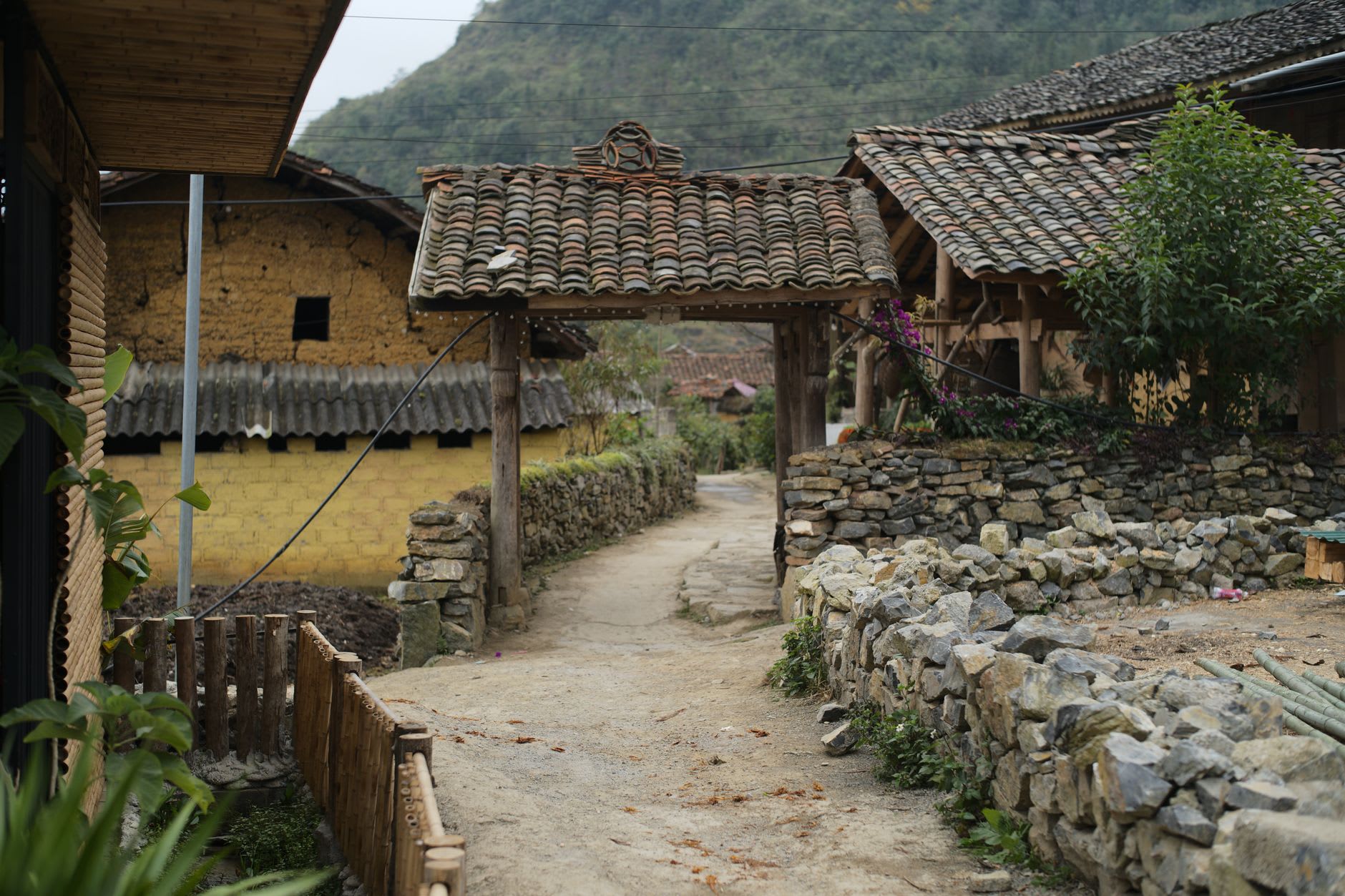
Most people treat Quản Bạ as a fifteen-minute viewpoint and ride on toward Yên Minh and Đồng Văn, and I understand the instinct — the loop ahead is spectacular and the day is long. But we spent a night in Tam Sơn and I’d do it again. There’s a Sunday market that pulls in Hmong, Dao, and Tày families from the surrounding hills, a cave called Lùng Khúy a short ride out of town that almost nobody bothers with, and a quietness in the evening once the day-trippers have gone that the more famous stops further north never quite manage. It’s the overture to the loop, and overtures are worth sitting through.
When to go: September and October, when the rice terraces in the valley turn gold before harvest and the morning light through the residual mist is at its best. Avoid the deep wet of June to August, when Heaven’s Gate is fogged in for days at a time and the switchbacks turn slick.