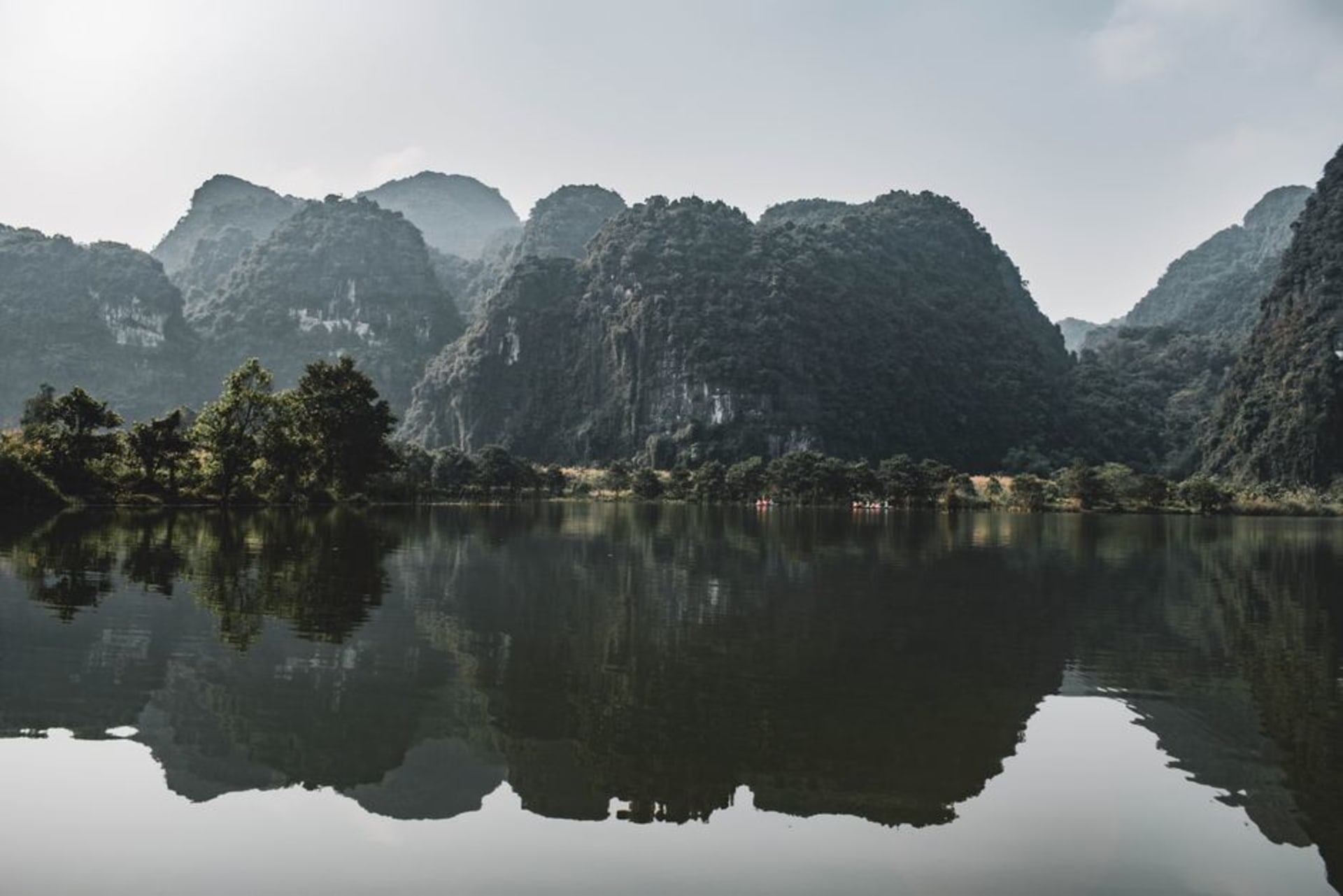
Vietnam's largest natural lake, cupped in limestone karst, where Tay stilt-house villages still meet the water by wooden boat.
We’d been in Vietnam for three weeks by the time we made it to Bac Kan Province, and I remember feeling almost relieved to leave the motorbike behind for a boat. It took us close to six hours from Hanoi, the road narrowing and climbing until the karst towers started punching up out of the rice paddies, and by the time we reached the park gate my back was sore and my mood was foul. Then we got onto the water. Ba Be is Vietnam’s largest natural freshwater lake, about 8 kilometers long, formed from three lakes that merge into one sheet of green-grey water sitting some 150 meters above sea level — and somehow all my irritation just left my body within the first ten minutes on the boat.
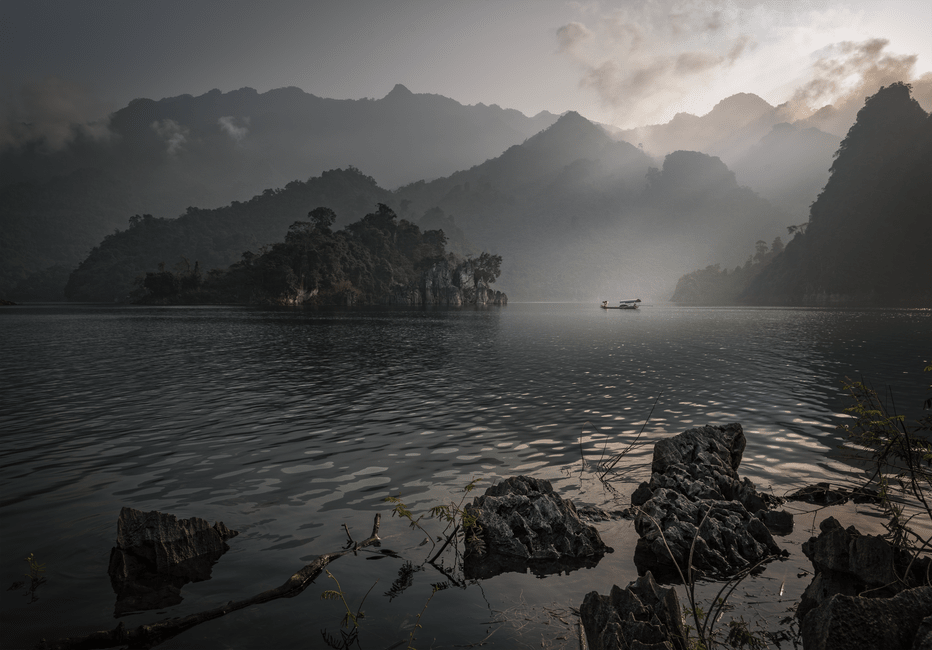
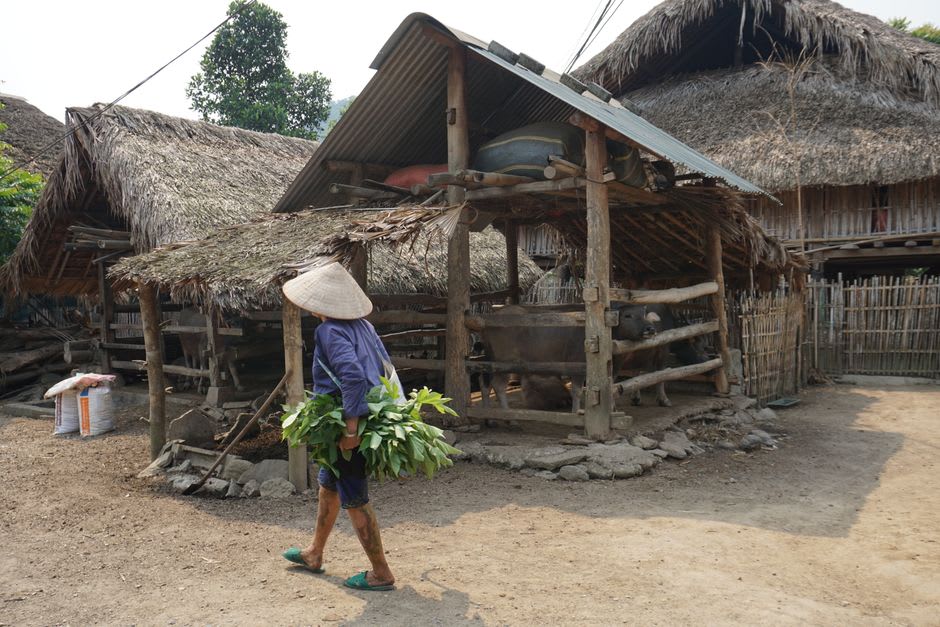
We stayed in a homestay in a Tay stilt-house village on the shore, and our host, an older woman named Mrs. Hien, cooked us grilled fish that had been swimming that same lake a few hours earlier, along with sticky rice steamed in bamboo and a sour soup with herbs I couldn’t name. Lia and I slept on a mat on the wooden floor upstairs, mosquito net tucked in, listening to what I think was a buffalo shifting around somewhere below us. In the morning, mist was still sitting on the water when a neighbor paddled past in one of the traditional wooden boats, standing at the stern the way I’d only ever seen in old photographs, and I remember elbowing Lia awake just to watch.
The park itself was established in 1992 and covers just over 10,000 hectares, and it’s recognized for holding an extraordinary range of biodiversity — 909 recorded plant species, apparently, though I couldn’t identify more than a handful. What struck me more than any statistic was the depth: up to 35 meters in places, which makes Ba Be Vietnam’s highest lake as well as its largest, and you can feel that depth in the color of the water, a green that goes almost black toward the middle. We took a half-day boat trip past Puong Cave, its mouth swallowing the river whole, and past a small island the locals call the Widow’s Island, and our boatman, a young Nung guy who’d grown up two villages over, pointed out a stretch of shoreline where his grandfather used to fish before the park rules changed what could be caught.
What I keep coming back to, months later, is how unhurried it all felt. No tour buses, no speedboats blasting music, just the soft knock of paddle against wood and the karst cliffs doubling themselves in the reflection. We left Ba Be smelling of woodsmoke and mosquito repellent, already talking about coming back in a different season to see how the light changes.
When to go: Aim for September to November or March to April, when the weather turns cool and dry and the lake goes glass-clear — ideal for boat trips and for actually seeing what’s under the surface.