Chapada Diamantina
"We came for a waterfall and left obsessed with a hole in the ground full of light."
A highland park of quartz cliffs, waterfalls, and flooded caves where shafts of light turn cave water an impossible, glowing blue.
Lia and I almost skipped Chapada Diamantina. We’d built our whole Bahia itinerary around the coast, and this inland plateau felt like a detour I wasn’t sure we had days for. Then a bartender in Salvador drew a little map on a napkin and said, essentially, you have not seen Bahia until you’ve seen the chapada, and that was that. We took the long bus up from the coast into a landscape that didn’t look like Brazil at all in my head — no palms, no beach haze, just tabletop mountains going pale gold at dusk, over a thousand meters up, air that was almost cool for the first time since we’d landed in the state.
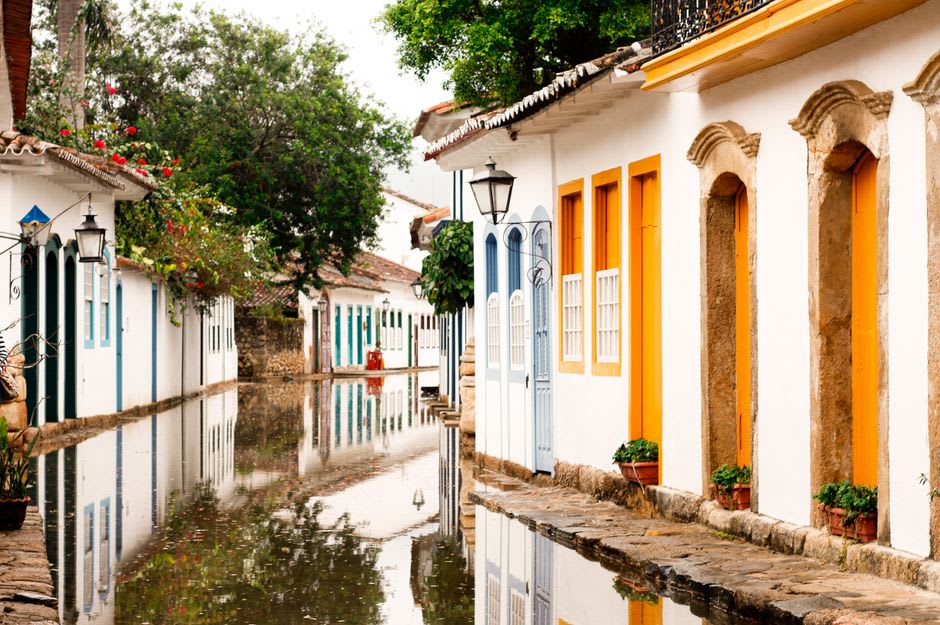
We based ourselves in Lençóis, the old diamond town, and it set the tone for everything. The gems were found here in 1844 and for a few wild decades the town filled with prospectors, and you can still feel it in the architecture — narrow colonial streets, houses painted in cracked blues and ochres, a certain faded grandeur that has nothing to do with beaches. We stayed in a guesthouse with a wall painted the color of a robin’s egg, ate tapioca and coffee every morning on a stoop overlooking a stone bridge, and I remember thinking that a town built on a mineral rush shouldn’t feel this unhurried.
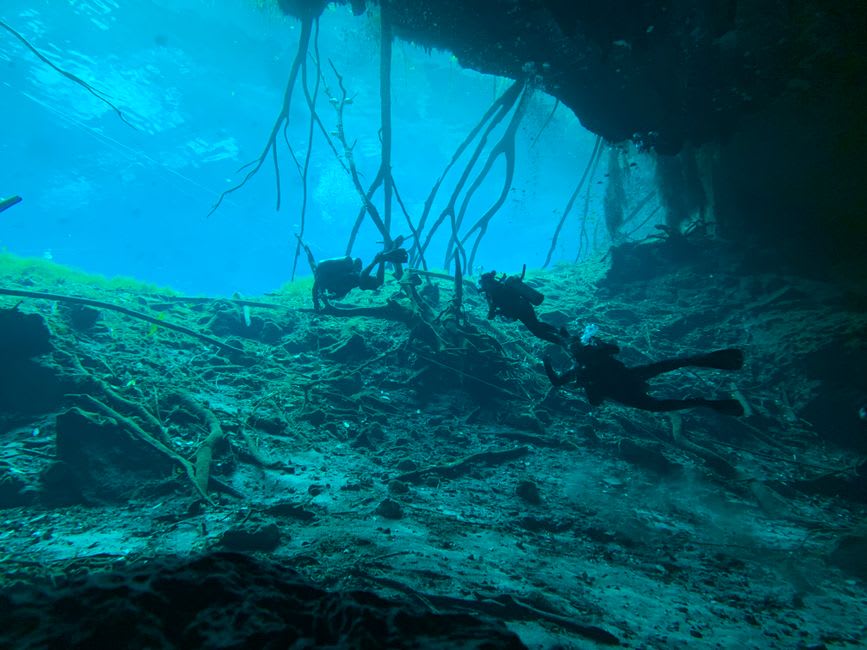
The park itself, established in 1985, is really a collection of separate obsessions. We hiked out toward Cachoeira da Fumaça — at roughly 380 meters, one of the tallest waterfalls in Brazil — and stood at the top rim watching the water essentially turn to mist before it hit the ground, which is where the name “smoke falls” comes from. But it was Poço Azul that undid me. You climb down into what looks like an ordinary cave mouth, and then the guide cuts the flashlights and a single shaft of midday sun comes through a crack overhead and lights the water from below like it’s been plugged into something electric. Lia went in first and I watched her legs disappear into that blue and just laughed out loud, it was so absurd.
We only had three days and I already know we under-scheduled it — there are valleys and trails out there I marked and never reached, and locals kept mentioning other caves, other pools, in that way that makes you realize a place has layers you won’t get through in one trip. I’ve caught myself checking flights back to Salvador just to have an excuse to return to the chapada properly next time, with a full week and better boots.
When to go: We went in the dry season, roughly April to September, and I’d steer you toward that window too — trails stay firm, the waterfalls are still running, and the cave water is at its clearest for that light show to actually work.
Keep exploring
More from Northeast Brazil
 northeast-brazil
 Fernando de Noronha
A volcanic archipelago 350 kilometers offshore where the water is so clear you can count the fish from the boat and spinner dolphins arrive each morning like clockwork.
Explore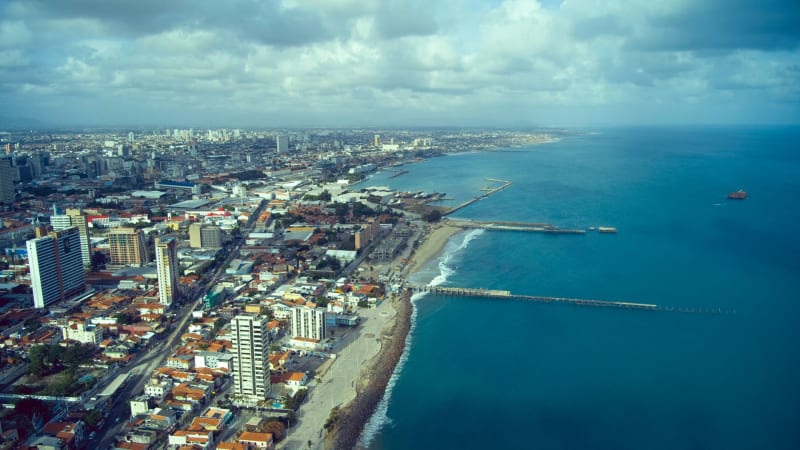 northeast-brazil
 Fortaleza
A loud, honest port city that doesn't care if you like it — and whose street food alone is worth crossing the continent for.
Explore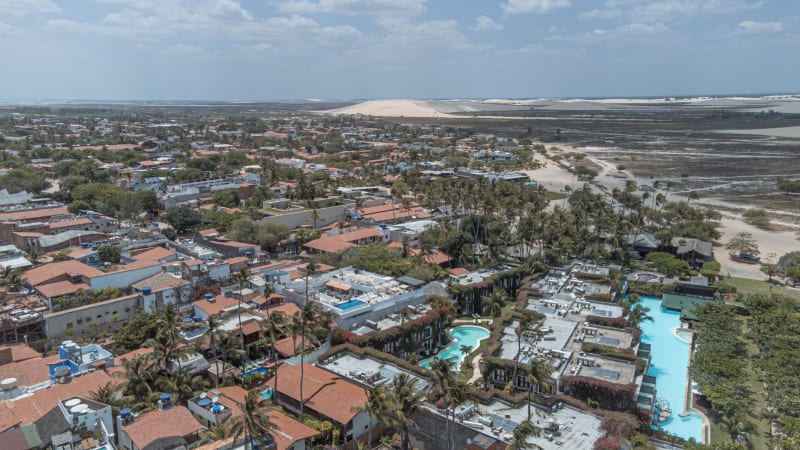 northeast-brazil
 Jericoacoara
A beach town where the streets are still sand, the sunsets draw the entire village to a single dune, and no one seems to know what day it is.
Explore northeast-brazil
 Lençóis Maranhenses
White quartz dunes the size of mountains, and between them hundreds of rainwater lagoons so blue they look painted by someone showing off.
Explore northeast-brazil
 Maceió
Alagoas' capital hides its best feature offshore — natural pools of emerald water so shallow you walk to them and so clear you can read the bottom.
Explore northeast-brazil
 Natal
The City of the Sun earns its nickname with 300 days of blue sky a year and dunes that roll from the city's edge directly into the Atlantic.
Explore