Canoa Quebrada
"The cliffs here are the color of a good terracotta pot, and they glow for about twenty minutes at sunset in a way that stops conversation."
The first thing I noticed about Canoa Quebrada was the color. I had come down from Fortaleza on the coast road, watching the cliffs appear and change — first tan, then rust, then a deep brick red — and when the road finally crested and the full face of the falésias came into view above the beach, the redness of them was almost aggressive. These are not gentle coastal cliffs. The wind has worked them over for thousands of years, cutting channels and overhangs, leaving formations that look deliberate — columns, arches, horizontal striations of different shades where the mineral content shifts. At the hour before sunset, when the angle of the light is perfect, they operate as a natural amplifier for color that the rest of the landscape simply provides.
The town itself exists on top of the cliffs, strung along Rua Broadway — a sandy street that became, in the 1970s and 80s, one of the Nordeste’s first backpacker destinations, and which retains a certain loosened hippie quality underneath the subsequent years of development. The restaurants along it are unpretentious, the bars open-sided to catch the breeze, the shops selling handmade lace and embroidery in exactly the pattern you’d expect. None of this is remarkable in itself. What makes the street work is its position: from the tables of any restaurant on the clifftop side, you look straight out over the falésias and down to the beach, and when the light shifts in the late afternoon, the conversation stops without anyone deciding to stop it.

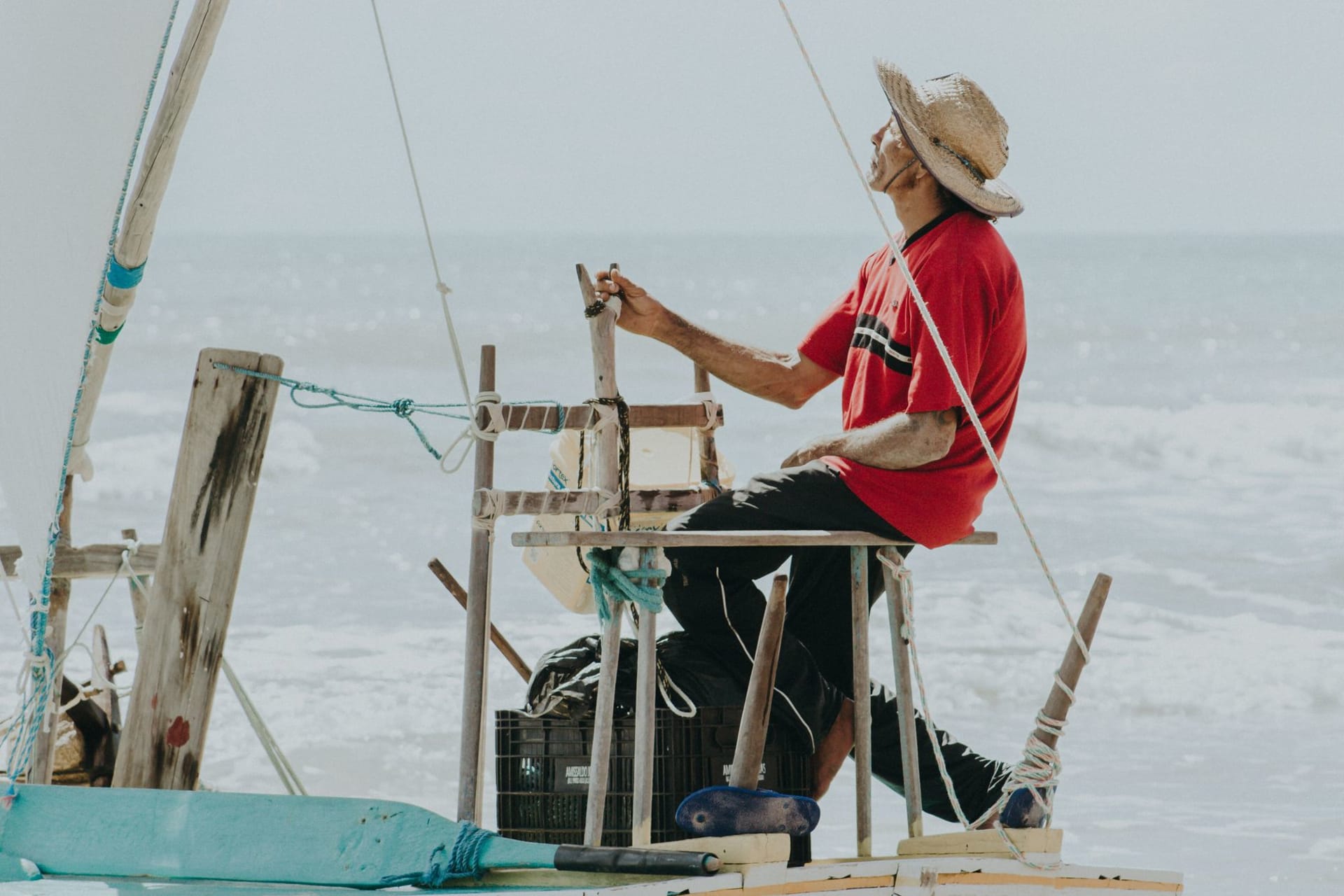
The jangadas. I had read about them in every description of the Ceará coast, and the reality — up close, in the dark, at five in the morning — was different from any representation. The fishermen at Canoa Quebrada still use the traditional wooden raft design: logs lashed together, a mast rigged for a triangular sail, no engine, no cabin, no navigation instrument except experience. They haul the heavy craft through the surf by hand, working in pairs, then the sail goes up and the raft catches the offshore wind and they are gone, indistinguishable from the predawn dark within minutes. They go out for lobster, for fish, for whatever the season offers, and they return in the late morning with the wind behind them, the raft riding through the surf at alarming speed and beaching with a controlled crash that would alarm anyone who didn’t know to expect it.
The beach below the falésias is wide and flat and backed by the cliffs in a way that makes it feel enclosed without being claustrophobic. The colored sand that falls from the cliff faces collects at the base in patterns that shift with every rain — reds and yellows and whites mixing and sorting according to weight and moisture, which is why the local artisans have, for generations, been filling bottles with careful layers of colored sand in miniature landscape designs. I bought one from a man who demonstrated his technique at a table near the cliff edge, pressing the colored sand into the bottle through a straw, and the miniature falésias he produced were, honestly, more precise than anything a photograph had given me.

Buggy rides across the dunes are the standard activity and they are loud and dusty and worth doing once for the access they provide to beaches that would be unreachable on foot. The drivers know where the natural pools form at low tide and the freshwater falls that drop through the cliff face in the wet season. Off-buggy, the beach walk from the main beach south to Praia das Fontes takes about forty minutes and passes through geological variety that a buggy goes too fast to appreciate.
When to go: July through December for the trade winds and dry weather. The northeastern quadrant winds bring the most reliable sailing conditions for the jangadas and the most comfortable beach temperatures. January through April brings rain that can muddy the red cliffs temporarily and occasionally closes the beach road. Sunset — regardless of season — is always worth being at the clifftop for.