
Rason
"Rason felt like North Korea holding its breath and letting a little air out, just this once."
A strange free-trade port on North Korea's northern edge, where Chinese traders, a casino, and fishing boats share a coastline the state rarely opens.
I almost didn’t believe the visa would clear. Lia and I had planned the Rason leg of our trip for months, half expecting a cancellation email the night before we crossed from China. But there we were, at the land border near Wonjong, watching the guards wave through a truck loaded with what looked like construction sand, and then us. Rason isn’t Pyongyang. It doesn’t try to be. It’s a special economic zone stitched together in 2000 from two old port towns, Rajin and Sonbong, and it wears that patchwork identity openly — a place where the usual rules loosen just enough to notice.
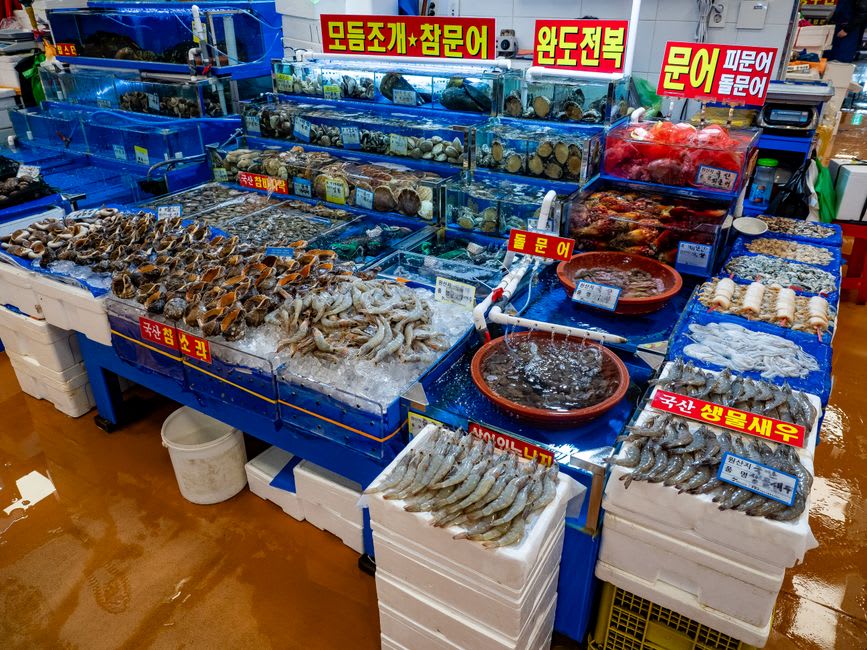
What struck me first was the market. Not because it was grand, but because it was so ordinary, and ordinary is not a word I expected to use here. Chinese traders ran stalls selling clothes, snacks, plastic goods, the same unglamorous inventory you’d find in a border town anywhere. Our guide let us wander a little more freely than I’d been told to expect, and I bought a bag of dried squid from a woman who barely looked up from her phone. Lia leaned over and whispered that it was the most normal thirty seconds we’d have all week.
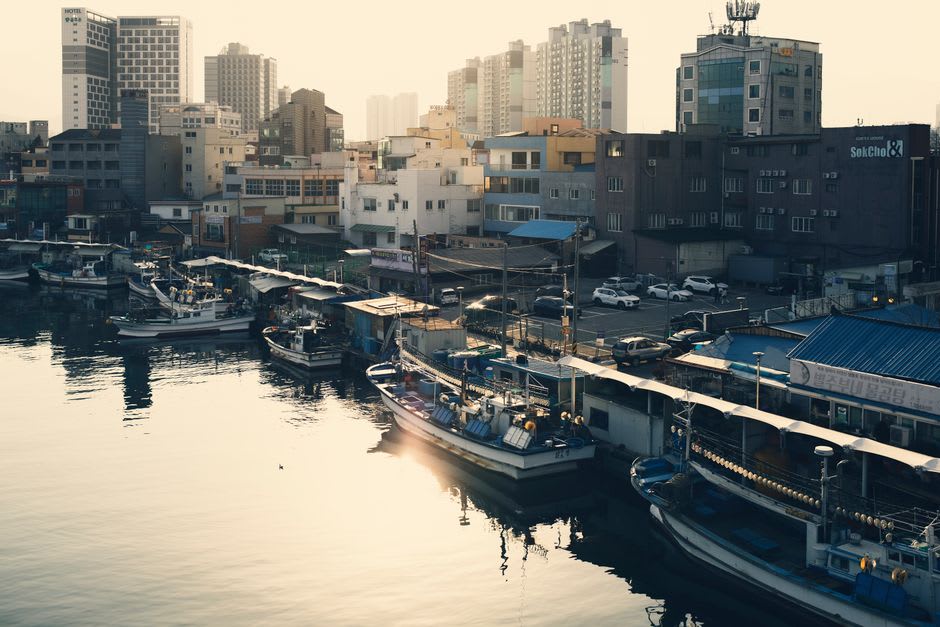
In the evening we walked down to the port, where small fishing boats bobbed against a concrete quay under a sky doing that pale northern thing where dusk lasts an hour longer than it should. Rason was built up as North Korea’s first experiment in trade liberalization back in 1991, and there’s a casino here that caters almost entirely to foreign visitors, its lights looking slightly absurd against the surrounding quiet. We didn’t go in — it felt like a room built for someone else’s evening — but we did stand outside it for a while, watching Chinese businessmen come and go, and I remember thinking that this whole zone was still waiting for the regional trade hub it was promised to become. It hasn’t arrived yet. Maybe it won’t.
What I’ll remember most is how unfinished it all felt, not in a sad way exactly, more like a sketch someone started decades ago and kept meaning to return to. Lia said it best on the drive back to the border: Rason isn’t a place that performs for visitors the way parts of Pyongyang do. It’s a place still deciding what it is.
When to go: September or October brought us the mildest weather for walking the port and market streets, though access here can shift with little warning, so treat any travel plan to Rason as provisional until a tour operator confirms it’s actually running.