
Mount Paektu
"The lake was so blue and so still that for a second I forgot every layer of meaning it had been assigned, and just looked at it."
There are places whose significance has been so thoroughly layered with myth and politics that encountering the actual physical thing produces a kind of disorientation. Mount Paektu is one of those places. By the time I reached its summit — after a drive through the volcanic uplands of Ryanggang Province that felt like driving across the surface of the moon — I had been told so many things about this mountain that the mountain itself seemed surprised to be real.
The caldera lake, Lake Chon, is the first thing you see as you crest the rim: a disc of impossible blue nearly ten kilometers across, sitting in the bowl of a dormant volcano at 2,744 meters, surrounded by crater walls of grey and rust-colored rock. The color of the water is one of those facts you have to see to believe. In the high October light it was somewhere between cobalt and turquoise, with a clarity that gave the impression you could see the bottom — though it’s 384 meters deep and you can’t. I stood at the rim and felt the altitude pressing gently on my chest. The wind came off the crater in cold, mineral gusts.
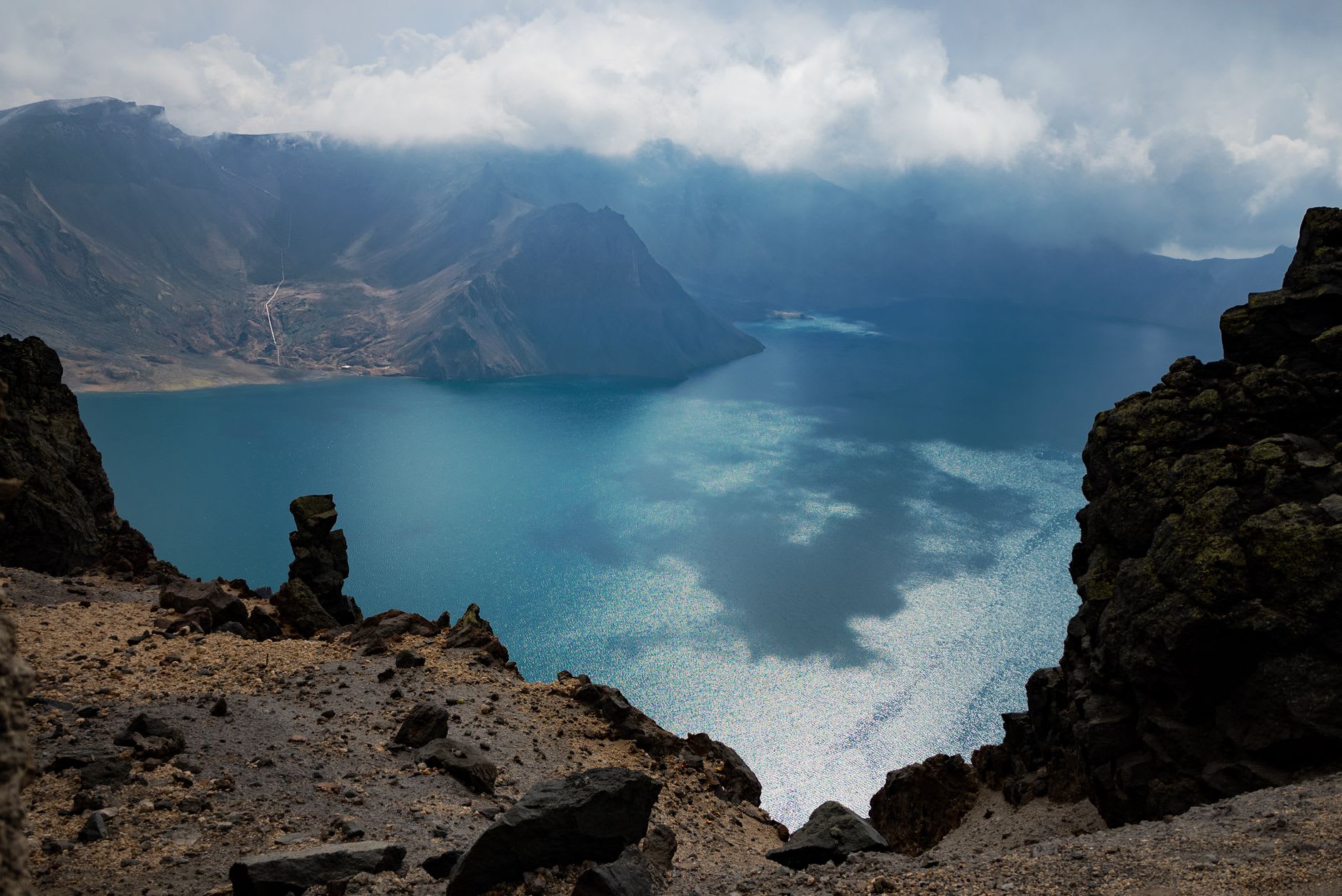
The regime’s mythology about this mountain is total and long-established. Kim Jong-il was officially born in a cabin on the mountain’s slopes during his father’s guerrilla campaign against the Japanese — a claim that historical records suggest is not quite right, but that has been repeated so consistently that the cabin itself, now maintained as a shrine, has acquired the patina of truth. I visited it on the way up: a log structure in a clearing, surrounded by older trees with the names of revolutionary songs carved into their bark by grateful soldiers, so the story goes. The trees are enormous — some of the carvings are twenty feet off the ground, reachable only by ladder. The mountain doesn’t care about any of this. It smokes its sulfur vents and holds its lake and predates every dynasty that has claimed it.
Walking the rim trail in the afternoon, I lost my guides briefly — not intentionally, but they had stopped to consult about something and I rounded a curve and for about three minutes stood completely alone at the edge of a Korean volcano with China visible in the valley below. The lake was silver now, the light having shifted. A hawk turned in the updraft above the crater wall. I thought about the fact that this mountain’s image — the sacred peak with the blue lake — appears on everything from the national seal to the military’s cap badges, and that outside this specific viewpoint you could probably spend a decade in North Korea without encountering anything as unmanipulated as this view.
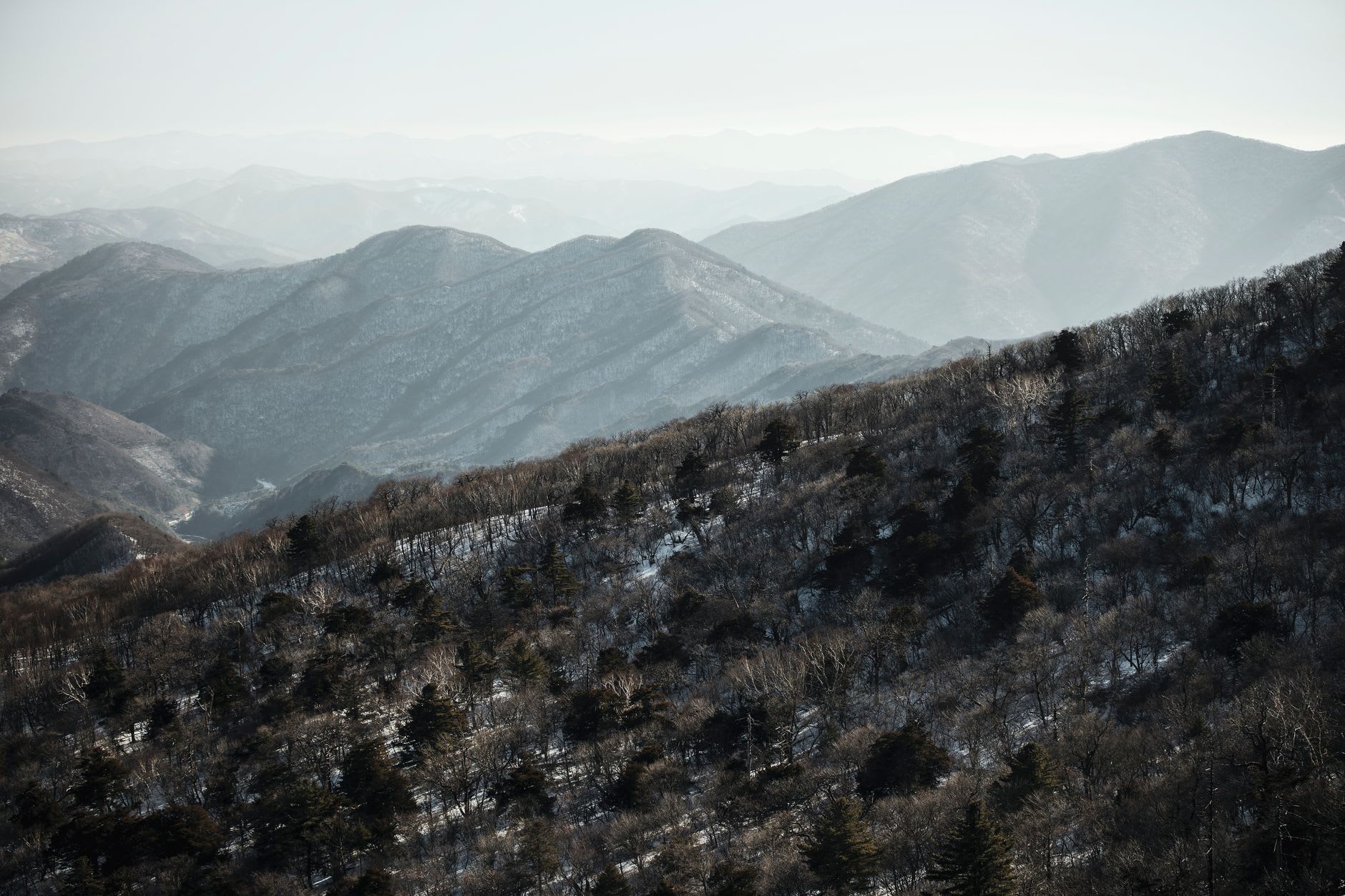
The drive back down through the volcanic fields took two hours. The landscape was vast and austere — treeless plateaus of dark rock, wetlands where cranes fed in the shallows, a sky wide enough to make you feel your own smallness in a way that felt medicinal rather than threatening. My guide, who had been quiet since the rim, suddenly said: “The mountain has power.” She wasn’t performing. She seemed to mean it. I thought about how a place and its mythology become genuinely inseparable eventually, how the lake doesn’t know it’s supposed to be a metaphor, but that doesn’t stop it from being one.
When to go: Summer (July to August) offers the most reliable clear weather over the caldera — cloud cover can obscure the lake view entirely on grey days. The summit access road is typically closed by November and doesn’t reopen until June. Getting to Paektu requires either a domestic flight to Samjiyon or a very long drive, and both need to be arranged through your tour operator well in advance.