
Mount Myohyang
"The monks are gone but the incense smell stays in the wood, and that's a kind of persistence that no ideology has ever managed to erase."
The road to Myohyang climbs out of the Pyongyang flatlands into a different North Korea entirely. The valleys narrowed, the poplars gave way to pine, and somewhere near the Chongchon River the air changed — cooler, carrying something resinous I couldn’t name but recognized as the smell of altitude. My guide, who had been explaining the agricultural achievements of the cooperative farms we’d passed, went quiet. Even she seemed to be listening to something else.
Pohyon Temple appears suddenly around a bend in the path, its curved rooflines rising from a grove of ancient ginkgos. It was built in 1042 during the Koryo Dynasty, nearly a thousand years before anyone called this place the Democratic People’s Republic of anything. The wooden pillars are painted in green and red that has faded to something subtler — ochre, rust, the color of dried lacquer. Incense burned in a stone urn by the entrance, and the smoke rose straight up in the windless morning air. There were no monks that I could see, but the temple was clearly maintained, swept, tended. Someone is still caring for this.
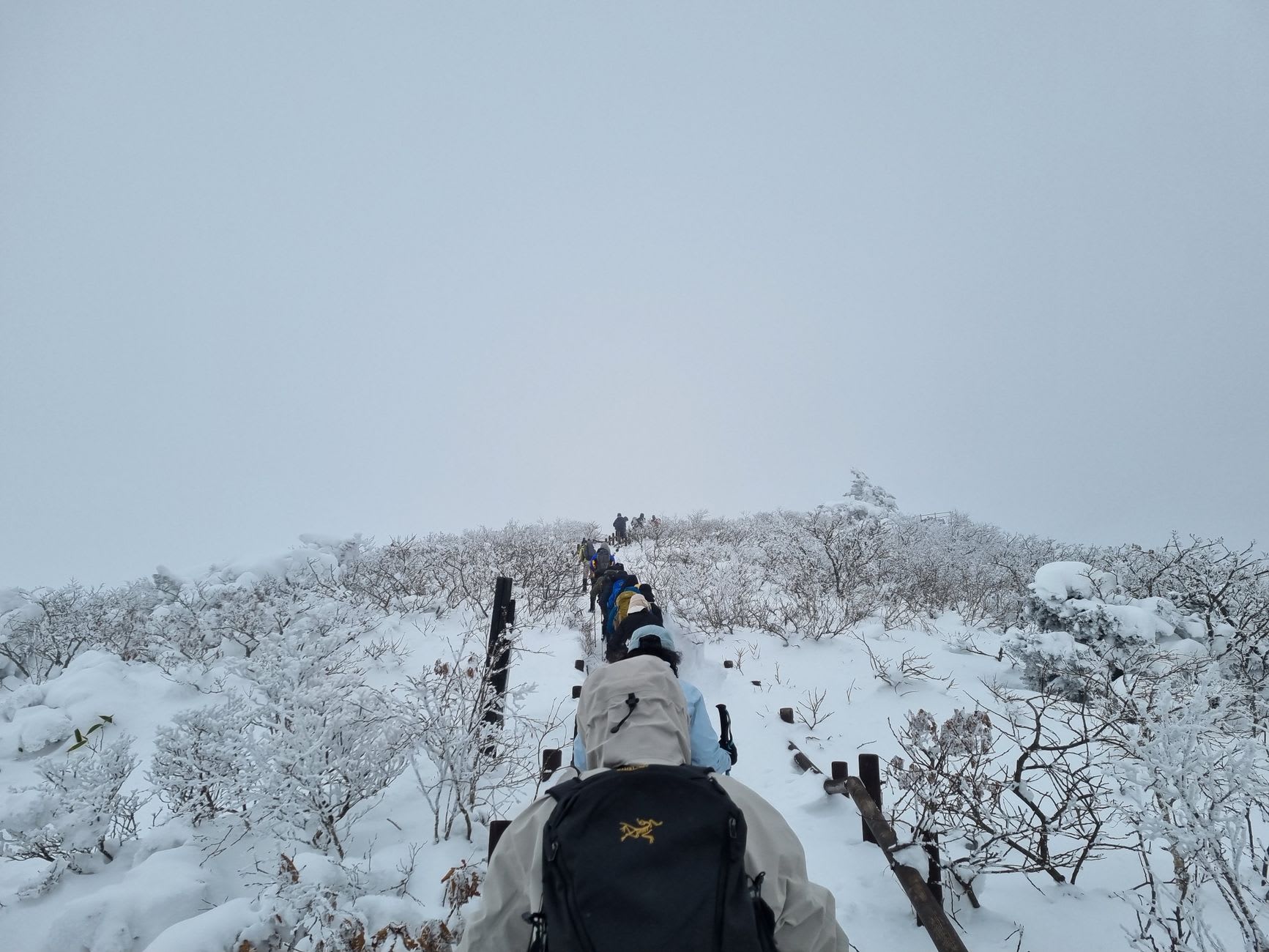
The mountain itself is the reason Myohyang has been called sacred since before Korean history was written down. The name translates roughly as “Mysterious Fragrance Mountain,” and the fragrance in question is supposedly the smell of the divine seeping through the rock. I am not religious but I understood the impulse — the forested ridges rising in successive waves, the waterfalls dropping through granite channels, the way the morning fog pools in the lower valleys and burns off slowly to reveal ridgeline after ridgeline going north. Standing on the trail above the temple, I had the sensation — rare in North Korea — of being genuinely, completely alone.
The official attraction up here includes the International Friendship Exhibition, a vast underground complex of gifts given to the Kim leaders by foreign dignitaries. It is the strangest museum I have ever visited: rooms and rooms of crystal vases, painted lacquers, a stuffed crocodile holding a drinks tray, a train carriage from Stalin. The juxtaposition of this curatorial fever dream with the Buddhist mountain outside it produces an almost surreal doubling. I kept thinking about the ginkgo trees. About what they had seen.

In the afternoon, walking back down through the temple complex, I stopped beside the stone urn where incense still burned. A temple caretaker — an older woman in a grey jacket — was sweeping the flagstones with a bundle of twigs. She glanced at me without alarm, then went back to sweeping. The sound of the twigs on stone, the smoke rising, the ginkgo leaves coming down in slow yellow spirals: for about thirty seconds I forgot every layer of context and just stood there. That’s what Myohyang does.
When to go: October is magnificent — the broadleaved trees turn amber and the crowds thin after the summer tour season. May is also excellent, when the temple gardens bloom and the trails are clear of snow. Winter visits are possible but the mountain roads can be treacherous and the cold at altitude is extreme.