
Kaesong
"The chess players in the courtyard have been there longer than the border — and they play like it."
Kaesong sits fifty kilometers south of Pyongyang and about six kilometers north of the DMZ, and that proximity saturates everything. The city itself is old — it was the capital of the Goryeo Kingdom for nearly five centuries, and its old quarter has the kind of worn, unlacquered authenticity that is almost impossible to find anywhere else on the peninsula. The stone walls of the Koryo Museum, a former Confucian academy, have been absorbing Korean winters for seven hundred years. I put my hand on one and tried to feel the arithmetic of that.
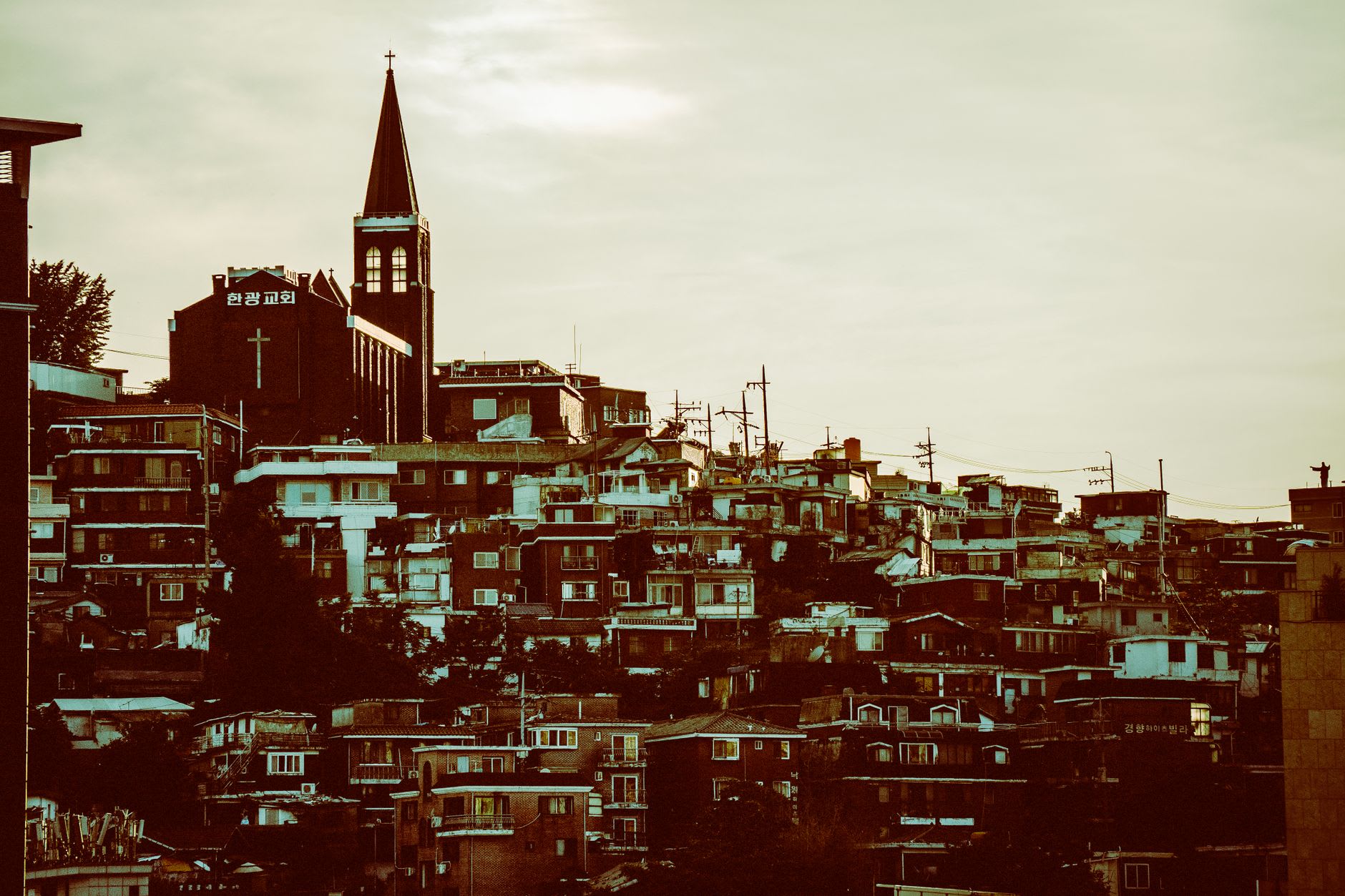
The preserved Goryeo-era neighborhood unfolds in narrow lanes between stone walls and tile-roofed hanok. Families live here — I could hear a radio through one wall, the smell of doenjang jjigae from another — and the effect is of a history that hasn’t been archived so much as inhabited. Cats moved through the lanes with the calm authority of creatures who have never been asked to perform. An old man sat in a doorway mending something, looking up at me with frank curiosity and not much else.
Lunch that day was pansangi — the traditional Kaesong meal of twelve to fifteen small dishes served in bronze bowls, a serving style that dates to the Goryeo court. The dishes came one after another: pickled mountain vegetables, a soup of doenjang with tofu, braised lotus root, a tangle of glass noodles with mushrooms, a small mound of white rice so polished it gleamed. It was the meal that made me understand that Korean cuisine’s obsessive variety — the insistence on many small things rather than one large thing — is not an aesthetic choice but a philosophical one. Abundance expressed through miniaturization. The table as a kind of argument.
The Koryo Museum is housed in what was once the Songgyungwan, the Confucian academy where Korea’s scholar-officials were educated for centuries. The courtyards have a stillness that feels earned. Stone doorstep markers, worn concave by a thousand years of feet, line the entrances. Inside, celadon pottery from the Goryeo period sits in glass cases — the Korean celadon green, that particular grey-green the color of mist, that artisans carried to a refinement the Chinese acknowledged as superior to their own. I stood too long in front of a small water bottle, trying to understand how someone had produced that color from clay and fire.
In the late afternoon, walking back through the old quarter toward the bus, I noticed two men playing janggi — Korean chess — on a low table in a courtyard. They were completely absorbed. The light was going golden and the shadows of the tile rooflines fell across the board. Neither man looked up. I thought about the fact that this game, in this courtyard, in some form or another, has been happening in Kaesong for as long as anyone has lived here — through the Goryeo kings, through Japanese occupation, through division and whatever comes next. The game continues. That seemed important.
When to go: Spring and autumn are ideal — the Goryeo tombs outside town (a UNESCO World Heritage Site) are most atmospheric when the surrounding hills are green or gold. Summer gets hot and humid; winter is bitterly cold but the snow on the tile rooftops is extraordinary if you can arrange it.