Hamhung
"They build the missiles here, they told me. Then the guide handed me a bowl of noodles and we talked about noodles."
Hamhung appears in the travel literature as a curiosity — North Korea’s second-largest city, almost never visited, a place where the itinerary bends toward industry rather than monuments. What that literature doesn’t adequately convey is how different it feels from Pyongyang: less polished, more purposeful, with the specific energy of a city that has a job to do. The Vinalon fiber plants and the chemical complexes on the city’s outskirts are not ornamental. They produce things. The smoke from the industrial district is the smoke of a place that is actually making something, and after days of Pyongyang’s careful pageantry, it felt — unexpectedly — like relief.
The city sits on the Songchon River estuary where it opens toward the East Sea, and the riverbanks have the wide, flat quality of industrial waterways everywhere — concrete revetments, rusting equipment, a few fishing skiffs pulled up on mud banks. The old city center, built on the foundations of a Joseon-era settlement, is now mostly 1950s and 1960s construction — the original city was almost completely destroyed during the Korean War and rebuilt by socialist architects from East Germany and the Soviet Union. You can see it in the proportions: wide streets meant to express collective dignity, apartment facades with a certain blunt confidence, public squares built for rallies rather than commerce.

The noodles, though. Hamhung is the other great cold noodle city of the Korean peninsula, and its version — hamhung naengmyeon — uses sweet potato starch rather than Pyongyang’s buckwheat, producing a chewier, more translucent noodle that arrives in a sharp vinegar and gochugaru sauce rather than cold broth. The texture is intense: the noodles resist the teeth for a moment before giving, and the sauce has a heat that builds slowly across the roof of the mouth. We ate in a restaurant where the tables were full of people who appeared to be actually eating lunch rather than performing it for our benefit, and the ordinary noise of that — the clink of spoons, a child complaining, the television above the counter broadcasting something athletic — felt like a gift.
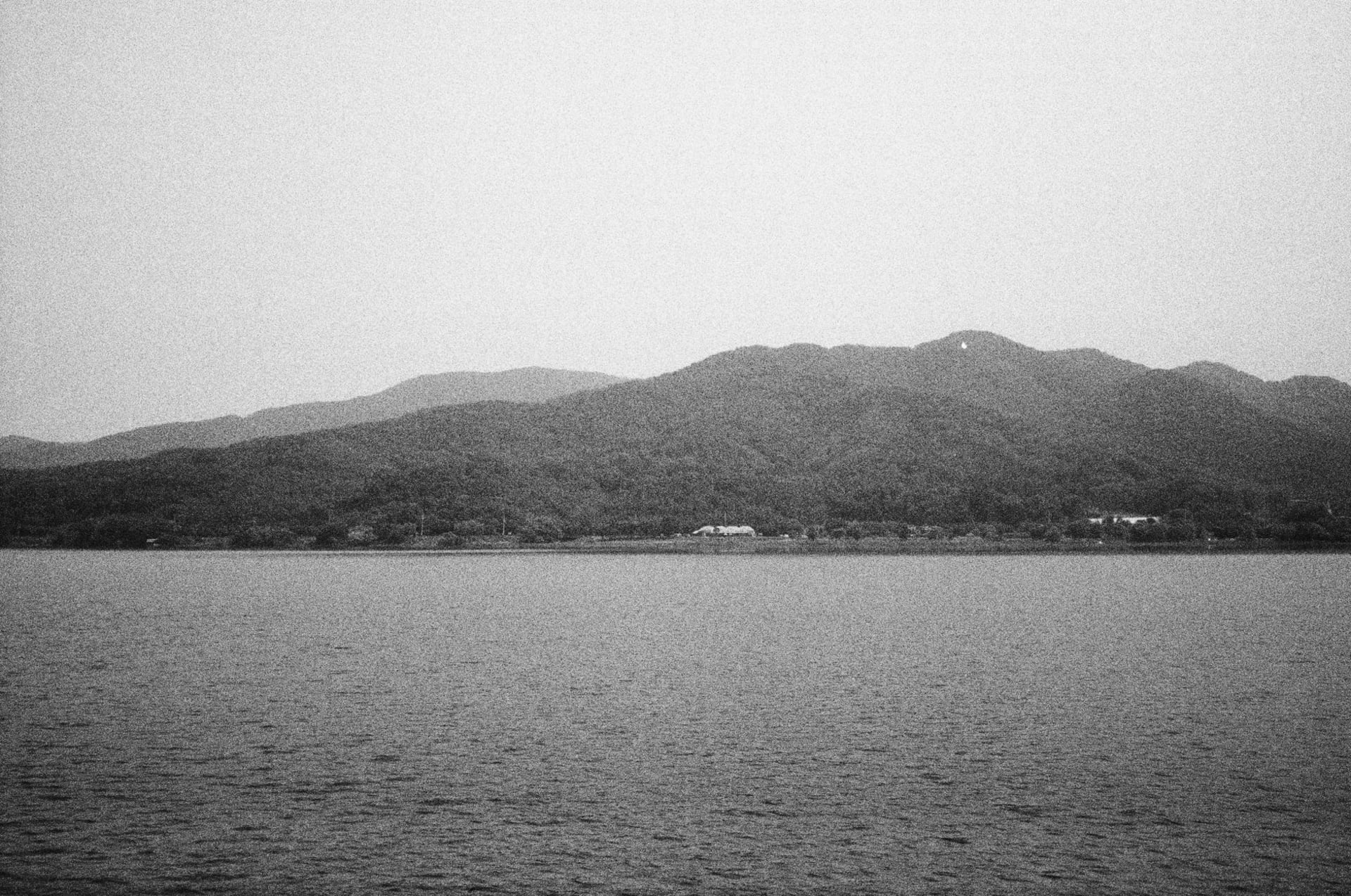
The coastal area east of Hamhung opens onto long, grey-sand beaches where the East Sea comes in hard. I was taken to one of these on a grey morning, and a group of students in matching tracksuits was doing military-style calisthenics on the beach while their instructor shouted cadence. The sea was rough, white-capped, not particularly inviting. A tugboat moved very slowly along the horizon. The students finished their exercises and filed off the beach in formation, and then for about twenty minutes the beach was empty and the sea made all the noise.

The Majon Beach area has been developed — somewhat ambitiously — as a resort zone, with hotels and facilities built for domestic tourism. On the day I visited it was not busy. A carousel stood motionless in the sea wind. The restaurants were open. A vendor selling dried squid sat in a canvas chair reading a book, and when I passed he looked up and then looked back at his book, which was the most normal thing anyone in North Korea had done around me in five days, and I was so grateful for it that I almost said something.
When to go: July and August bring North Korean domestic vacationers to the coastal resorts and the city has something close to a holiday atmosphere. Autumn is the best time to travel the northeastern region generally — October through early November offers cool, clear days. Hamhung is typically reached from Pyongyang by a domestic flight to Sondok Airport or via the long-haul train; both must be arranged through your operator.