Talava Arches
"No one built this. The sea just had ten thousand years and nothing better to do."
I walked to the Talava Arches on a morning with high cloud and flat sea, following the track north from the road through a coastal forest of purau trees and coral outcroppings. The track takes maybe forty minutes and is marked by faded signposts that would be easy to miss if you weren’t paying attention — but on Niue there’s not much else to be distracted by, so you pay attention to everything. I could hear the sea before I could see it, a low rhythmic sound coming through the rock itself, like the island was breathing.
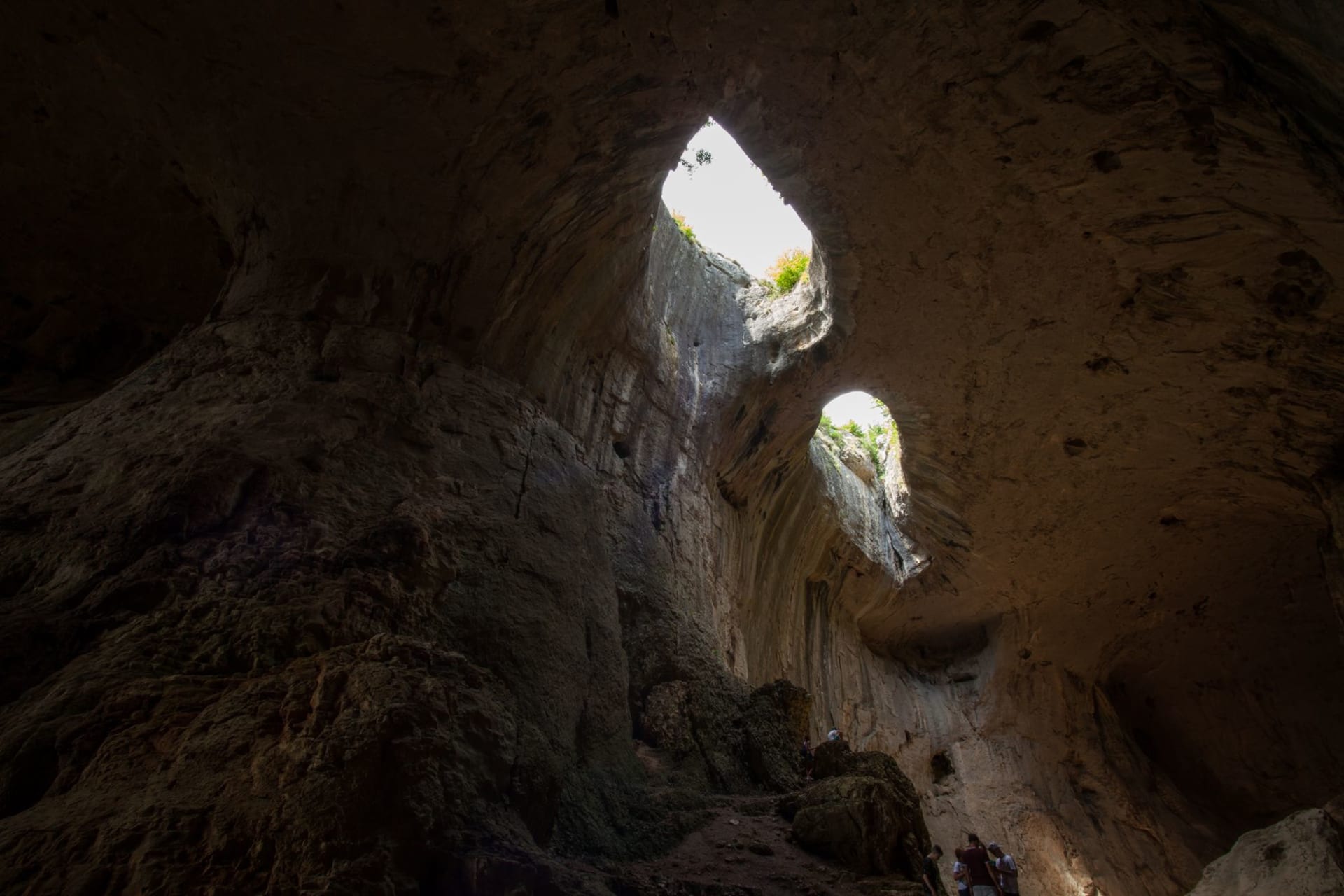
The arches appear suddenly as you scramble down the last section of limestone toward the water. Two natural tunnels carved through the coral rock by millennia of wave action, each large enough to walk through upright, with the Pacific visible as a bright frame at the far end. The scale is what gets you first. Each arch is perhaps ten metres high and twenty long, the ceiling ridged with fossil coral and hung with small stalactites in the deeper recesses. The rock is the colour of old bone, streaked rust and grey where the salt has worked into it.

At low tide you can walk through both arches and stand on the outer shelf where the rock drops into deep water. The sea here is not the protected lagoon water you get on other Pacific islands — there’s no reef barrier, just open ocean shelf dropping away quickly to blue-black. When I stood at the outer edge and looked down, I could see the coral below through fifteen or twenty metres of absolutely clear water, the shapes precise and still as if suspended in glass. A small reef shark drifted below me parallel to the shelf edge, going nowhere in particular, and disappeared into the deeper blue.
What I wasn’t expecting was the acoustics. Inside the larger arch, when a wave pushes into the passage, the sound is amplified and deepened by the rock until it becomes something between a groan and a chord. You feel it in your chest more than you hear it with your ears. I sat in there for longer than I meant to, listening to the sea play the limestone, watching the light on the water shift as the clouds moved overhead.

The arches are at the northern tip of Niue, past the village of Hikutavake, and the area around them is one of the more remote corners of an already remote island. On the afternoon I visited, I saw no one else for the entire two hours I was there. A pair of white terns traced lazy loops above the cliff edge. The silence, once the waves had retreated from the arch, was total. I’d been on the island four days by then and was beginning to understand that the silence here isn’t emptiness — it has texture, almost weight. You sit in it differently than you sit in noise.
When to go: The arches are walkable year-round, but at high tide the outer shelf is submerged and the full passage through both arches isn’t possible. Low tide on a calm day gives you the full experience. The walk is exposed in places — bring sun protection and water. Shoes with grip are essential; the limestone surface around the arches is wet and irregular.