Limu Pools
"The ocean refills the Limu pools every thirty seconds and takes everything you were thinking about with it."
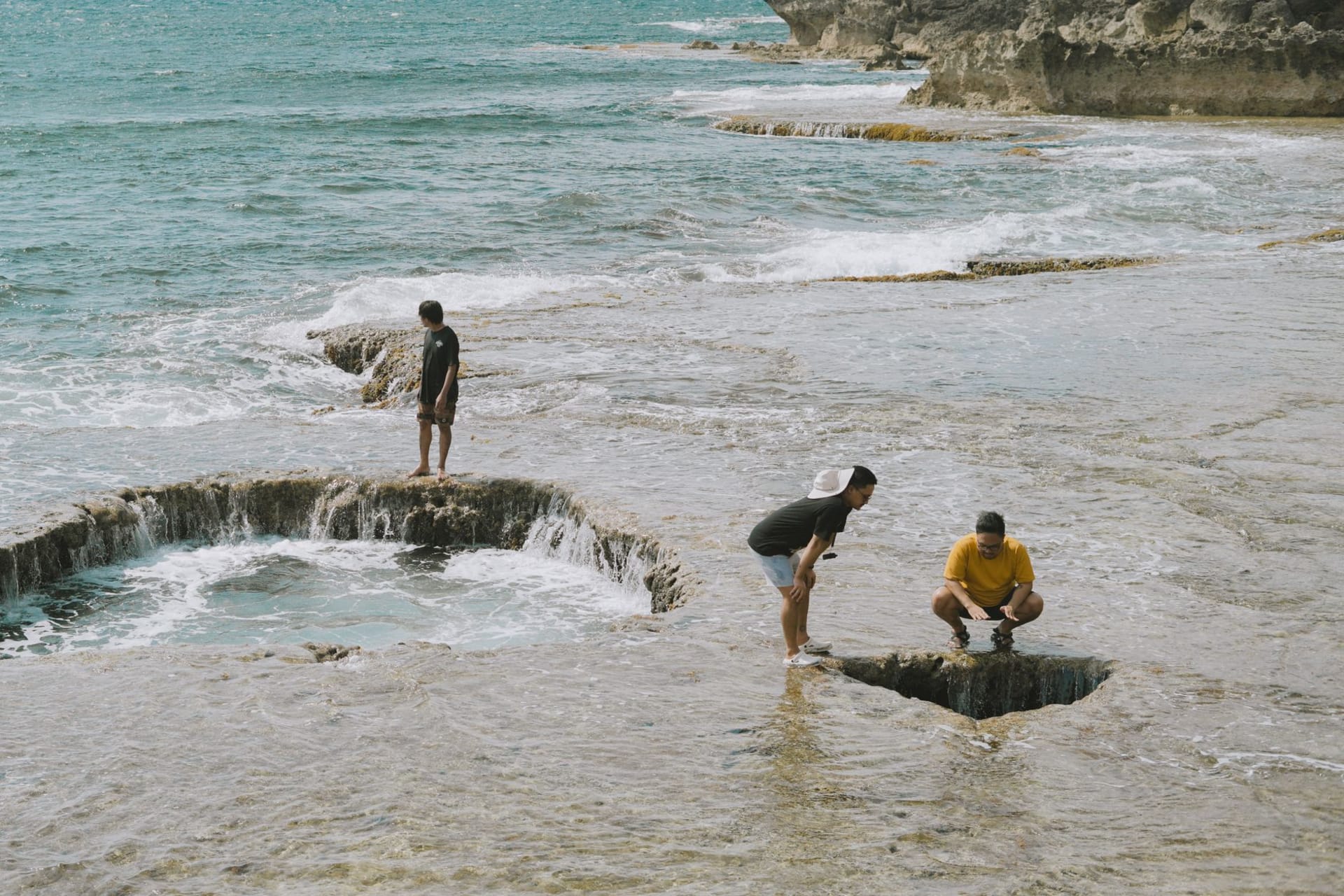
The Limu Pools are not dramatic the way Togo Chasm is dramatic. There’s no descent, no scramble, no moment of vertigo. You park at the side of the road, walk through a grove of pandanus trees for five minutes, and arrive at a series of natural basins in the coral shelf where the ocean comes and goes with each swell. The first time I visited I almost drove past. The second time I spent four hours there and lost track of the afternoon completely.
What the pools have is rhythm. The ocean fills them from below through channels in the coral, a slow surge of warm seawater that lifts you off your feet if you’re standing in the right place, then drains back through the same gaps with a long, sighing pull. In the larger pools you can float without effort, face up, watching the sky and the tops of the palm trees onshore, and the sensation is something between swimming and being carried. The water is always moving but never frightening — the pools are naturally protected by their lip of raised coral, so even when the swell is running outside you’re buffered from the worst of it.

The coral inside the pools is alive and rich — brain coral, staghorn, small table formations — and at low tide you can see it clearly through water that carries forty metres of visibility on a decent day. I snorkelled in the outer pools one morning and counted maybe thirty species of fish in an hour: parrotfish doing their slow methodical grazing, small purple and yellow wrasses, a pair of moorish idols that kept appearing at the edge of my vision and retreating when I turned toward them. There’s a nervousness to the reef fish here that you don’t get at heavily visited reefs — they’re not used to crowds, which makes them more skittish but also, in some way, more themselves.
Late afternoons at Limu have a particular quality. The light hits the water at a low angle and the spray from the surging pools catches it and for a few minutes everything glitters. A local family arrived one evening while I was still there — parents, three young kids, a grandmother — and set up a picnic on the coral shelf while the children played in the pools. The grandmother sat in a shallow section with water up to her waist and didn’t move for the entire hour I was still there. She looked like someone who had been coming to this exact spot for sixty years and intended to keep doing so.

The pools are located on the central west coast, south of Alofi, and are one of Niue’s more reliably accessible swimming spots — unlike the ocean itself, which is entered via ladders down the cliff face and requires reading the swell carefully. The pools give you the saltwater Pacific experience without the cliff-entry commitment. That said, don’t dismiss them as a tamed version of the real thing. On a bigger swell day, the surge into the pools is powerful and the channels between them run fast.
When to go: The Limu Pools are swimmable year-round, but the clearest water and calmest conditions are June through October. Avoid them in the days after a major swell when the water is churned. Sunset visits are particularly good — the light is better and the temperature, if you’ve been in the sun all day, makes the water feel even cooler and more welcome.