
Huvalu Forest Conservation Area
"I kept expecting the forest to end. It just kept going, getting quieter and stranger."
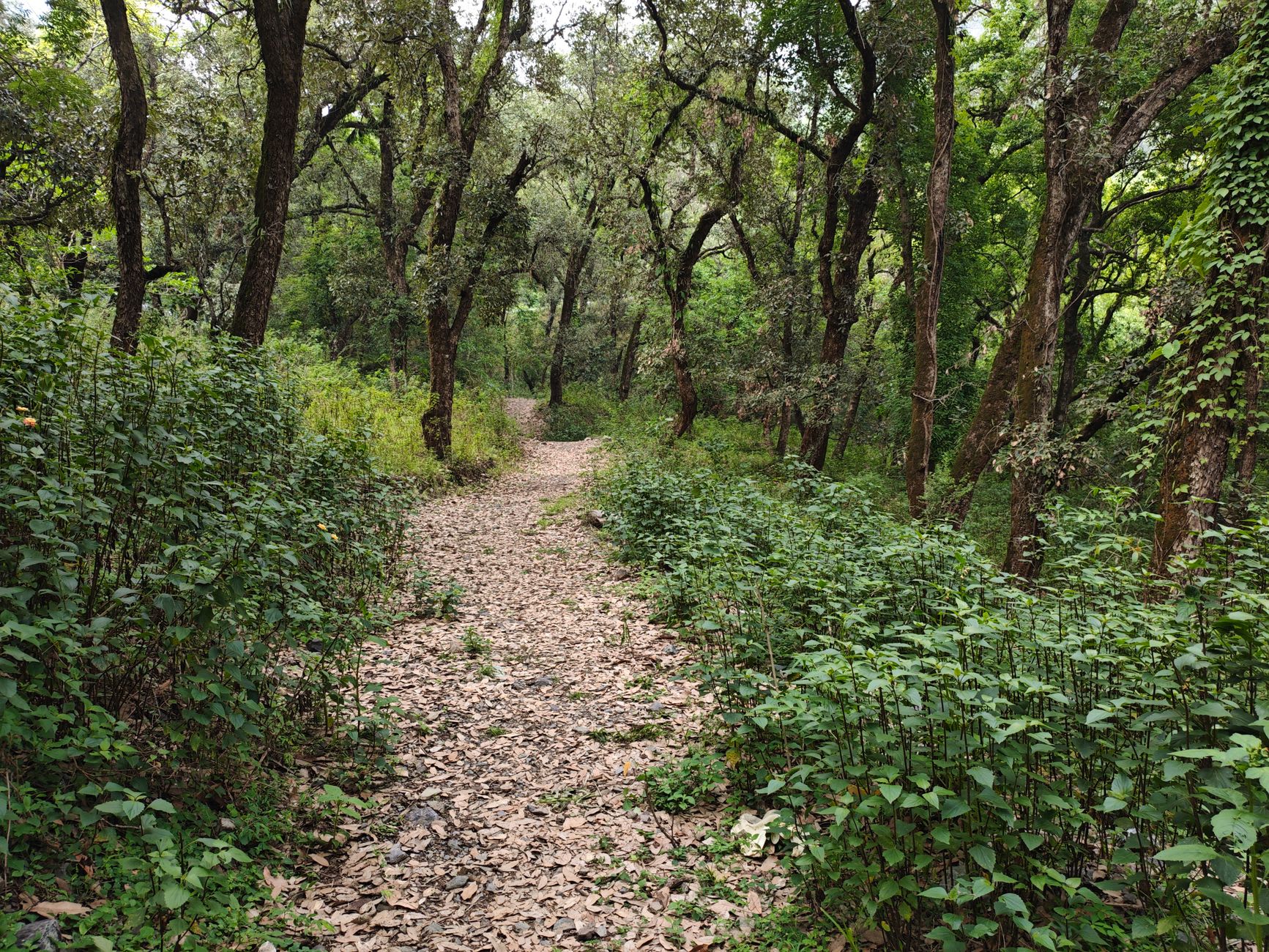
I went into the Huvalu Forest on a morning after two days of rain and the whole place was breathing. Not metaphorically — the humidity was high enough that every surface of leaf and rock was steaming faintly, and the air above the trail carried a mist that caught the light and scattered it into something softer and more diffuse than ordinary sunlight. The forest floor in Huvalu is coral limestone, which means it’s uneven and pitted in ways that make walking attentive work, but the vegetation above it — the tamanu trees, the banyan, the climbing ferns that drape everything in green — creates a canopy so complete that by mid-morning it still felt like dawn under the trees.
Huvalu covers roughly 5,400 acres of the eastern and central plateau of Niue, managed by local communities as a conservation reserve. There’s no lodge, no ranger station, no interpretive centre. There are tracks, marked but not manicured, leading through forest that feels genuinely ancient — old-growth tamanu trees with buttressed roots three metres high, decaying logs hosting entire ecosystems of ferns and moss and tiny orchids. Niue has no native land mammals and very few introduced species, which gives the forest an unusual quality: the ecological community here has been evolving in relative isolation for thousands of years.
The birds are what you come for if you know what you’re listening for. The Niue fruit dove — a small, extraordinarily colourful bird found nowhere else on earth — lives in Huvalu, though seeing one requires patience and luck in roughly equal measure. I heard them constantly, a series of soft accelerating whistles, but caught only brief glimpses: a flash of green and copper in the canopy, gone before I could properly focus. More reliable are the white terns and red-footed boobies visible at the forest edges, and the mynah birds that have colonised the tracks and will walk three paces ahead of you for minutes at a time before bothering to move.
The deeper you go into the forest, the more the coral limestone beneath your feet begins to speak. In wet weather, water collects in the pits and hollows of the rock and you cross sections of trail where you’re essentially stepping between natural pools, the water dark and still and probably very old. There are caves in the deeper sections of Huvalu that local communities consider culturally significant and that aren’t on any trail map. I didn’t seek them out — there are places where not being shown something is the right outcome — but their presence as a weight in the landscape is something I was aware of.

The trail from Hakupu into the forest takes you along the southern edge of the reserve and gives a good sense of the ecosystem without requiring full-day commitment. But if you have time, the longer eastern tracks drop toward the coast eventually, where the forest thins and the cliff edge gives views out over water you can’t access from this angle anywhere else on the island. I came out at a clifftop at around two in the afternoon and stood looking at the Pacific for a long time. The forest behind me was humming with its invisible life.
When to go: The forest is accessible year-round but the drier months (May to October) make the coral limestone tracks far less slippery. Bring plenty of water and solid footwear — the terrain is uneven enough to turn an ankle on tired legs. Start early to avoid walking the exposed clifftop sections in midday heat. A local guide dramatically improves the bird-watching experience.