Karnak
"A hundred and thirty-four columns. I counted, badly, and gave up, and just stood there feeling correctly sized."
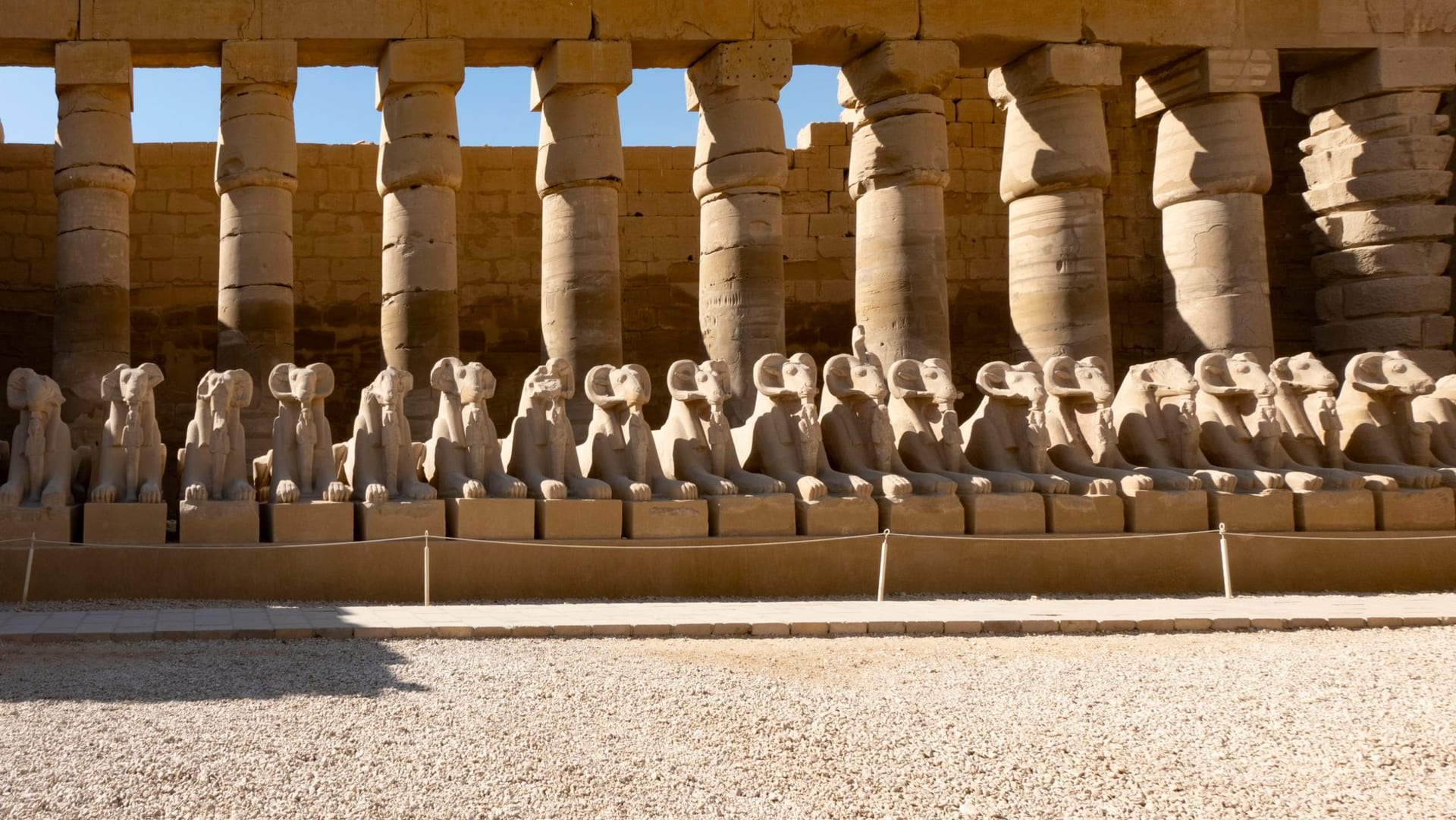
The trick with Karnak is arriving before the tour groups. I set my alarm for four-thirty and was at the entrance gate when it opened at six, the sky still pale enough that the muezzin’s call from a distant minaret carried clearly across the fields. Inside, the Avenue of Ram-Headed Sphinxes stretches toward the first pylon — a gateway so wide and so tall that for a moment I could not compute its scale. Then I was through it and into the hypostyle hall, and I stopped walking entirely.
One hundred and thirty-four columns. Each one nearly twenty-four metres tall, carved from sandstone in sections and fitted together with a precision that modern engineers still study. The hall covers five thousand square metres and in the early light, with the sun coming sideways through the gaps between the outer columns, the effect is of standing inside a stone forest while the light filters through as if through leaves. The papyrus-capital columns along the central nave are taller than the outer ones, creating a clerestory that fills the axis with direct light while the side aisles remain in shadow. The Egyptians engineered with light as deliberately as they engineered with stone.

Beyond the hypostyle hall, the complex unfolds in a succession of courts, chapels, sanctuaries, and subsidiary temples that took over two thousand years to accumulate. Each pharaoh added to what existed — some expanding, some appropriating, some erasing the names of predecessors and substituting their own. Hatshepsut’s obelisks still stand, their electrum tips long since stolen but their heights intact: twenty-nine metres of Aswan granite, each shaft carved from a single piece of stone. Thutmosis III built a wall around them to conceal them after her death. The wall eventually fell and here the obelisks stand, outlasting everything.
The Sacred Lake lies at the southern end of the main enclosure — a rectangular pool of still green water that the priests used for ritual purification and that now reflects a large stone scarab said to grant wishes if you circle it seven times. I circled it six times and stopped there, feeling ambivalent about pressing my luck.

The son et lumière show at night turns the whole complex into theatre — coloured lights tracking through the ruins as a recorded voice narrates Egyptian history in three languages. It is the most dramatic thing I have ever found slightly tedious. Go at dawn instead. Go alone if you can.
When to go: Open from six in the morning; arrive at opening. November through February for manageable heat. Bring water and a hat — there is no shade inside the complex and the sun in the main courtyard by nine in the morning already requires respect.