Aswan
"In Aswan the desert is close enough to smell, but the river here is wide enough to forget it."
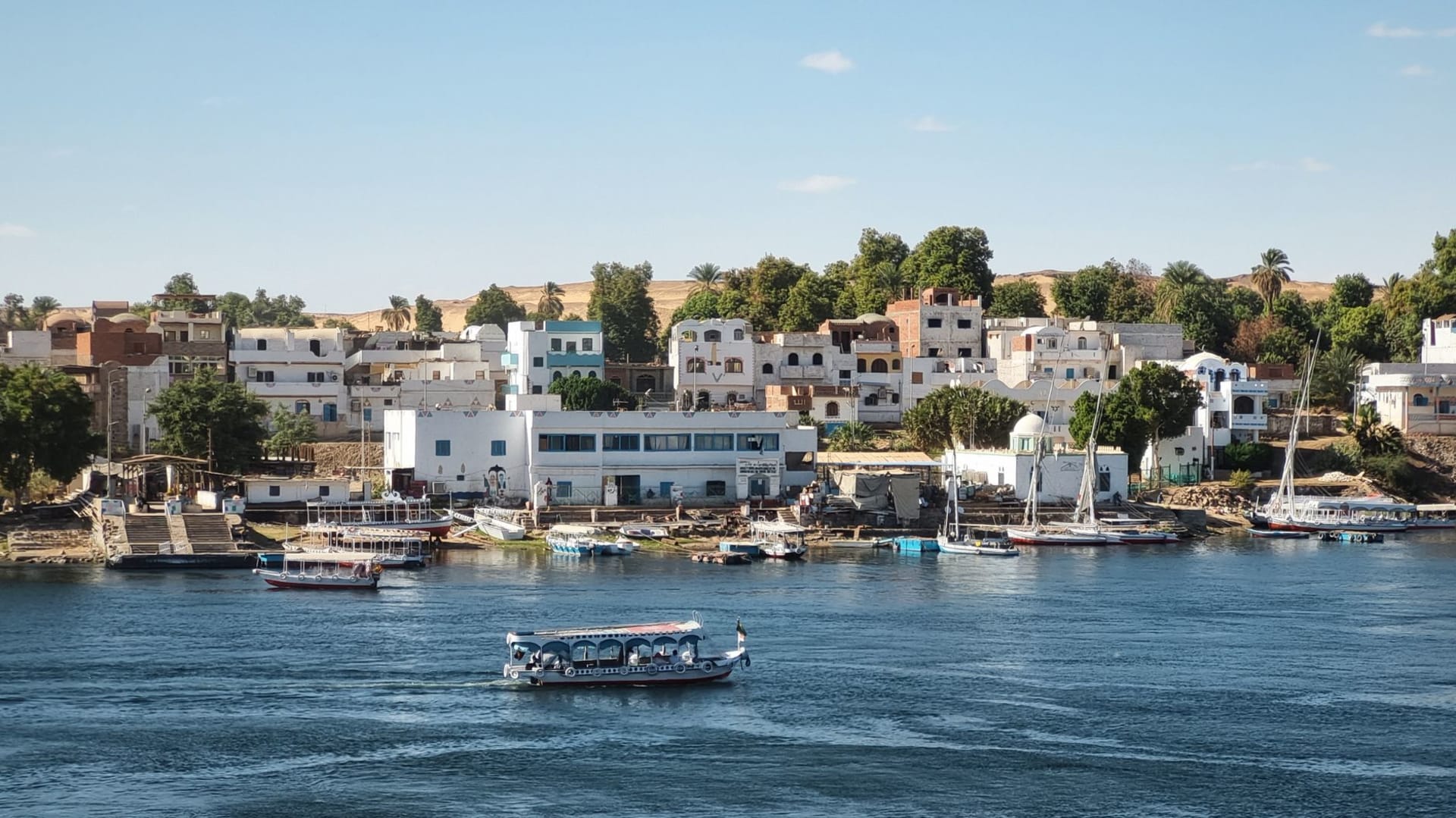
I had been travelling through monuments for a week when Aswan hit me like an exhale. The train pulled in from Luxor mid-afternoon and the city that greeted me felt different in ways I kept trying to name. Softer, was the word I kept coming back to. The granite boulders that break the river’s surface at Aswan slow the Nile to something almost contemplative, and the city built itself around that slower pace. Painted houses in hibiscus pink and turquoise dot Elephantine Island across the water. The Corniche here is quieter than Luxor’s — locals sitting in plastic chairs watching the river rather than selling things to people watching the river.

The souk in Aswan is a different animal from the papyrus-and-alabaster markets of Luxor. Spice sellers here deal in hibiscus flowers, dried okra, date sugar, and things labelled in Arabic that I pointed at and bought without asking what they were. The perfume shops are serious — small establishments run by men who will spend an hour explaining the difference between rose and oud if you show any interest, and who are not offended if you leave having bought nothing. I spent an afternoon in the spice market buying small bags of things I couldn’t identify, the street smelling of cinnamon and something darker underneath, like incense left burning in a closed room.
The Nile around Aswan moves through a different Egypt — the Nubia that was absorbed into Egypt administratively but kept its own colour palette, its own music, its own food. The felucca captains here will sail you out to Kitchener’s Island, where a botanical garden planted by a British general now feels like a hallucination of tropical green in the middle of desert rock. I went there on a winter afternoon and sat under a tree I believe was a fig, watching the water go by, eating falafel from a bag, and thinking that travel sometimes assembles itself into the perfect afternoon without your participation.

Cold karkadé — hibiscus tea, served in deep red glasses everywhere in Aswan — is the drink that defines the city for me more than any monument. It tastes sharper than I expected, almost metallic, the way good fruit should taste, and nothing from a bottle back home comes close.
When to go: November through February. Aswan runs hotter than Luxor — the desert feels closer, the latitude more extreme. March begins to tip into heat that redefines the word. January evenings are genuinely cool; bring something to wear after dark.