Mansoura
"They captured a king here in 1250 and the whole medieval world tilted. Now students eat koshary and the river runs silver at dusk."
I arrived in Mansoura by microbus from Tanta on a Tuesday afternoon and walked out of the station into a crowd of university students so thick I had to press sideways against a tea stall to let the main stream pass. Mansoura University enrolls something like a hundred thousand students — one of the largest in Egypt — and the effect on the city is total and visible. The streets around campus smell of printed paper and cheap food. The cafes run four deep in plastic chairs. Young women in hijabs of colors that change every semester carry enormous architecture portfolios. Young men argue about football in the specific register of young men arguing about football everywhere in the world, which is to say with absolute certainty and a complete willingness to be wrong.

The historical event that Mansoura is built around happened in 1250, when the army of King Louis IX of France — the Seventh Crusade — was routed on the banks of the Nile canal called the Bahr al-Saghir, and the king himself was captured and held prisoner. The Mansoura Museum of the Seventh Crusade attempts to reconstruct this, with dioramas and maps and battle artifacts in cases with handwritten labels that have started to yellow at the edges. I was the only visitor on the afternoon I went, and a guard unlocked the room for me specifically and then sat outside reading his phone while I walked through the reconstructed medieval battle scenes in silence. Louis IX was ransomed for an enormous sum and his crusade failed. The city was named Mansoura — “the victorious” — to commemorate the defeat. I thought about how rarely victors need to name their cities anything.
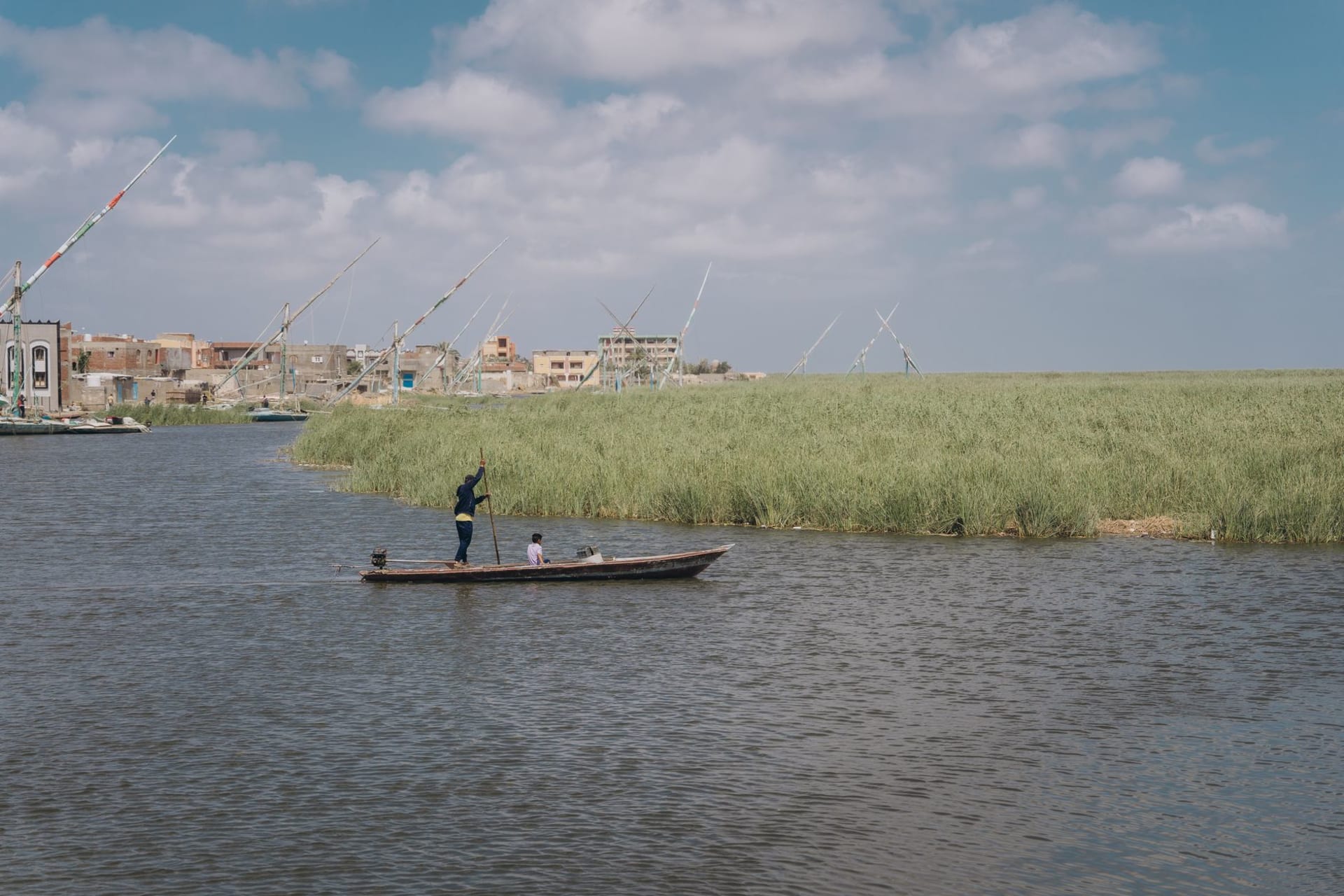
The river here is spectacular. The Damietta branch of the Nile runs broad and muscular past the eastern edge of the city, with the older residential streets running down to the waterfront in a series of staircase terraces. In the early evening, families spread blankets on the grass along the Corniche and eat grilled corn from the carts that appear at dusk. Children run down to dangle their feet over the bank wall. The water is brown and fast-moving and enormous. I watched a man fish from a concrete ledge for nearly an hour without catching anything, and his patience struck me as the most honest relationship with the river I had seen.

The food situation is excellent precisely because of the students. The koshary shops are cheap and serious — three kinds of pasta, rice, lentils, tomato sauce, fried onion, and the hot vinegar sauce on the side that you add yourself and which is the most important component even though no koshary shop will admit this. There are also, in the streets around the old market, excellent falafel sandwiches fried to order in oil that has not been sitting idle, and tea shops where the tea comes so sweet it makes your jaw tighten pleasantly.
When to go: October through April, coinciding with the university calendar. The city’s energy peaks during the academic year; in summer, students go home and the streets quiet considerably. March, when the Delta heat is building but not yet brutal, is particularly pleasant.