San Juan de Oriente
"In San Juan de Oriente I watched a nine-year-old paint a spiral pattern more precise than anything I could manage with a ruler."
The smallest of the Pueblos Blancos, where ceramic families have passed down pre-Columbian pottery techniques for generations without interruption.
San Juan de Oriente is small enough that you can walk its entire center in ten minutes, and yet it holds one of the most intact craft traditions I’ve encountered anywhere in Central America. Almost every house along the main street doubles as a ceramics workshop, and the techniques being used — hand-coiling clay, burnishing with river stones, painting with mineral pigments in geometric and animal motifs — trace directly back to the pre-Columbian Chorotega and Nahoa potters who worked this same soil centuries before Spanish contact.
A craft that skipped nothing
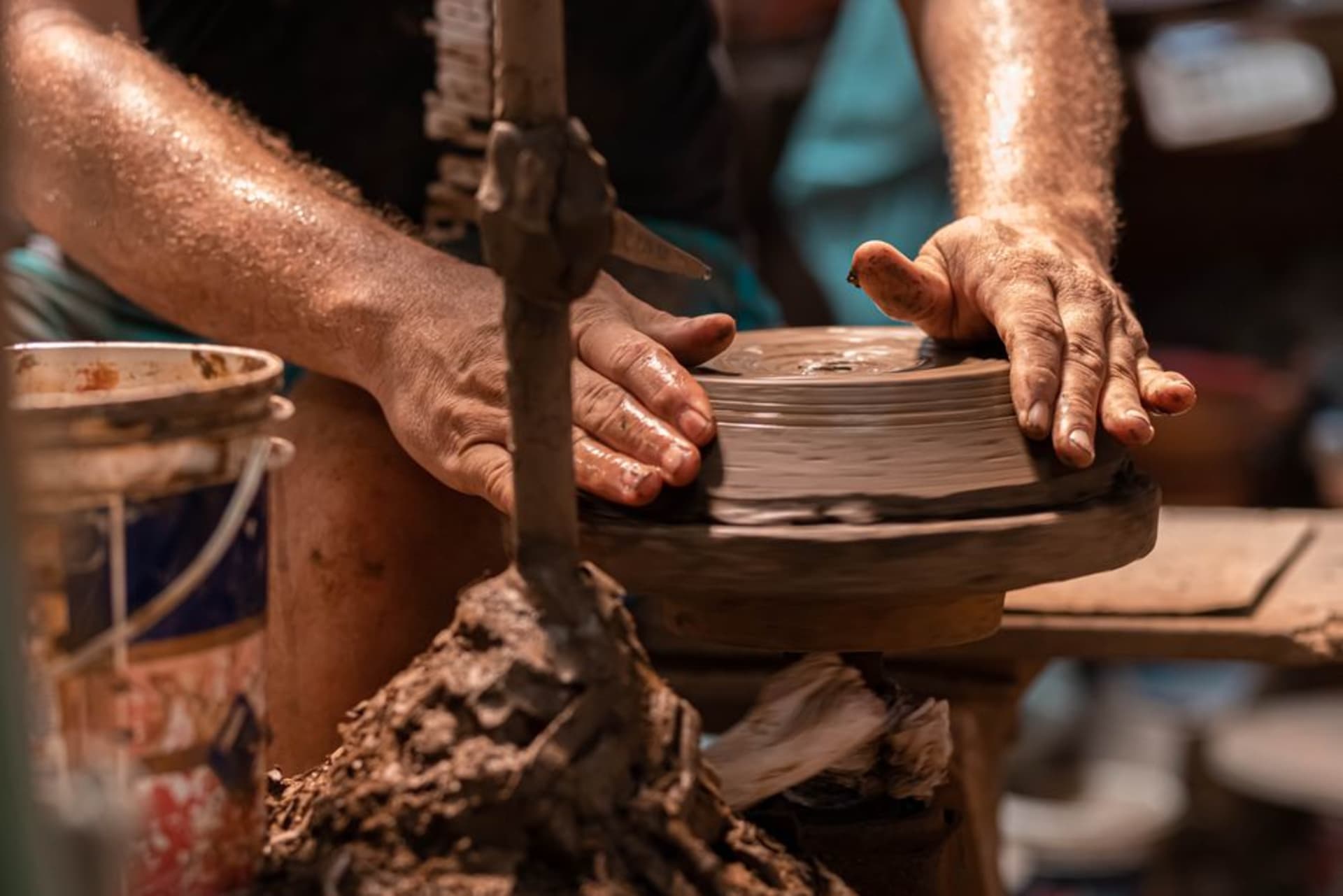
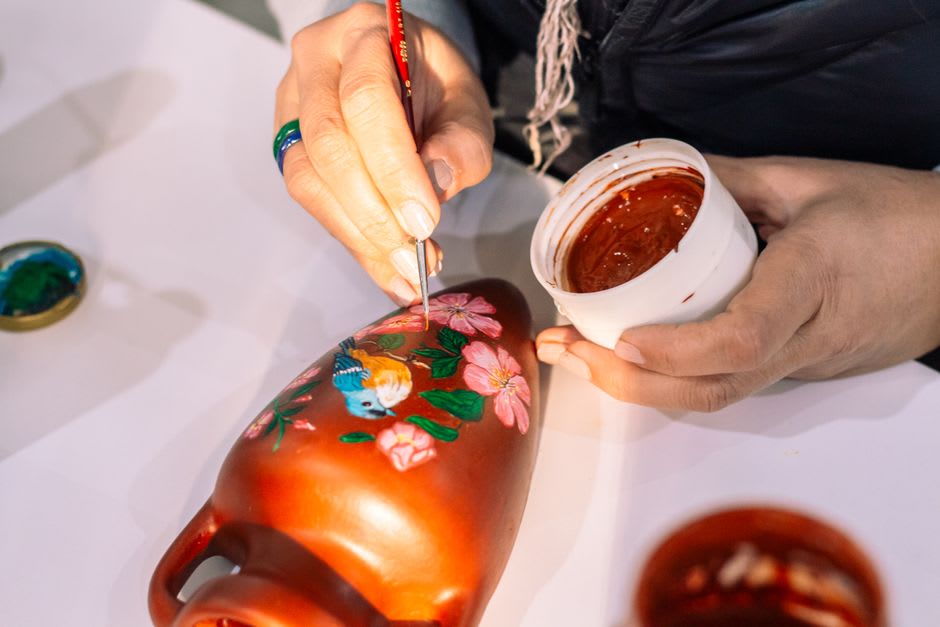
What struck me most wasn’t the pottery itself, beautiful as it is, but the way the knowledge moves through families without any formal school or workshop structure. I visited the home studio of the Calero family, where three generations were working within the same open-air patio — a grandmother burnishing a finished piece to a soft shine with a smooth stone, her son at the wheel shaping a new vessel, and his daughter, maybe eight or nine, carefully painting a spiral motif onto a small bowl with a brush made from her own hair, a technique fine enough to render lines a store-bought brush couldn’t manage. Nobody was teaching anybody in any formal sense. She’d just been watching since she could walk, and now she was doing it herself, unsupervised and precise.
Clay from the same hills, techniques from the same ancestors
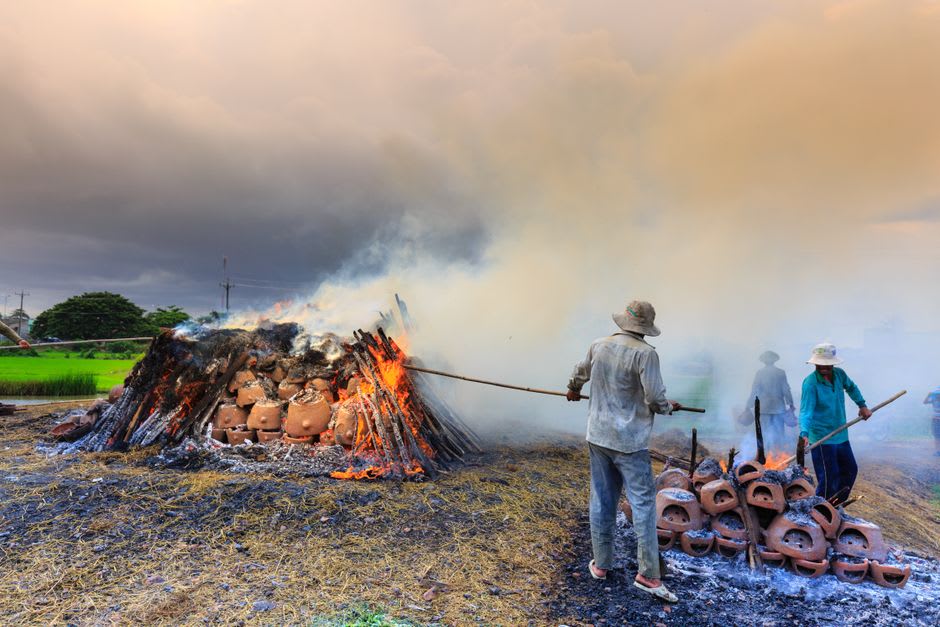
The clay used here is sourced locally, from deposits in the surrounding hills that potters have drawn from for as long as anyone can trace back. What differentiates San Juan de Oriente’s ceramics from mass-produced souvenirs elsewhere in the country is the total absence of a potter’s wheel motor — everything is either hand-coiled or turned on a simple kick wheel, then fired in wood-burning kilns dug into the ground behind the workshops. I watched a firing happen at dusk, smoke curling up through a corrugated roof, the potter checking the color of the flame rather than any thermometer to judge readiness. He’d been doing this since he was a teenager and said he could tell the temperature within fifty degrees just by the smoke’s color.
It’s easy to drive straight through San Juan de Oriente on the way to Catarina’s mirador and miss it entirely — there’s no grand market building, just houses with pottery displayed in front. But slow down, knock on an open door, and you’ll likely be welcomed into a workshop that has been operating, essentially unchanged, since long before this was called Nicaragua.
When to go: Weekday mornings, when workshops are most active and kilns are often being loaded or unloaded — dry season makes the outdoor firing process easier to watch up close.