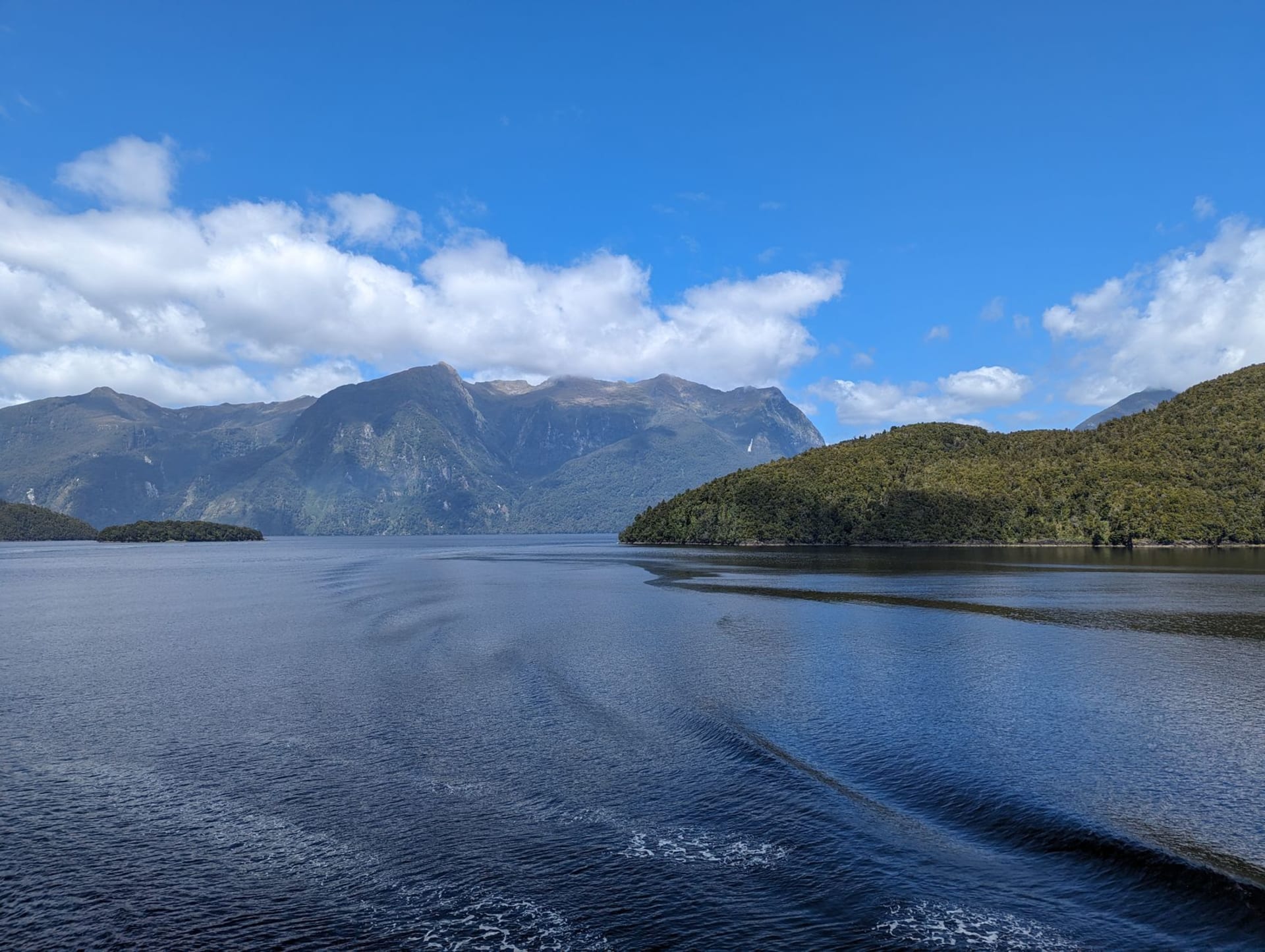
A deeper, darker and ten times larger fiord than Milford Sound in Fiordland, reached by boat across a hydro lake.
The boat from Manapouri crosses a hydro lake before a bus climbs the Wilmot Pass, and by the time you descend the other side into the sound itself, you feel like you have been smuggled somewhere the world forgot to develop. That three-stage journey — lake, road, fiord — is not inconvenience. It is a filter.
Three Arms, No Roads
Doubtful Sound fractures into three arms: Hall Arm to the north, Crooked Arm to the south, and the main channel running west toward the Tasman Sea. From the deck of the overnight vessel we were on, the scale registered slowly, the way cold water does. Walls of dark schist and dripping kahikatea rose three hundred metres straight off the waterline. Lia pointed at a waterfall threading down the far cliff — a ribbon from this distance — and said it must be at least a hundred metres tall. It was closer to five hundred.
What no photograph prepares you for is the tannin. The rainforest leaches humic acid into the fiord, staining the top ten metres a deep amber-brown. Below that layer, the salt water is almost anoxic, which means deep-ocean species — black coral, brachiopods — live within snorkelling depth. I learned this from the marine biologist on board who pulled on a wetsuit at dusk and slipped off the stern ladder into water that looked like cold tea.
The Overnight Shift
The unexpected thing happened around two in the morning. I had gone up to the top deck because I could not sleep, and found the sound completely still — no wind, no engine hum since we had anchored in Hall Arm. The silence had a texture. I could hear my own pulse. Then a Fiordland crested penguin splashed somewhere in the dark and called once, and the sound came back off four cliff faces at slightly different delays, arriving in sequence like a slow echo. Nothing about it felt like New Zealand tourism. It felt like overhearing the landscape thinking.
Getting There and Reading the Weather
The access point is Manapouri, a small town on the southern shore of Lake Manapouri. Real Journeys (now Fiordland Expeditions) runs the only permitted vessels into the sound. Day trips exist but the overnight option is the one worth the money — the other passengers thin out, the wildlife appears, and the mountains close in differently once the afternoon tour boats have gone.
When to go: November through April offers the calmest seas and the longest days; winter crossings are possible but the Wilmot Pass can close in heavy snow, and the Tasman swells at the fiord mouth are genuinely rough. Avoid Easter week, when berths sell out months in advance.