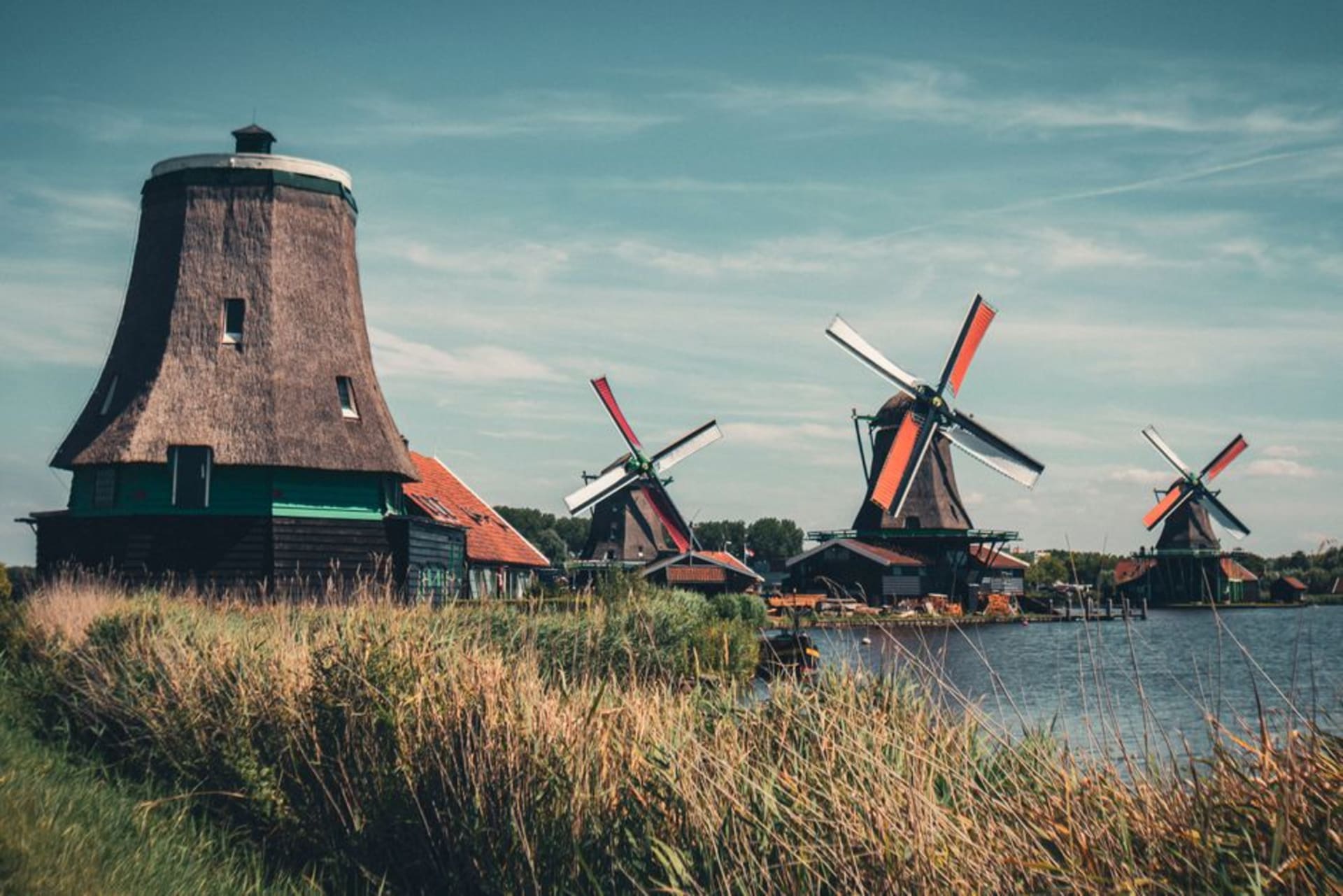
Zaanse Schans
"I came for the windmills and stayed for the smell of paint and sawdust that still hangs in the air."
A cluster of green wooden houses and working windmills rescued from Amsterdam's industrial edge, spinning quietly beside the Zaan.
Lia and I took the train out from Amsterdam Centraal on a Tuesday, half expecting a tourist trap dressed up as a village. What we found instead was stranger and better: a whole neighborhood of 17th- and 18th-century houses and warehouses that had been picked up from villages around the Zaan region, starting in the 1960s, and rebuilt here to save them from being paved over by factories. Nothing at Zaanse Schans is quite where it originally stood, and yet it doesn’t feel like a replica — it feels like a rescue.
We got there early enough that the mist was still sitting low over the river, and De Kat, the dye mill, already had its sails turning. I hadn’t really registered, before that morning, that this stretch of the Zaan was once the most industrialized patch of land on earth — hundreds of windmills here once ground pigments, pressed oil, and sawed timber for the ships that built the Dutch trading empire. Standing under De Kat’s blades, hearing the gears clunk overhead, made that history feel less like a museum caption and more like something with weight.
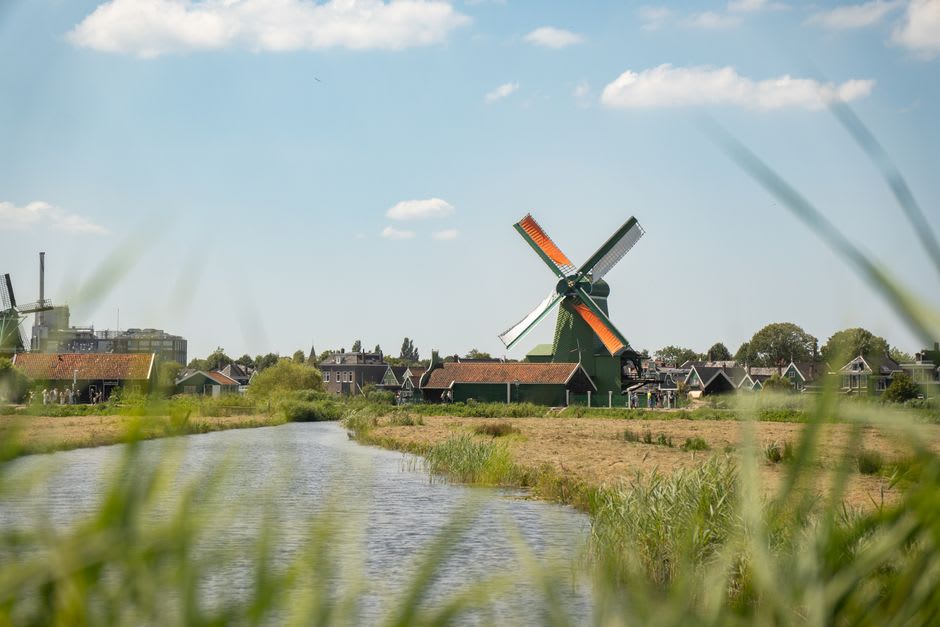
We wandered into De Zoeker, the sawmill, and watched a single log get pulled through blades that hadn’t changed much in three centuries. Lia bought a small wheel of cheese from one of the working cheese farms nearby, and we ate it on a bench by the water with bread from a bakery in Zaandam, watching cyclists cross the little bridge with their kids balanced on the back rack. It’s a strange, good feeling to be fifteen kilometers from Amsterdam and hear almost nothing but wind and gears.
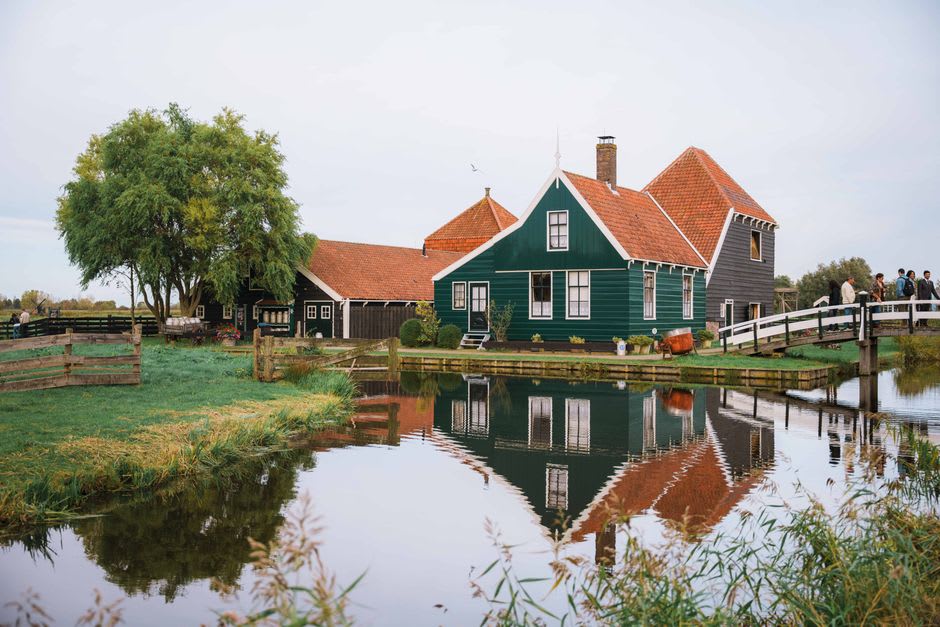
By midday the footbridges had filled with tour groups and the windmills had become backdrops for a hundred phone cameras, which is fair enough — this is still one of the easiest half-day trips out of Amsterdam. But I was glad we’d had that first quiet hour to ourselves, with just the sails turning and the smell of fresh paint drifting off the workshops.
When to go: Go on a weekday morning, ideally in spring or early autumn, when the windmills are running and the crowds haven’t yet arrived from the city.