Europe
Netherlands
"The country that proves great design is invisible until you leave."
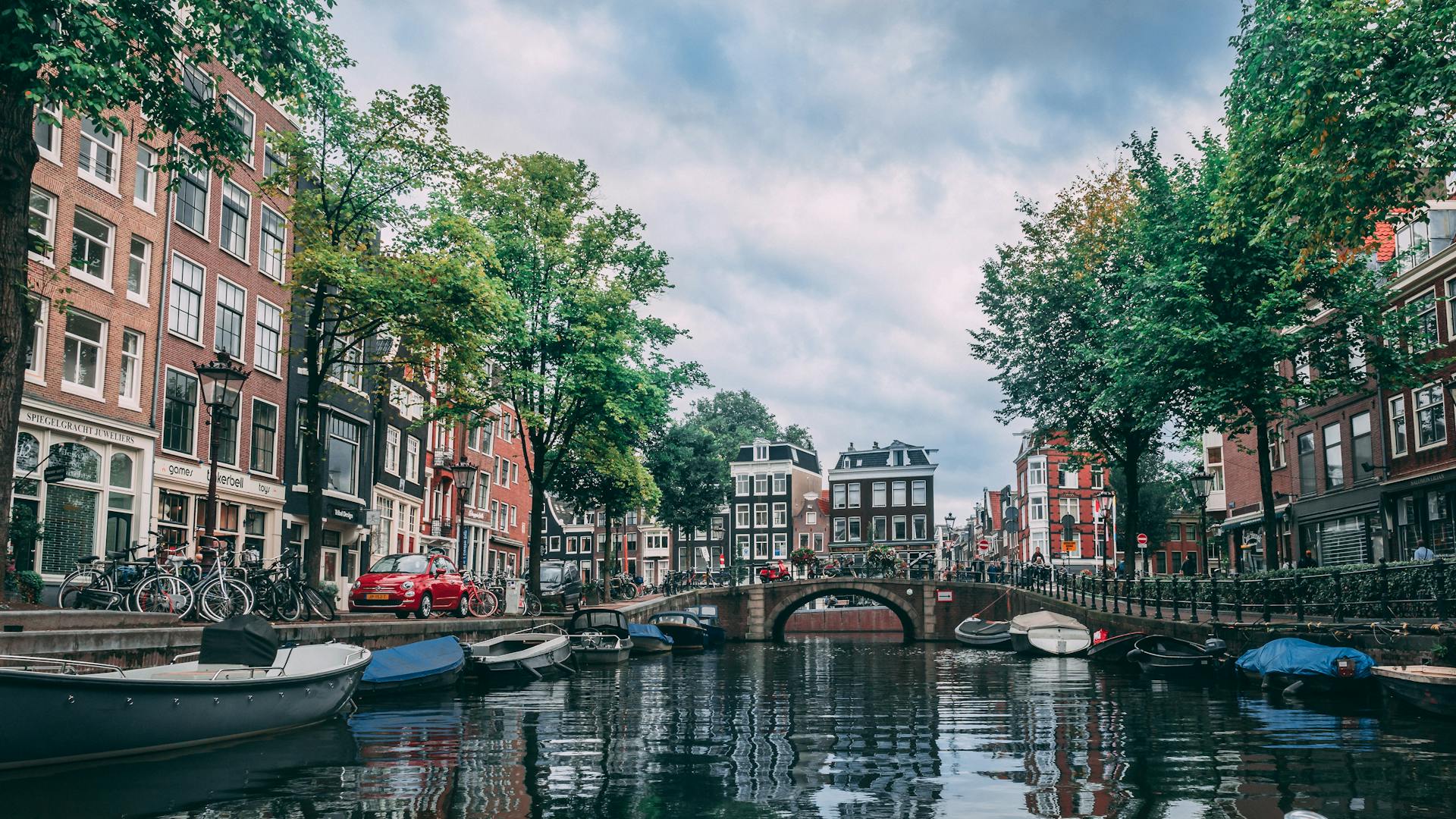
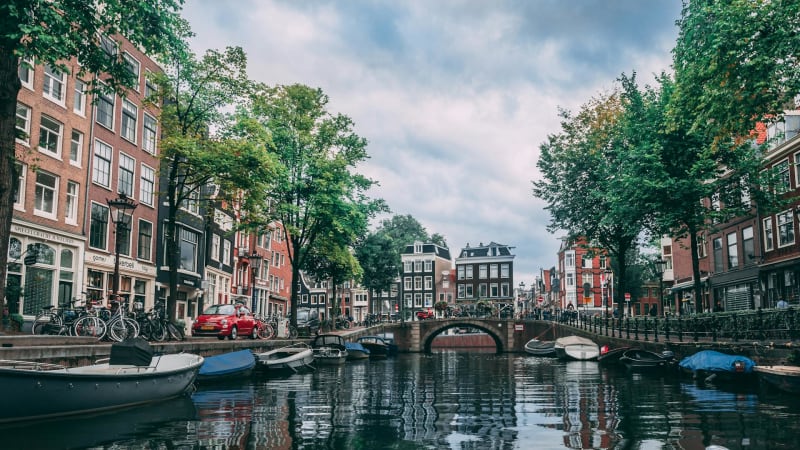
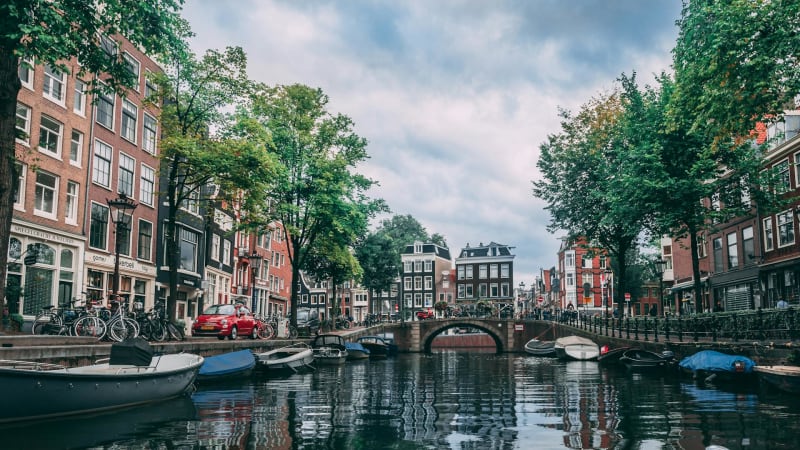
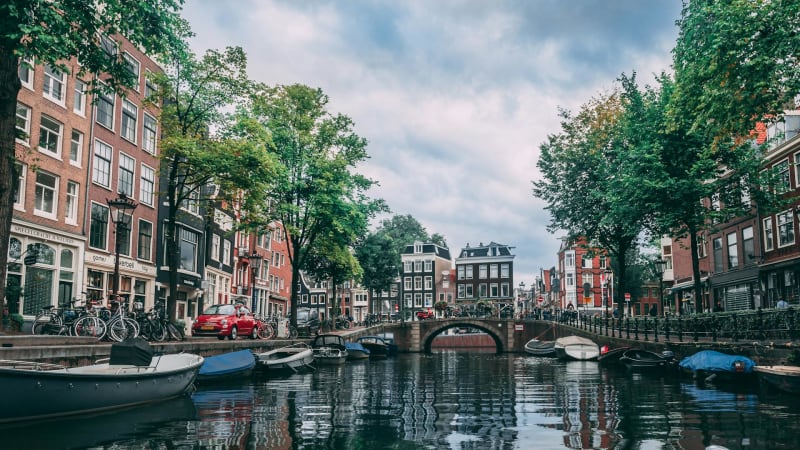
The Netherlands is the most designed country in Europe, and possibly the world. This is a place where the land itself is an engineering project — half the country should be underwater, and the fact that it is not represents centuries of stubborn, meticulous effort. That same temperament applies to everything else. The cycling infrastructure is so seamless you forget it exists. The trains connect towns with a precision that feels almost apologetic. The cities are built at a human scale, organized around canals and squares and the assumption that people should be able to live comfortably without a car. Coming from almost anywhere else, the Netherlands feels like a quiet correction.
Amsterdam deserves its reputation but suffers from its own popularity. The real revelation lies twenty minutes away by train. Haarlem, with its enormous Grote Kerk and Saturday market spilling across the square, is the Amsterdam that Amsterdam used to be. Utrecht has the sunken canal-side terraces and a university energy that keeps things sharp. Delft is Vermeer’s city, still recognizable, still luminous. Rotterdam is the opposite of everything — bombed flat in the war, rebuilt as a laboratory of modern architecture, now the most visually exciting city in the country. The Hoge Veluwe national park holds a Van Gogh collection in the middle of a forest, reachable by free white bicycles, which is about as Dutch as anything gets.
When to go: April to May for tulip season and long light, or September for mild weather and thinner crowds. Dutch summers are pleasant but unpredictable — pack a rain jacket regardless of the forecast. King’s Day (April 27) is a national street party worth planning around.
What most guides get wrong: They treat the Netherlands as Amsterdam plus a tulip field. This is a country built for lateral exploration — small, dense, and connected by trains that run every ten minutes. Pick a direction and go. The smaller the city, the better the ratio of quality to crowds. And rent a bike everywhere. The Dutch built their country around cycling, and it is the only honest way to see it.
Explore
Places in Netherlands
Amsterdam
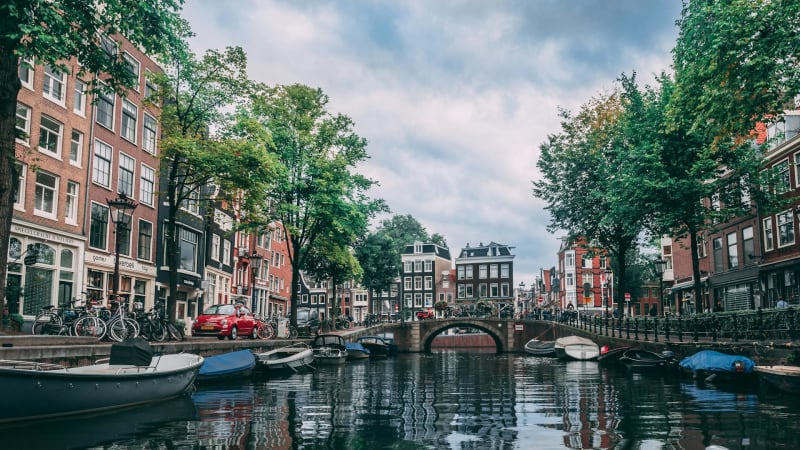
A city of canals, bicycles, and masterpieces, where Golden Age grandeur coexists with a freewheeling modern spirit.
Delft
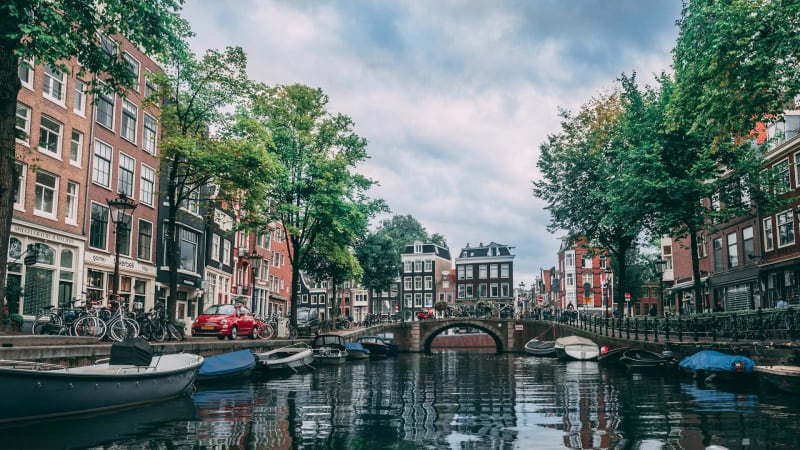
A porcelain-perfect canal town where Vermeer painted, blue pottery became world-famous, and time moves at a gentler pace.

Giethoorn
A village with no roads, where thatched farmhouses sit on tiny islands linked by footbridges and the only traffic jam is made of boats.
Groningen
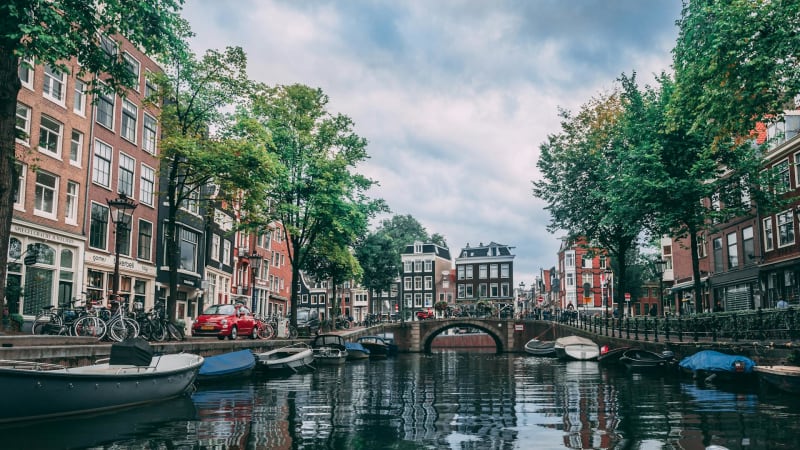
A youthful university city in the Dutch north, where half the population cycles, the nightlife punches above its weight, and the Martinitoren watches over it all.
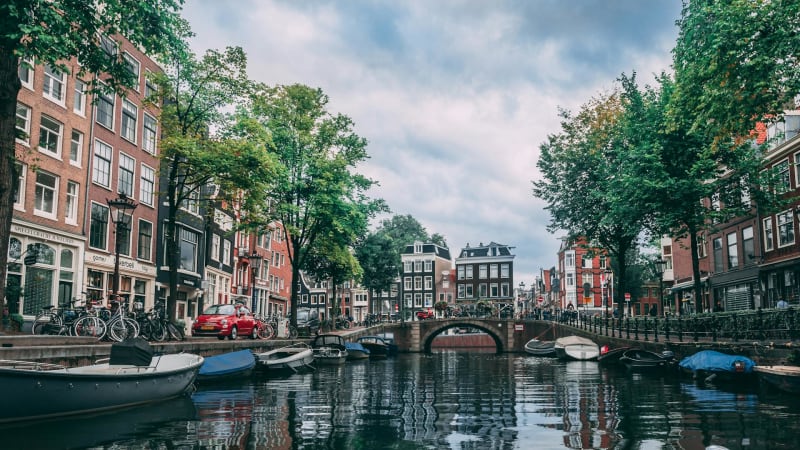
Haarlem
Amsterdam's elegant neighbor, where a medieval market square, world-class organ music, and Frans Hals paintings create a quieter Dutch masterpiece.
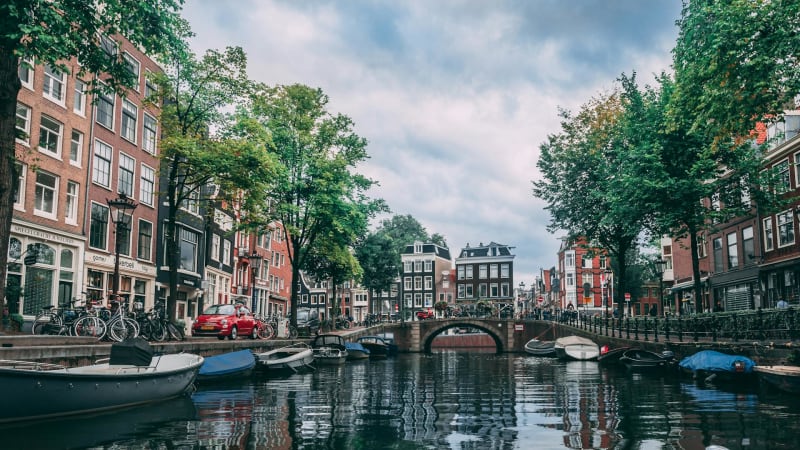
Kinderdijk
Nineteen historic windmills in a polder landscape so quintessentially Dutch it became a UNESCO World Heritage site.
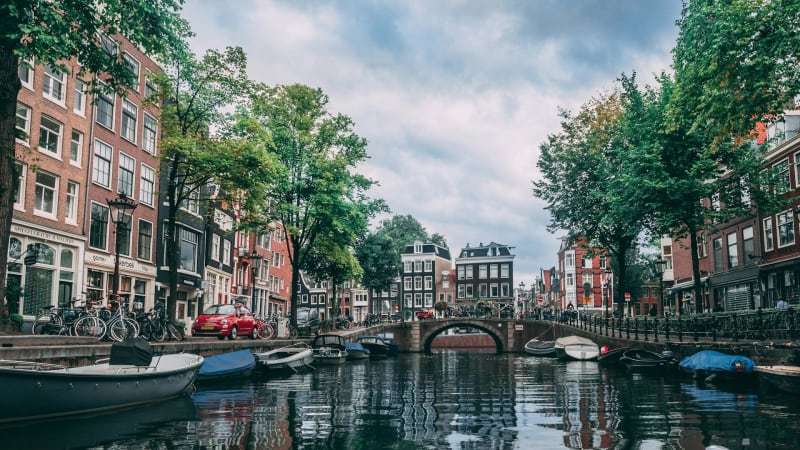
Leiden
A scholarly canal city where Rembrandt was born, the Pilgrims once lived, and the university has been teaching since 1575.
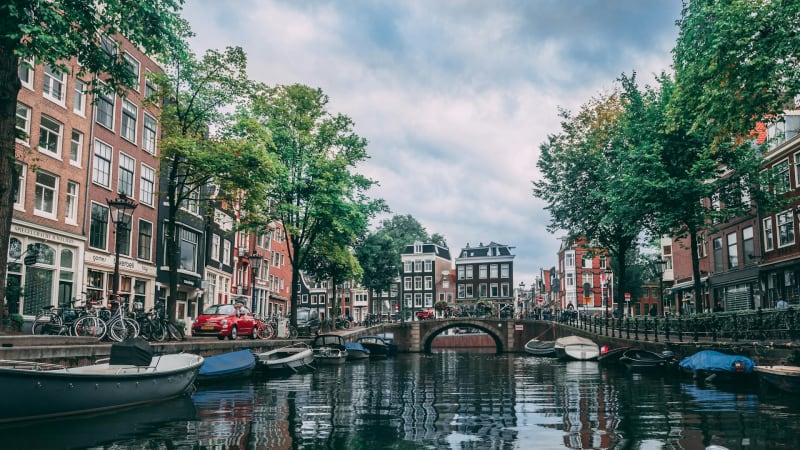
Maastricht
The most un-Dutch city in the Netherlands, where Burgundian food culture, limestone caves, and a bookshop in a cathedral redefine expectations.
Rotterdam
Europe's most daring architectural laboratory, rebuilt from wartime rubble into a skyline of cube houses, market halls, and bridges that defy convention.
The Hague
The seat of Dutch government and international justice, with a Vermeer collection, royal palaces, and the best North Sea beach of any major city.
Utrecht
A canal city with a medieval heart, where sunken wharves hold waterside terraces and a leaning tower rivals Pisa's.