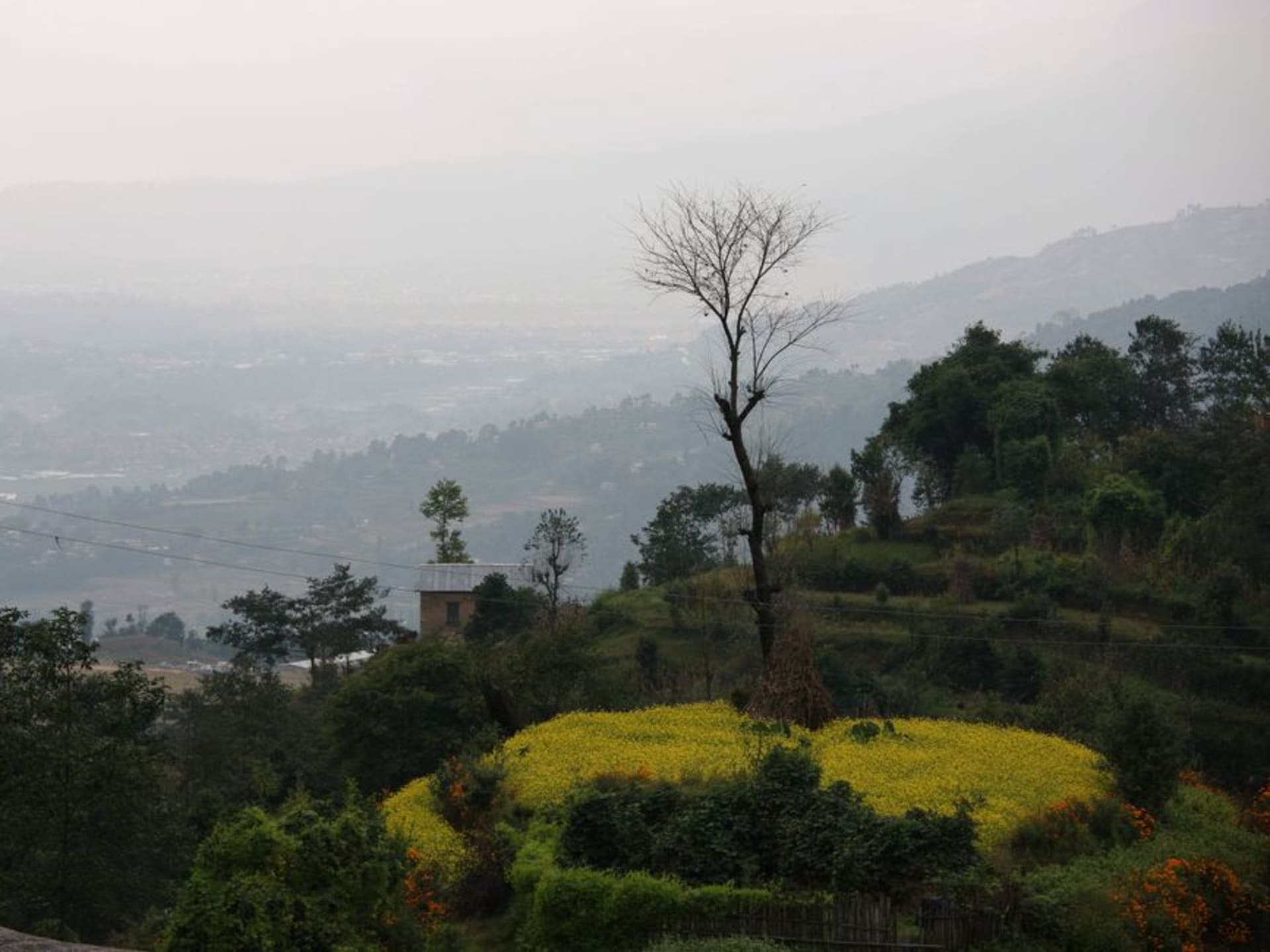
Thimi
"Thimi is the town every tour bus drives straight past on the way to Bhaktapur, which is exactly why I liked it."
A pottery and papier-mâché mask-making town between Kathmandu and Bhaktapur, working in full view of anyone who bothers to stop.
Most people passing between Kathmandu and Bhaktapur go straight through Thimi without stopping, which is a shame, because the town has its own long-standing craft identity — pottery on one side, the elaborate papier-mâché masks used in Newari festival dances on the other — and almost none of the visitor infrastructure that comes with fame.
The Mask Workshops of Thimi
Thimi is the traditional center for producing the papier-mâché masks worn during the Newari festival of Bhairav Nach and other ritual dances, and several family workshops still make them by hand, layering wet paper pulp over clay molds and painting the dried shells in lurid reds, golds, and blacks once they’ve cured. One workshop owner near Bode let us watch him paint the fangs on a Bhairav mask with a brush so fine it looked more suited to a jeweler than a craftsman working at speed. He barely looked up from the work while explaining the dance the mask was destined for.
Pottery Square, Thimi’s Version
Like Bhaktapur a few kilometers east, Thimi has its own pottery quarter, though on a smaller and less photographed scale — a courtyard of wheel-thrown clay pots left to dry in neat rows before firing, tended by two or three families who have clearly done this work for generations. A boy of maybe ten was spinning a smaller practice wheel alongside his father, throwing pots that wobbled and collapsed with cheerful regularity while his father’s own pots came off the wheel in perfect, identical cylinders.
Bode’s Jibha Chhedan Festival
Thimi’s neighboring settlement of Bode is known for one of the valley’s stranger rituals — the Jibha Chhedan, or tongue-piercing festival, held each year around the Nepali New Year, in which a chosen participant pierces his own tongue with a sharpened iron rod and carries a heavy palanquin through the streets as an act of devotion. We weren’t there for the right week to see it, but a shopkeeper described it in enough detail that I regretted the timing for the rest of the trip.
When to go: Thimi works well as a short stop on the road between Kathmandu and Bhaktapur, any time outside the monsoon. If you can time a visit to the Nepali New Year in mid-April, Thimi and Bode host some of the valley’s most distinctive Newari festivals.