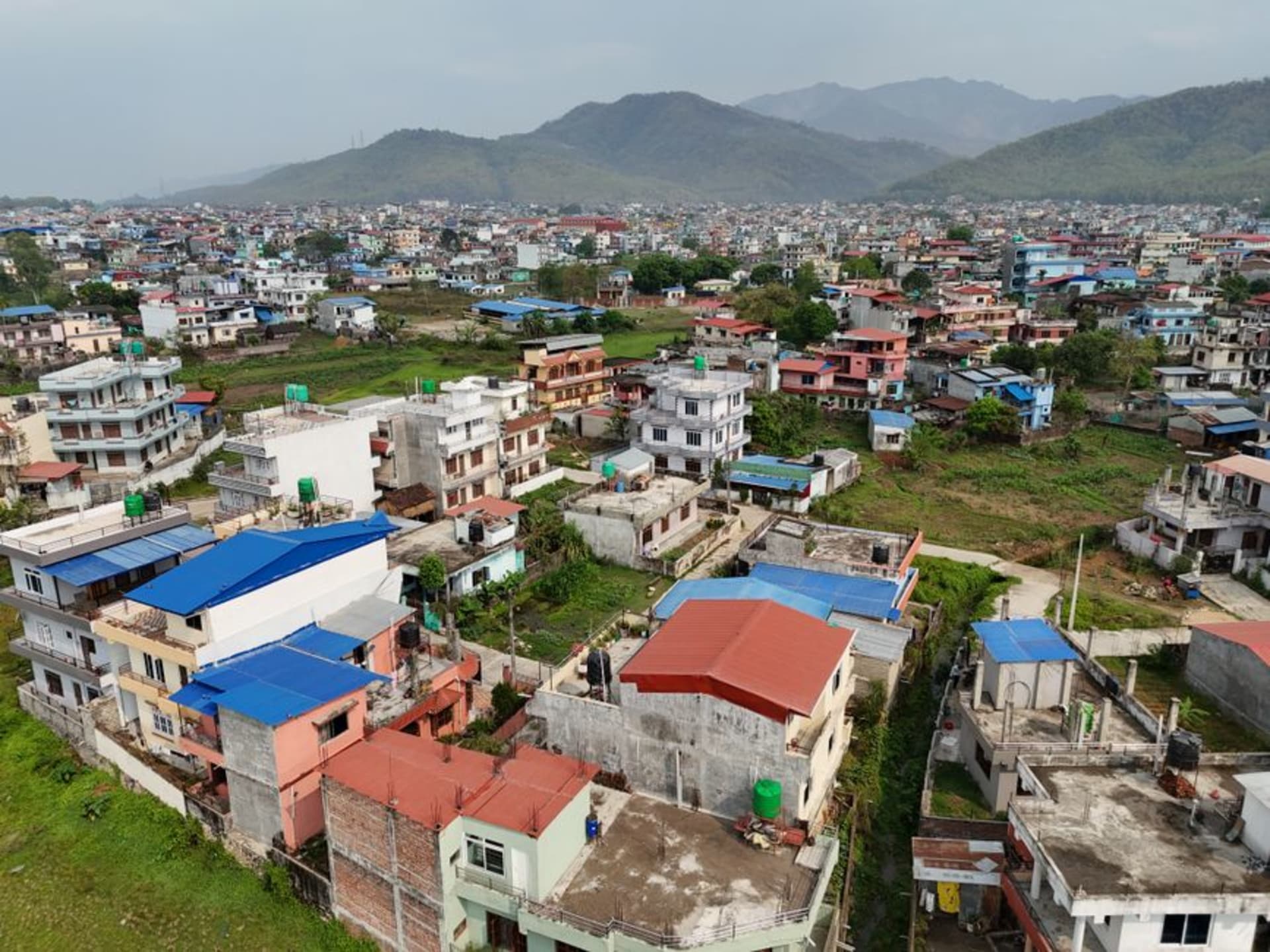
A Newari hill town in western Nepal, once the seat of the Magar kings, now a maze of red-brick lanes and umbrella workshops that tourism has barely touched.
I found Tansen almost by accident, on a longer overland route between Chitwan and Pokhara that a bus conductor talked me into interrupting. He said the town — also called Palpa — was worth a night. I stayed three.
Sitalpati and the Palace That Isn’t There Anymore
The old royal palace, Tansen Durbar, burned in the political unrest of 2006 and has never been fully rebuilt, so the main square, Sitalpati, now centers on an octagonal rest pavilion where old men play cards under a peepal tree from mid-morning until dusk. I sat with them for the better part of an afternoon on my second day, understanding almost nothing of the card game but welcomed into the shade anyway, handed tea I hadn’t ordered by someone who never told me his name.
The Dhaka Weavers
Tansen is famous within Nepal for dhaka, the hand-woven cotton fabric with geometric patterns used for the traditional Nepali cap, the topi. Down a lane off the main bazaar, I found a workshop where three women worked wooden looms in a small room, the click and thud of the shuttle the only sound for long stretches. One of them, without much shared language between us, walked me through the pattern she was weaving thread by thread, clearly proud of a craft that tourists rarely stop to ask about.
Shreenagar Hill at First Light
Above town, a forty-five-minute climb through pine forest leads to Shreenagar Hill, a viewpoint that on a clear morning shows the Dhaulagiri and Annapurna ranges laid out along the northern horizon. Lia and I went up before sunrise, mostly alone except for a jogger who passed us twice on his second lap, and watched the light move across the peaks in complete silence, no other travelers, no vendors, nothing but wind through the pines.
When to go: October through March for clear mountain views from Shreenagar Hill and comfortable walking temperatures through the old town’s steep lanes. Spring brings warmer weather and blooming rhododendrons if you don’t mind slightly hazier long-distance views.