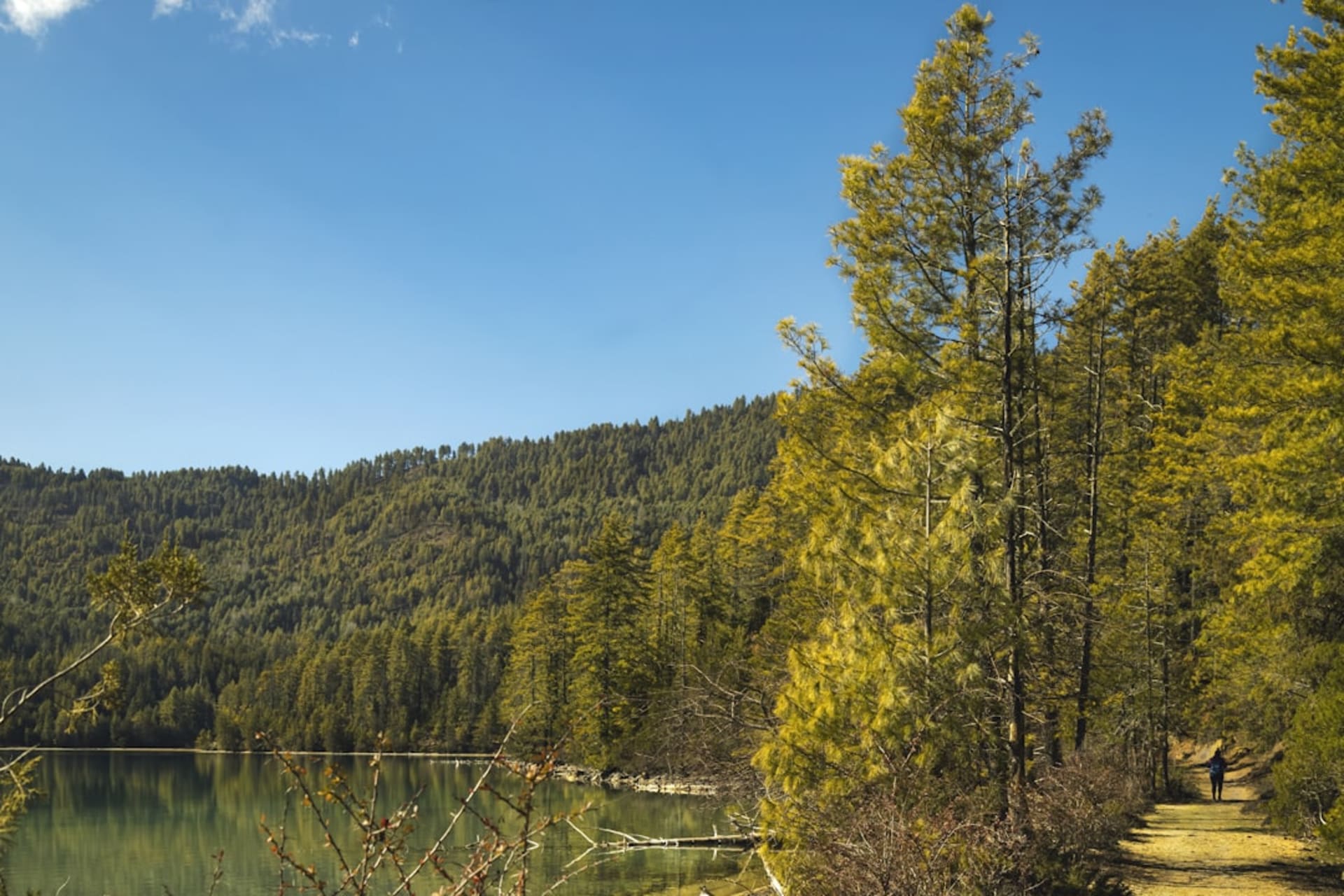
Rara Lake
"Rara doesn't perform for you. It just sits there, blue and enormous, and waits to see if you noticed."
Nepal's largest lake, a sheet of cobalt water inside a remote national park in the far northwest, reached only on foot or by a small plane.
The flight into Talcha is the kind that makes you renegotiate your relationship with fear. A nineteen-seat Twin Otter drops through a gap in the ridgelines, banks hard, and lands on a dirt strip that looks, from the air, roughly the width of the plane itself. I gripped the seat in front of me. The Nepali businessman next to me was asleep. When we finally rolled to a stop I had to remind myself to breathe before I could appreciate what I’d flown into: one of the least-visited corners of the entire country.
The Walk Around the Lake
From Talcha it’s a two-hour walk down to the lake itself, and the first sight of it — after an hour of pine forest with almost no other sound than my own boots — genuinely stopped me. Rara is Nepal’s largest lake, ten square kilometers of water so densely blue it looks dyed, held inside a bowl of forested hills that turn a deep charcoal green at dusk. I did the loop trail that circles the entire shoreline, roughly a full day at an unhurried pace, and passed maybe four other trekkers the whole way.
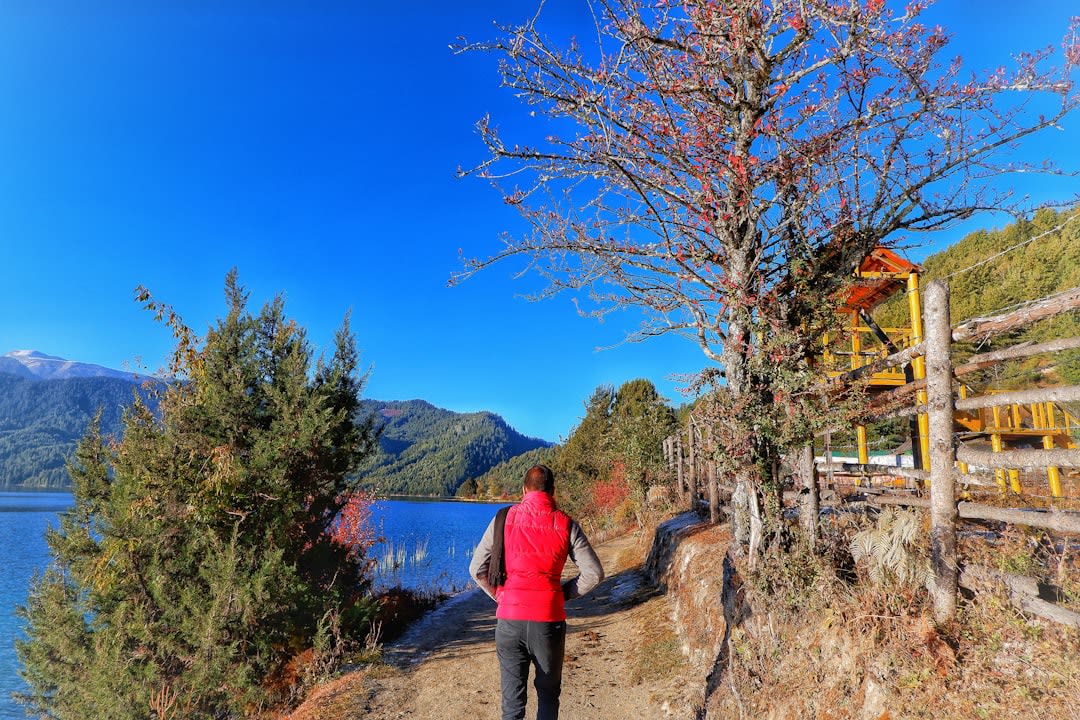
Lia stayed behind at the guesthouse near Rara village that first morning, nursing a stomach bug from the lodge in Surkhet, and I felt guilty walking the lakeshore without her — this was supposed to be the trip’s quiet reward after a hard few weeks on the road. She caught up by afternoon, and we sat on a flat rock at the western end watching a pair of great crested grebes work the shallows, and neither of us said much. Some places don’t need narration.
Rara Village and What’s Left of It
The village of Rara sits above the northeastern shore, and much of its old population was resettled decades ago when the national park was created — a policy that still generates quiet resentment among the Thakuri and Chhetri families who remain. The handful of teahouses run on dal bhat, potatoes grown at altitude, and whatever fish someone caught that morning, since limited local fishing is still permitted outside the strict protection zones. In the evening, the temperature drops fast even in September, and everyone crowds around the same wood stove telling stories about the mountain leopards that occasionally take a yak.
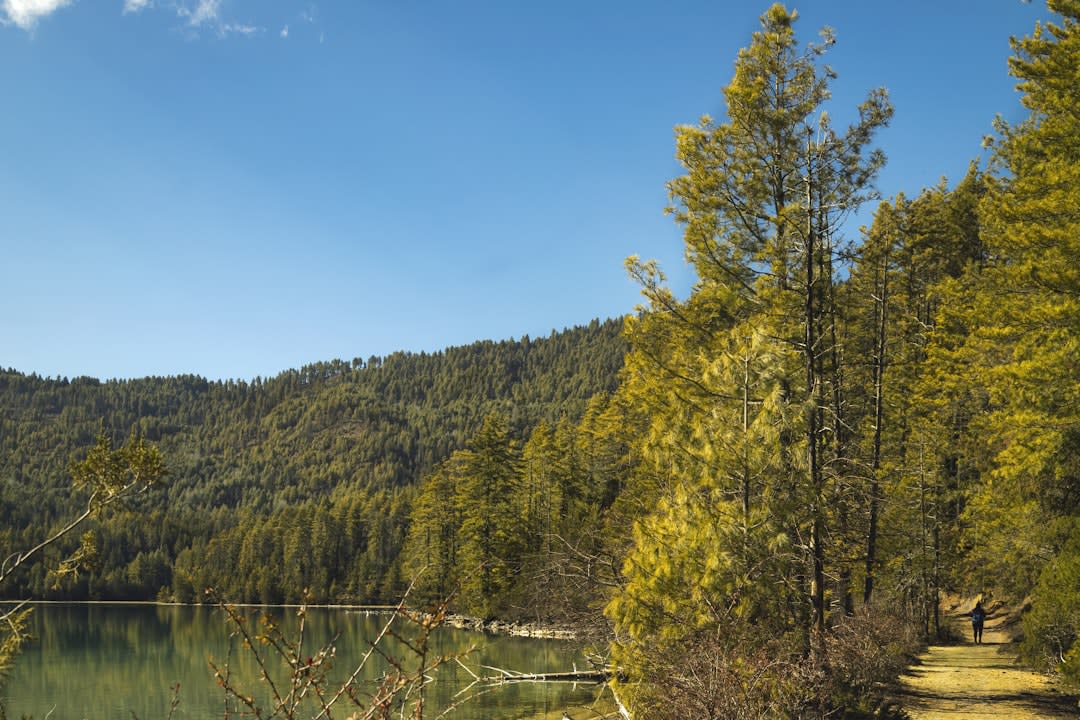
What struck me most was how the light changes the lake’s personality three or four times a day — steel grey at dawn, an almost tropical turquoise by mid-morning, black and mirror-still after sunset. I’ve seen a lot of alpine lakes. I haven’t seen one this remote hold onto so many different colors.
When to go: October and November give the clearest skies and driest trails, with the surrounding hills already turning autumn gold. May and early June work well too, before the monsoon, with rhododendrons blooming along the lower approach trails. The flight into Talcha is frequently cancelled by weather, so build slack into any itinerary.