Pokhara
"Pokhara's lake reflects the Annapurna range so perfectly that the mountains seem to exist twice."
Trekking hub beside a mirror lake with the Annapurna range hovering in perfect reflection.
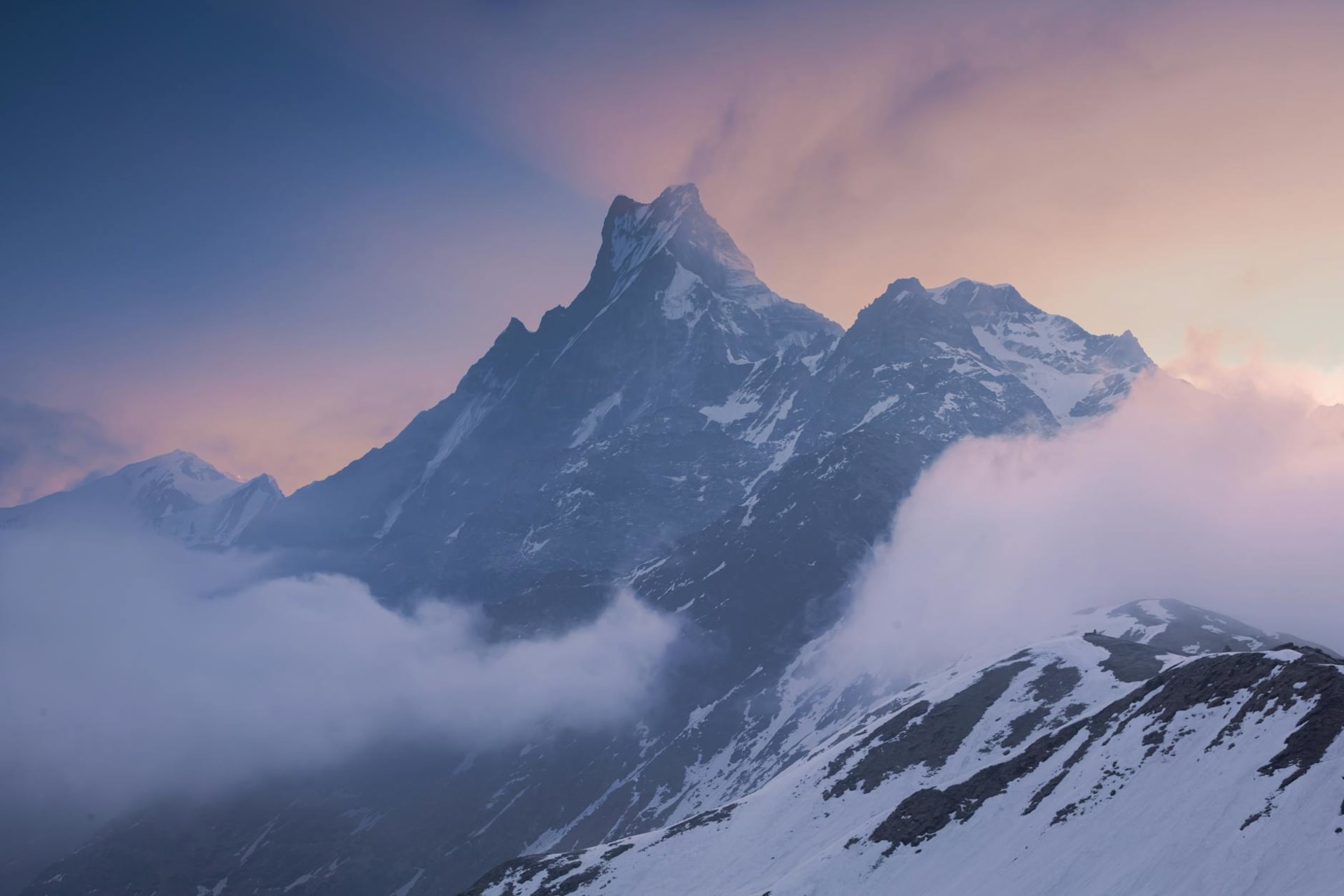
I arrived in Pokhara on a night bus from Kathmandu that smelled of cardamom and diesel, the road switchbacking through darkness for seven hours. By the time we rolled into Lakeside at six in the morning, the fog still lay low over Phewa Lake and I couldn’t see a thing. Lia fell asleep against my shoulder somewhere past Mugling. When I finally stepped off the bus and the mist parted for a single minute — just one — I saw Machapuchare, the fishtail peak, floating above the cloud line, backlit by a sun that hadn’t yet touched the valley floor. I stood on the pavement with my pack still on and said nothing.
Lakeside and the Lake Itself
The main drag of Lakeside — Baidam Sadak — sells everything a trekker needs and a few things nobody does. I drank my first bowl of thukpa sitting on a plastic chair outside a nameless kitchen near the wooden pier, watching boatmen pole their pirogues through the shallows. The broth had a sour depth from dried yak cheese I couldn’t identify until I asked. Across the water, the Barahi Temple sits on its small island, always slightly blurred by humidity, like a watercolor left in the rain.
The reflection that Phewa offers is not a postcard trick. It is genuinely disorienting. I rented a rowboat one afternoon and pulled out toward the center of the lake, and at that distance, with the water perfectly still, the mountains above and the mountains below became interchangeable. The real and the reflected existed at equal weight. I stopped rowing and drifted for longer than I planned.
The Climb to Peace Pagoda
The World Peace Pagoda on the southern ridge demands sweat. I took the trail from the lakeside that cuts steeply through a sal forest — forty minutes of humid climbing where the light arrives in diagonal shafts and the birds are loud and invisible. At the top, the pagoda gleams white against blue sky, and the whole Annapurna range opens without obstruction: Dhaulagiri to the west, Annapurna South, Hiunchuli, and then Machapuchare commanding the center.
What surprised me was the silence. Not the absence of sound — there were monks and tourists and wind — but something beneath it, a quality of altitude and open space that doesn’t exist at lake level. I sat on the stone ledge for an hour and watched shadows move across the high snowfields in real time.
Before the Trek
Pokhara is where you eat your last dal bhat before heading into the Annapurna Circuit, where you tape your boots and argue about poles. It’s a town built for preparation and for recovery, and it serves both functions honestly. The best momos I found were at a small place on Camping Chowk, pan-fried, eaten standing at a counter. Simple, correct, nothing else needed.
When to go: October and November offer the clearest skies and the sharpest reflections after the monsoon scrubs the air clean. March and April are also strong, with rhododendron blooming on the lower slopes of the Annapurnas — the hillsides turn red and pink all the way up to the treeline.