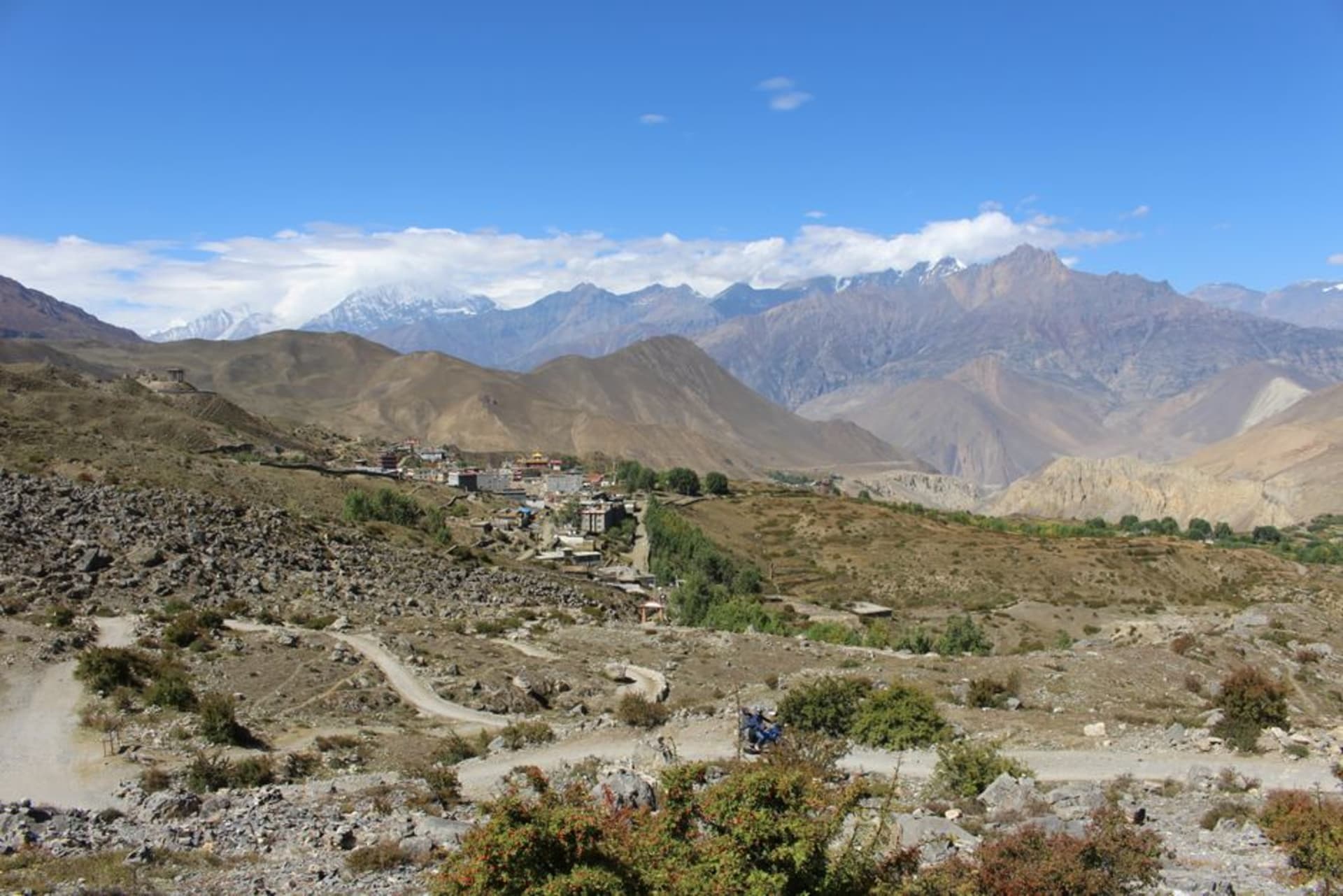
Muktinath
"I have never been more certain water was cold than the moment it hit my back at spout forty-something."
A sacred pilgrimage site holy to both Hindus and Buddhists, where 108 stone spouts pour glacial water over anyone brave enough to stand under all of them.
Muktinath sits at close to 3,800 meters, just below the Thorong La pass on the Annapurna Circuit and easily reachable by jeep from Jomsom, which means it gets two very different kinds of visitors: exhausted trekkers descending from seventeen days on the trail, and Hindu and Buddhist pilgrims who’ve traveled from across South Asia specifically for the temple. Both groups end up doing the same thing when they arrive — lining up to walk beneath the 108 bull-head-shaped stone spouts that ring the temple courtyard, each one channeling icy glacial meltwater said to wash away a lifetime of sin.
The 108 spouts
I did all of them, which was a mistake I’d make again. The water is genuinely frigid, sourced straight from the mountain, and by spout thirty I’d lost feeling in my shoulders and by spout eighty I’d stopped registering temperature at all, just the rhythm of stepping under each stream. Lia, wiser, did a symbolic dozen and watched me finish the rest, laughing from a dry vantage point that I resented in the moment and appreciated afterward.
Where two religions share one flame
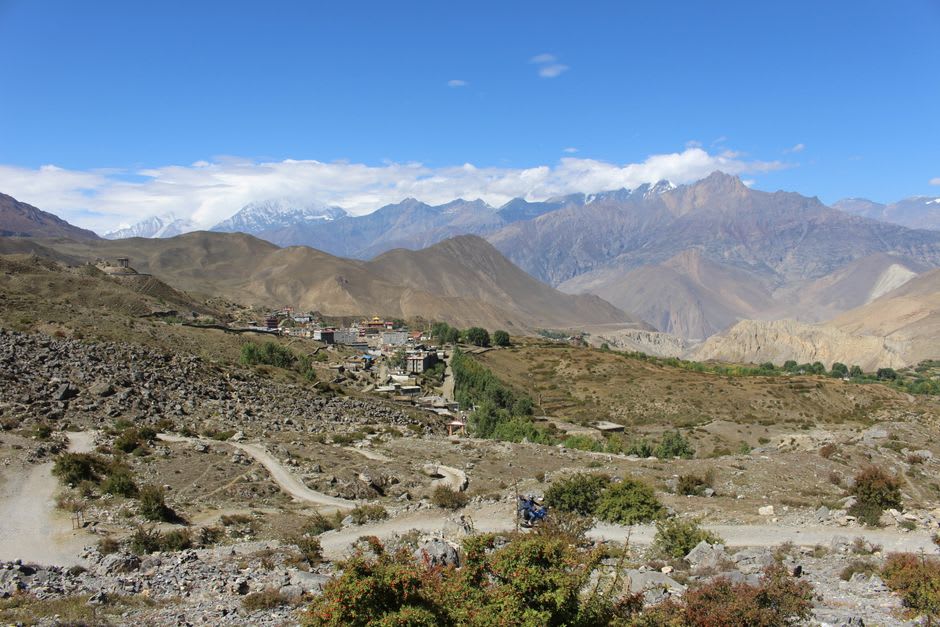
Inside the main temple compound is the Jwala Mai shrine, where a natural gas seep keeps a flame burning above a spring of water — fire and water occurring together, which both Hindu and Buddhist traditions treat as a significant and rare sign. Buddhist monks and Hindu priests maintain the site jointly, an arrangement that’s held for centuries without the friction you might expect, and watching both traditions perform their rituals within meters of each other, unbothered by the overlap, said more about the region’s religious character than anything I read beforehand.
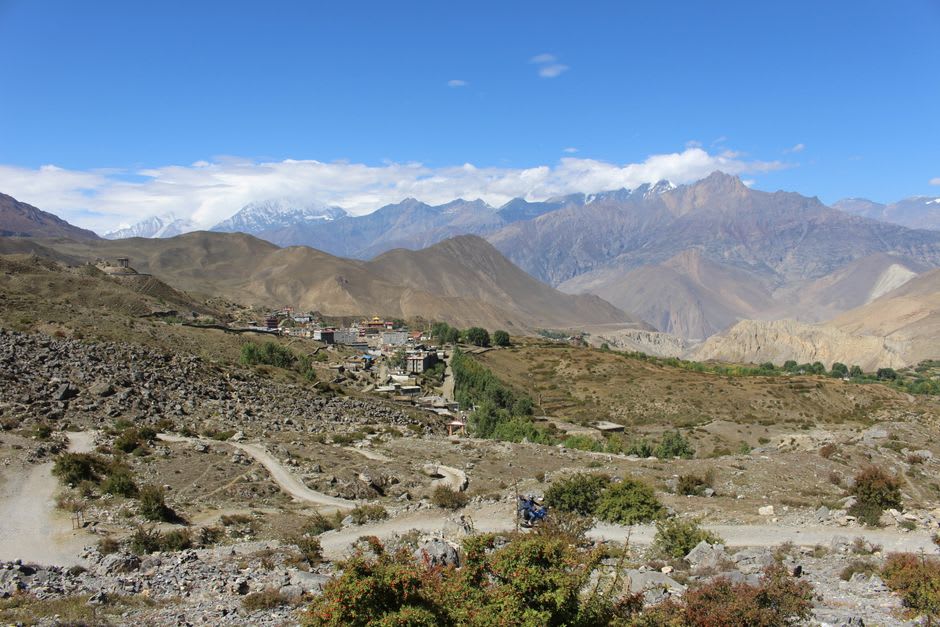
We stayed the night in nearby Ranipauwa, the small settlement that serves the temple, and woke to watch pilgrims arriving before dawn, some having walked for days, to complete the circuit of spouts before the day’s crowds built up.
When to go: March through May and September through November for the clearest access. If you’re arriving over Thorong La from the Annapurna Circuit, plan for a cold, early descent — the pass is typically crossed at first light.