Janakpur
"I'd been in Nepal a month before I realized I hadn't actually seen the Terai yet — not really, not until Janakpur."
The spiritual capital of the Mithila region, where the ornate Janaki Mandir and painted village walls reveal a Terai culture that looks nothing like the hills.
Everyone I’d met in Kathmandu talked about Nepal as mountains, monasteries, and prayer flags. Janakpur broke that mental model within an hour of arriving. This is Mithila country, a cultural region that spills across the border into Bihar, India, and it looks and feels distinctly different — flat, hot, humid, and covered in some of the most vivid folk art I’ve seen anywhere in the world.
The Janaki Mandir
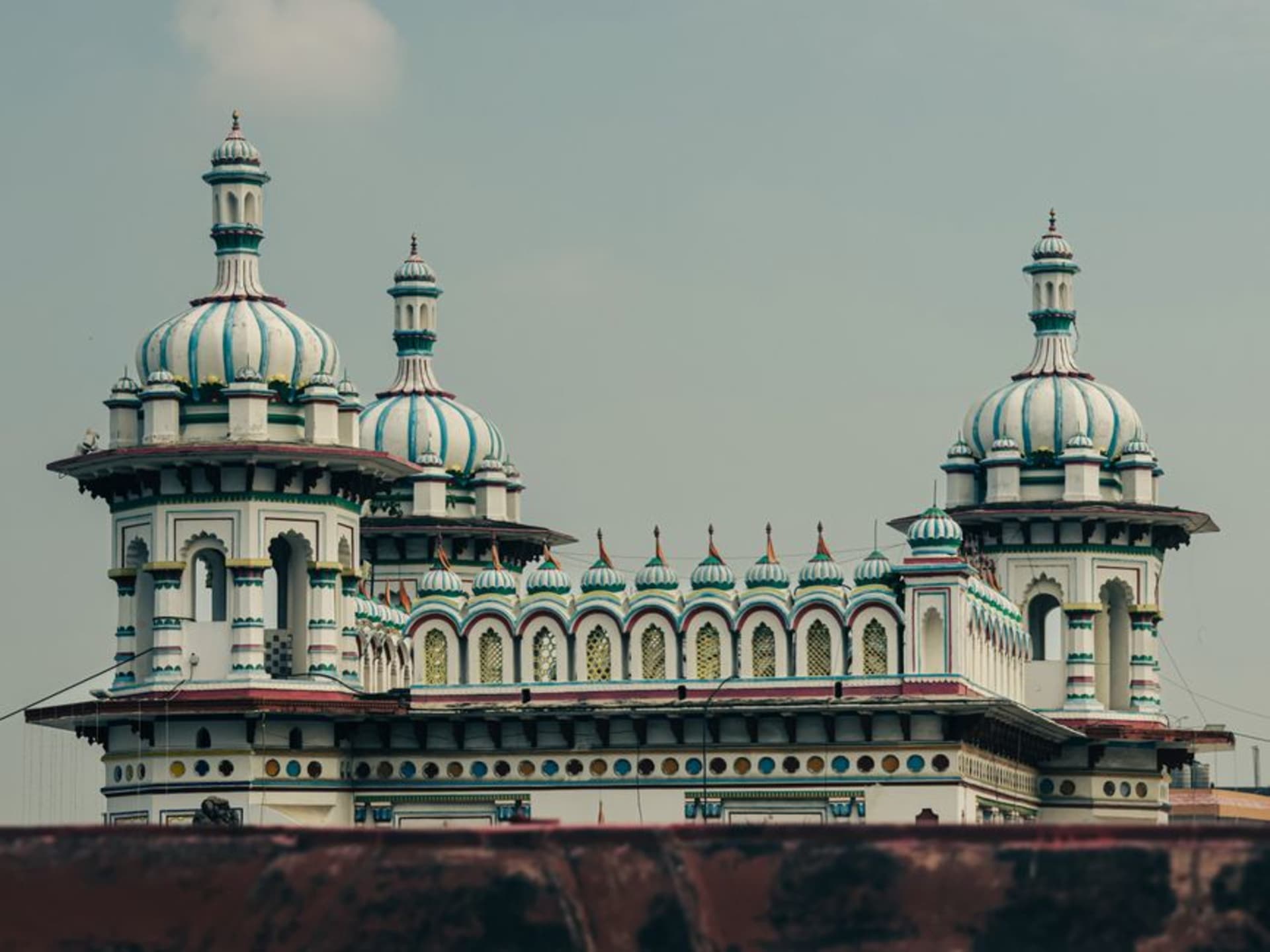
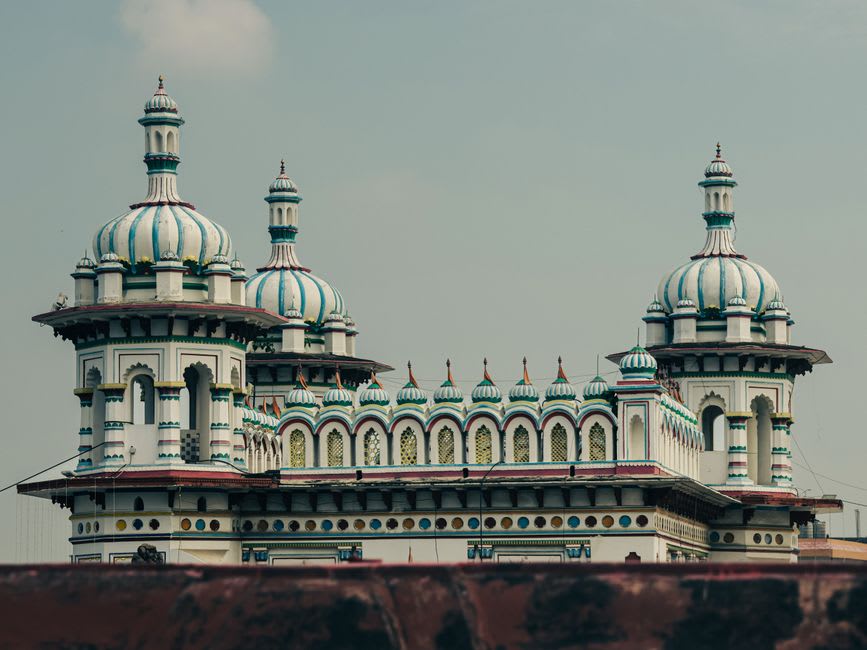
The centerpiece is the Janaki Mandir, a white marble temple built in 1910 in a Mughal-influenced style that has nothing in common with the pagoda architecture of Kathmandu. It marks the spot where, according to Hindu tradition, Sita — Rama’s wife in the Ramayana — was discovered as an infant. I arrived during evening aarti, when priests carried flame around the inner sanctum and hundreds of pilgrims pressed close, chanting in a call-and-response that built into something overwhelming. Lia, usually unbothered by crowds, admitted afterward she’d found it genuinely moving in a way she hadn’t expected.
Mithila Art in the Villages
The real discovery, though, came the next day, cycling out to the villages surrounding the city. Mithila painting — bold, geometric, filled with fish, peacocks, and lotus motifs in ochre, vermillion, and indigo — covers entire house walls here, made traditionally by women using fingers, twigs, and matchsticks rather than brushes. We stopped at a cooperative near Kuwa village where a group of painters worked on paper and canvas for sale, and I watched a woman named Sunita fill in a peacock’s tail freehand, no sketch beneath it, in under ten minutes.
Ponds and the Slower City
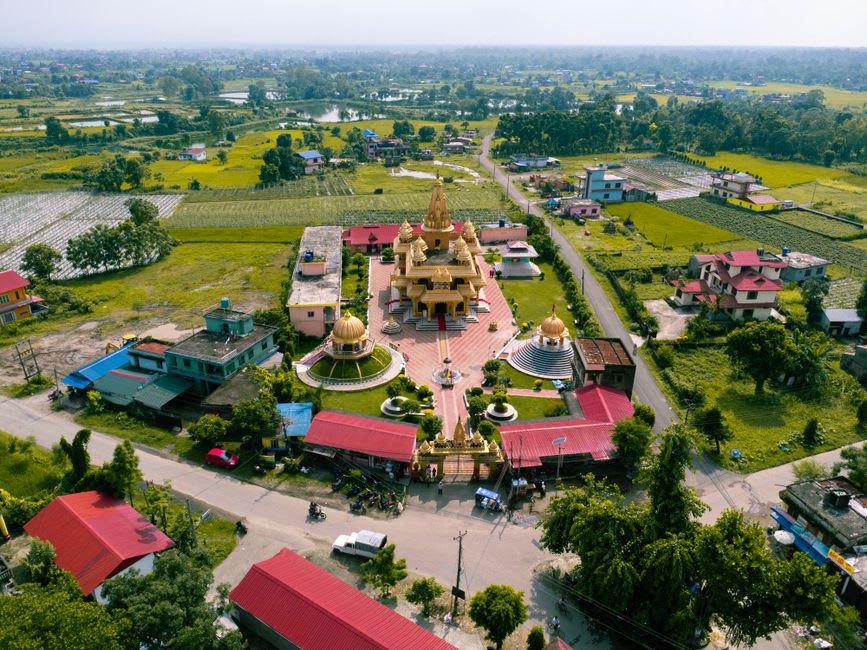
Janakpur is built around a network of sacred ponds — Ganga Sagar being the largest — where locals bathe, wash laundry, and gather at dusk while egrets pick through the shallows. Sitting on the ghats there in the fading light, watching the temple domes catch the last orange sun, felt like a completely different Nepal than the one I’d been sold in guidebooks.
When to go: October through March is most comfortable, avoiding the punishing pre-monsoon heat. If your timing allows it, the Vivaha Panchami festival in late November or early December — which reenacts Rama and Sita’s wedding — turns the entire city into a days-long celebration worth planning around.