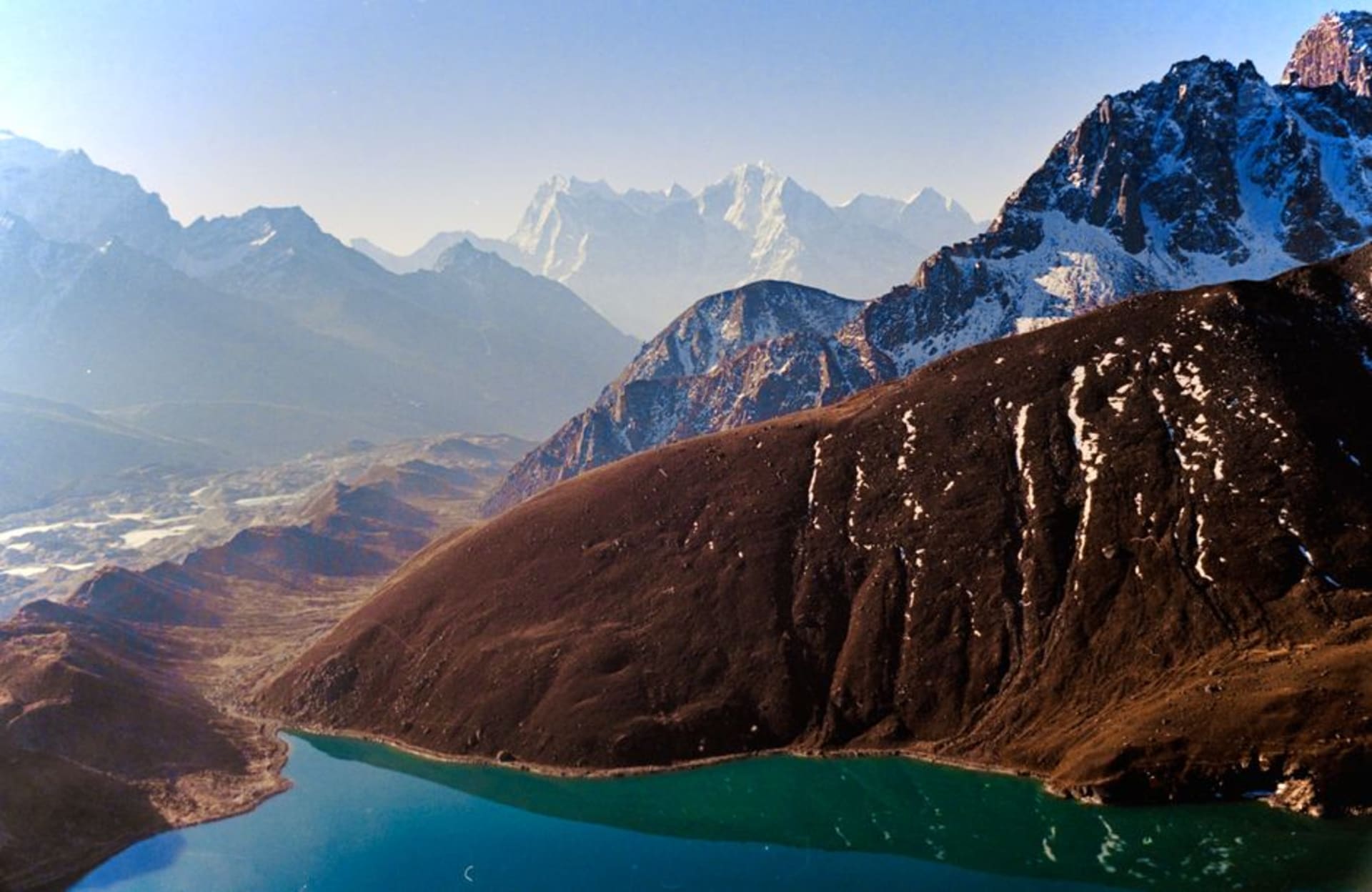
Gokyo Lakes
"Everyone goes to Base Camp. Almost nobody detours to Gokyo, which might be the point."
A chain of glacial lakes in a side valley west of the main Everest trail, turquoise against grey moraine, reached by far fewer trekkers than the numbers deserve.
We took the Gokyo route instead of the direct push to Base Camp on the advice of a Sherpa guide we met in Namche, who said, with the confidence of someone who’d walked both a hundred times, that Gokyo was the better view and Base Camp was the better bragging right. He wasn’t wrong on either count, and I’ve never regretted choosing the lakes.
A Valley of Water and Ice
The trail to Gokyo splits off from the main Base Camp route at Sanasa and climbs the Dudh Kosi’s western branch instead, tracing the edge of the Ngozumpa Glacier — the longest glacier in Nepal, though it looks more like a stretch of grey rubble than the white ice most people picture. The lakes themselves appear in a series: six named glacial lakes strung up the valley, the third and largest — Dudh Pokhari, beside Gokyo village — an improbable turquoise that seems to change shade with the angle of the light.
Gokyo Village and the Silence
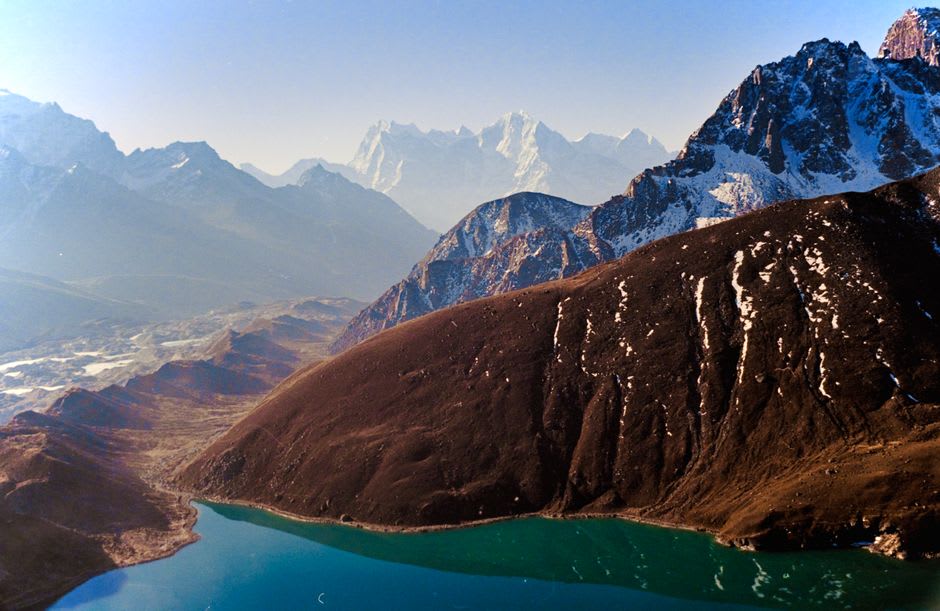
Gokyo village itself is tiny, a scatter of teahouses at 4,790 meters on the lakeshore, and it holds a fraction of the trekker traffic that Namche or Dingboche do. Lia and I sat on the frozen edge of Dudh Pokhari one morning and watched a lammergeier circle for almost twenty minutes without another human voice audible anywhere in the valley — a stillness the main Base Camp trail, for all its beauty, rarely offers anymore.
Gokyo Ri
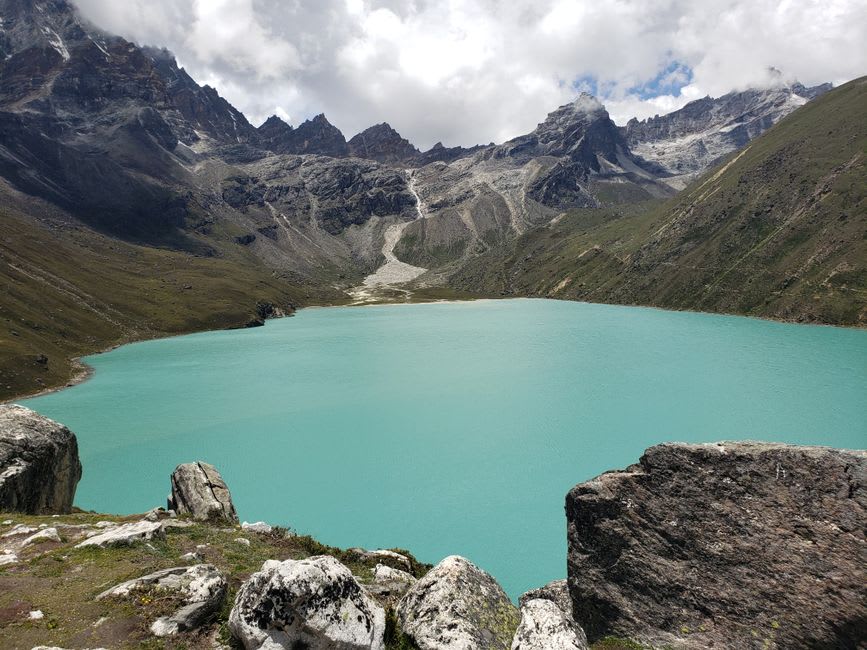
The obligatory pre-dawn climb up Gokyo Ri, at 5,357 meters, delivers what several serious trekkers told us was the single best panorama in the entire Khumbu — four of the world’s six highest peaks visible at once, including Everest, Cho Oyu, Makalu, and Lhotse, arranged across a horizon so wide it took a full turn of the body to see it all. Colder and harder than Kala Patthar, with roughly a tenth of the crowd.
When to go: October and November remain the clearest window for the Gokyo Ri sunrise view. Late April to May offers a warmer alternative with slightly more cloud risk. The route to Gokyo can be affected by early or late-season snow on the glacier crossing, so check conditions before committing.
Keep exploring
More from Nepal
 nepal
nepal Gorkha
The hilltop fortress town where Prithvi Narayan Shah launched the unification of Nepal, still guarded by a palace perched improbably on a cliff edge.
Explore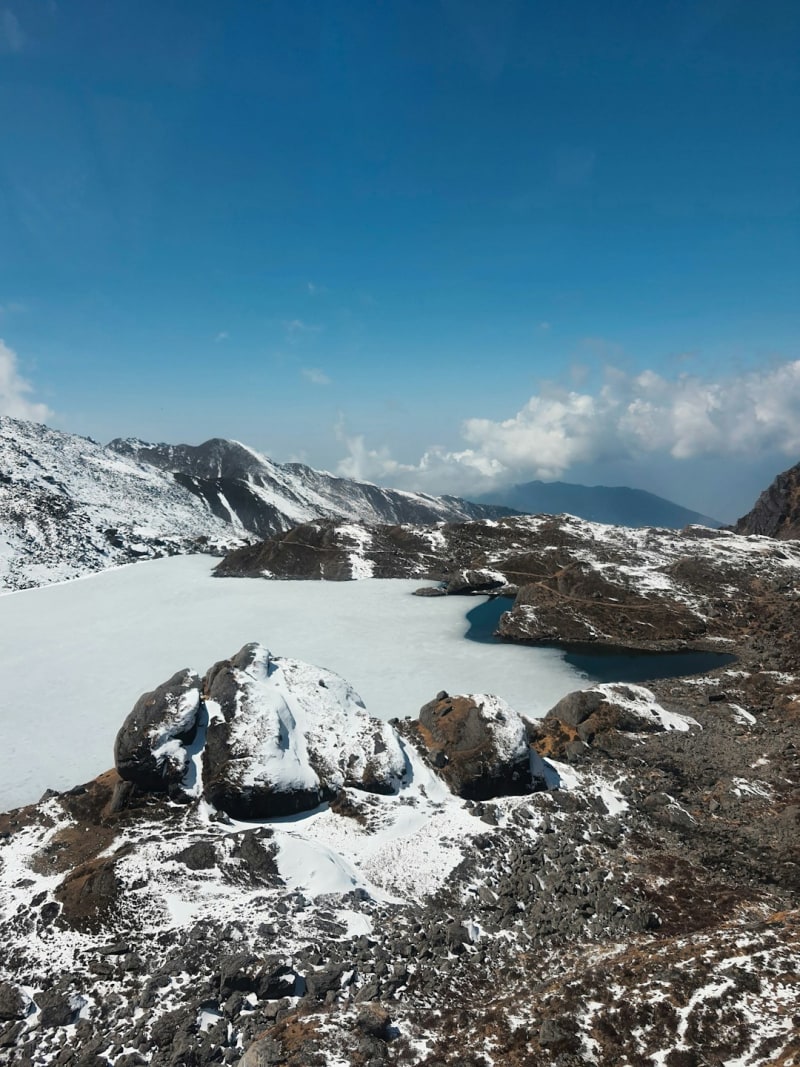 nepal
nepal Gosaikunda Lake
A sacred alpine lake at 4,380 meters, frozen half the year and swarmed by pilgrims the other half, reached by a brutal ridge trail that rewards you with some of the starkest scenery in the Langtang region.
Explore nepal
nepal Gupteshwor Cave
A limestone cave beneath Pokhara where an underground river meets a Shiva shrine in total darkness.
Explore nepal
nepal Halesi Mahadev
A vast limestone cave temple sacred to Hindus and Buddhists alike, hidden in the hills of Khotang district and reached by a barefoot scramble through the dark.
Explore nepal
nepal Halesi Mahadev
A limestone cave temple in the eastern hills sacred to both Hindus and Buddhists, its dripping stalactite chambers doubling as a shrine to Shiva.
Explore nepal
nepal Ilam
Rolling emerald tea gardens in Nepal's far east, where the hills look more like Darjeeling than the Himalayas most people picture.
Explore