Everest Base Camp Trail
"The Everest trail teaches you that altitude sickness is democratic and the views are worth every headache."
The 12-day teahouse trek through Sherpa villages to the foot of the world's highest mountain.
I had been warned about the altitude the way people warn you about bad traffic — vaguely, inevitably, as though it were merely inconvenient. By the second night in Namche Bazaar, lying awake at 3,440 metres with a skull that felt stuffed with wet cement, I understood that the warnings had been almost comically understated.
The Path from Lukla
The trail begins in chaos. The Tenzing-Hillary Airport at Lukla is the most terrifying runway in the world — a short strip cut into a mountainside that ends in a cliff — and the moment you step out of the plane, the air is already thinner than anything the body remembers. From there, the route follows the Dudh Kosi river north through rhododendron forest, prayer wheels spinning at the edge of every suspension bridge, the cables strung with faded lungta flags that snap and chatter in the canyon wind.
The teahouses along the trail are not luxury. Dal bhat arrives twice a day at most of them — lentil soup, steamed rice, a curl of vegetable — and it is somehow exactly what the body wants at altitude. I ate it every evening for eleven days and never tired of it. In Tengboche, the cook at our lodge made a yak butter tea so aggressively rancid and so perfectly warming that Lia and I looked at each other and ordered a second cup without a word.
Gorak Shep and the Glacier
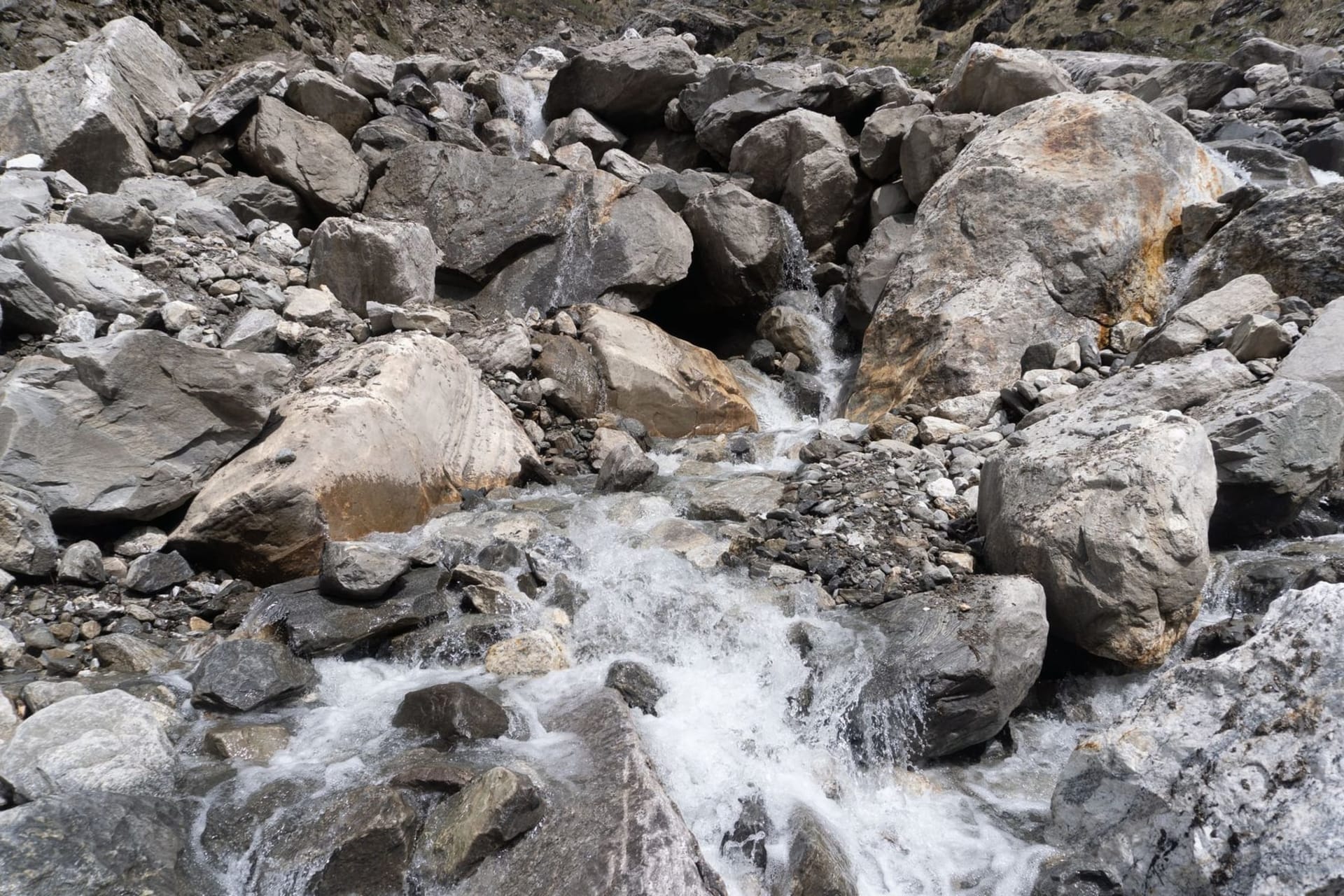
The last stretch before Base Camp crosses the Khumbu Glacier moraine, a sprawling rubble of grey ice and black rock that looks nothing like the mountain photographs promise. It looks industrial, almost ugly — and then the morning light hits Pumori and Nuptse and the entire horizon turns gold and you forgive every blister.
What I did not expect was the silence at Base Camp itself. Expedition season had not yet begun. There were no tents, no climbers. Just the wind moving across 5,364 metres of stone and ice, a handful of trekkers speaking in murmurs, and the mountain enormous above us — not friendly, not hostile, simply indifferent in the way that only very old things can be.
The unexpected thing: I wept. Not from emotion I could name, but from something simpler and more physical, as though the altitude had worn through whatever layer normally keeps that kind of response in check.
When to go: The classic seasons are October–November for crisp post-monsoon skies and March–May for warmer temperatures before the summer rains arrive. Avoid December through February when high passes freeze and many teahouses close.