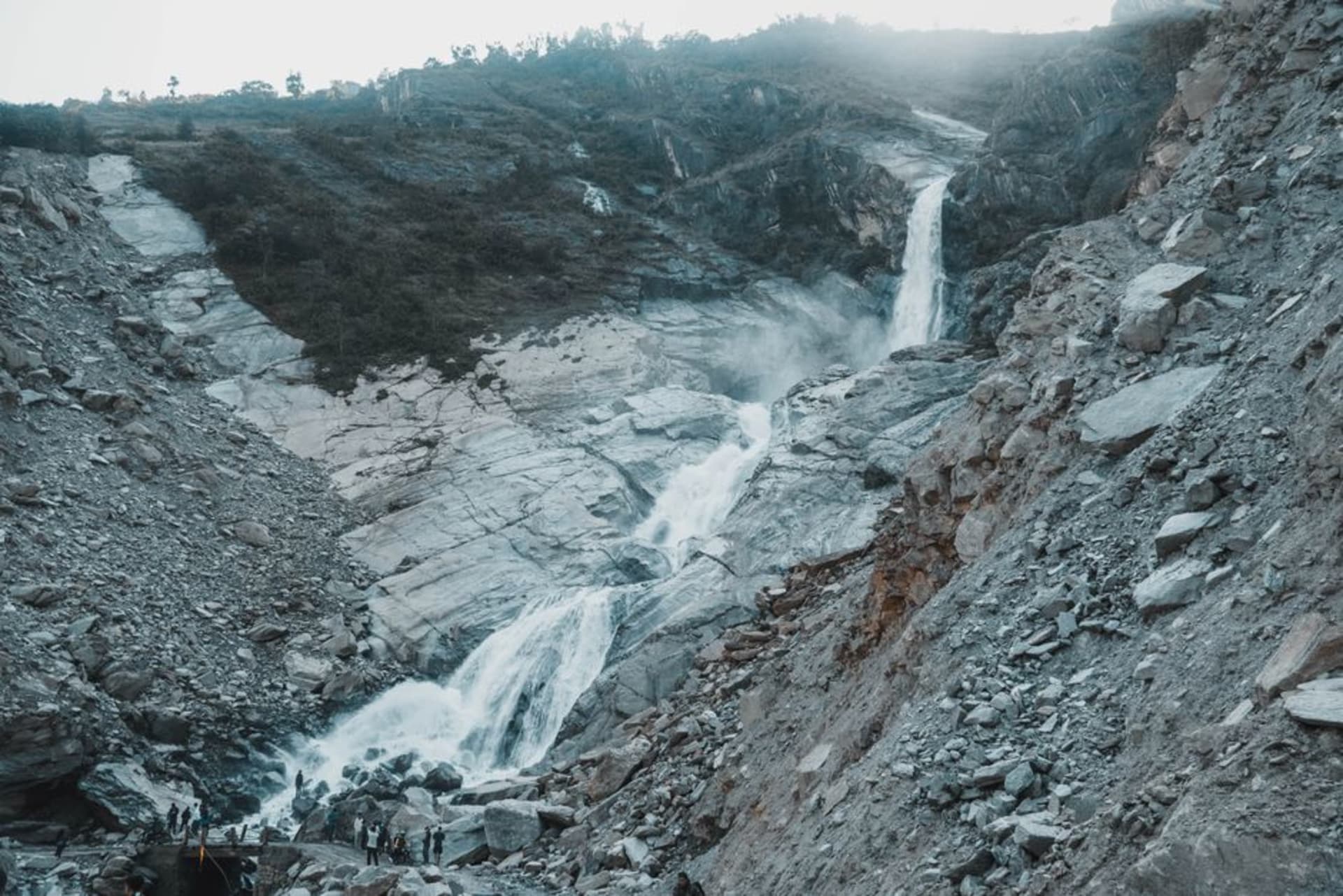
A violent, roaring waterfall that vanishes underground mid-fall, named for a tragedy nobody quite agrees on.
The taxi driver who took us there told a version of the story with total confidence — a Swiss or Israeli or American tourist named Davis, depending on who’s telling it, swept off the rocks and pulled into the sinkhole below during monsoon season sometime in the seventies. Nobody at the site itself seemed to agree on the nationality or even the decade, and I’ve since read three contradictory accounts. What everyone agrees on is that the falls are named after whoever it was, and that the water still moves with enough force to make the story entirely plausible.
Where the Water Just Stops
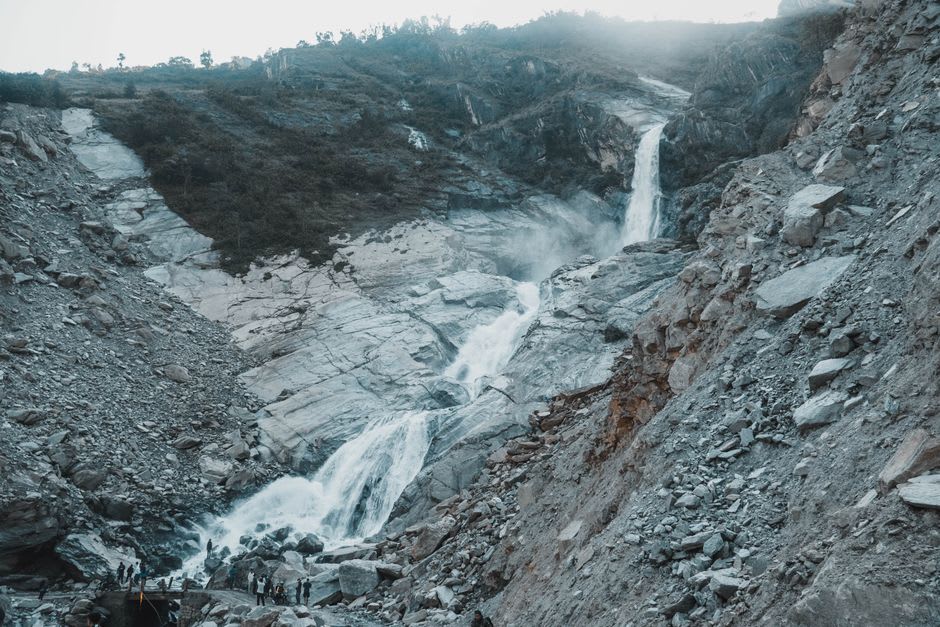
The falls themselves are short and almost violent for their size, fed by an overflow channel from Phewa Lake that gets dramatically more forceful during monsoon. We went in October, post-monsoon, and the volume was already impressive — a churning white column dropping maybe fifteen meters into a narrow limestone chute before vanishing entirely into a sinkhole at the bottom. There’s no pool, no gentle spreading out. The water just goes somewhere you can’t see, into a tunnel system that geologists only partially mapped, and reappears — allegedly, and this took me a while to verify — inside Gupteshwor Cave a few hundred meters away.
Standing at the Rail
There’s a viewing platform now, fenced properly after enough accidents that the local municipality finally invested in railings, and you can stand right at the edge and feel the spray on your face even in the drier months. Lia pointed out that the fencing itself tells you something — a low iron rail bent slightly outward in one place, like it had taken weight and held. We stood there longer than the sight strictly warranted, mesmerized by the specific violence of water that has somewhere urgent to be and isn’t interested in a scenic pause on the way.
When to go: June through September, during monsoon, is when the falls are at their most dramatic and genuinely thunderous — bring a rain jacket regardless of the forecast. The dry months from October to March are calmer and safer to photograph up close, with far less spray obscuring the view.