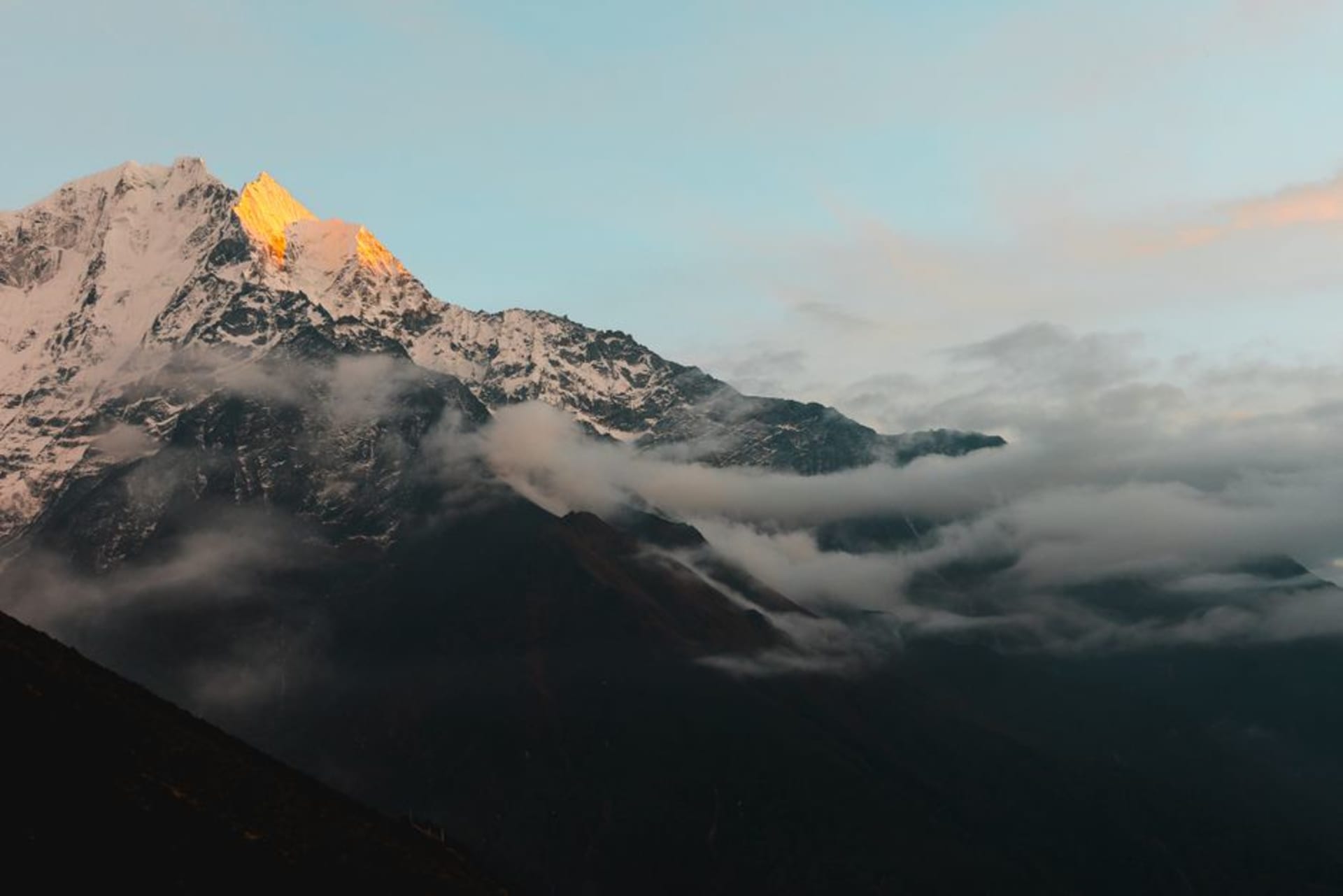
Chukhung
"Chukhung is where the Everest trail's crowds finally disappear and the mountains take over completely."
A tiny valley outpost beyond Dingboche, the last stop before Island Peak, where the crowds thin out and the mountain walls close in from every side.
Past Dingboche, the main trekking traffic peels off toward Lobuche and the push to Base Camp, and only a fraction of hikers continue up the side valley to Chukhung instead. We went because a French climber we’d met in a teahouse two nights earlier described it as “the quiet version of everything you already like about this trek,” which turned out to be exactly right.
The Valley Nobody Rushes Through
Chukhung sits at 4,730 meters at the head of the Imja Valley, a settlement of maybe half a dozen teahouses ringed by some of the most concentrated high peaks in the entire Khumbu: Lhotse’s south face rising almost directly overhead, Ama Dablam visible from an angle most trekkers never see, and Island Peak — a serious mountaineering objective in its own right — filling the head of the valley like a wall. The trail in from Dingboche crosses wide, flat pastureland grazed by yaks, a strange calm after the steeper stone-walled terrain further down.
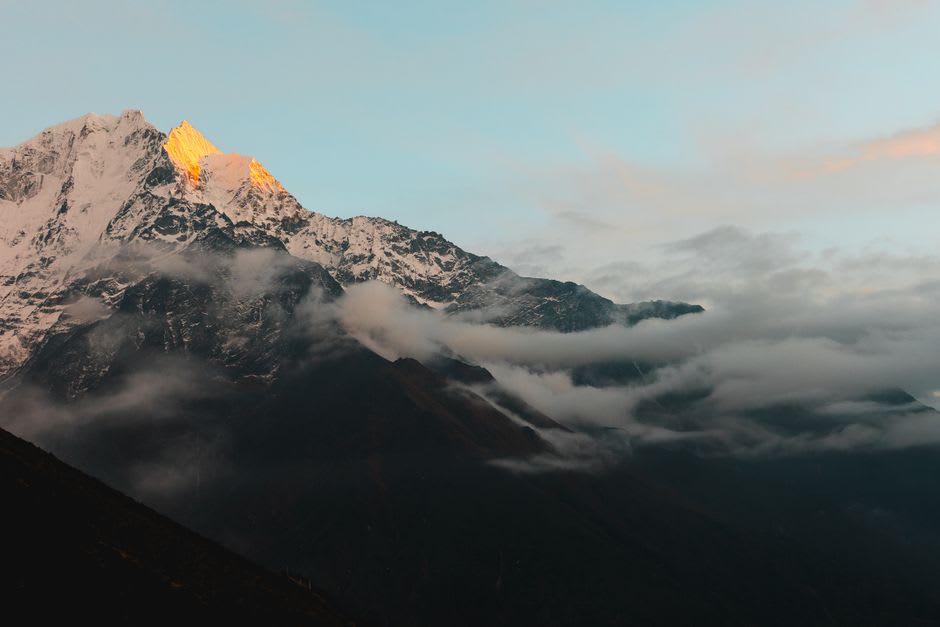
Chukhung Ri
The acclimatization hike here climbs Chukhung Ri, a ridge above the village that tops out around 5,550 meters — technically harder than Kala Patthar and rewarded with far fewer other trekkers at the summit. We shared the viewpoint with exactly two other people, both mountaineers acclimatizing for an Island Peak attempt, and the panorama of Lhotse, Nuptse, Makalu, and Ama Dablam felt like a private screening compared to the crowds we’d find later at Kala Patthar.
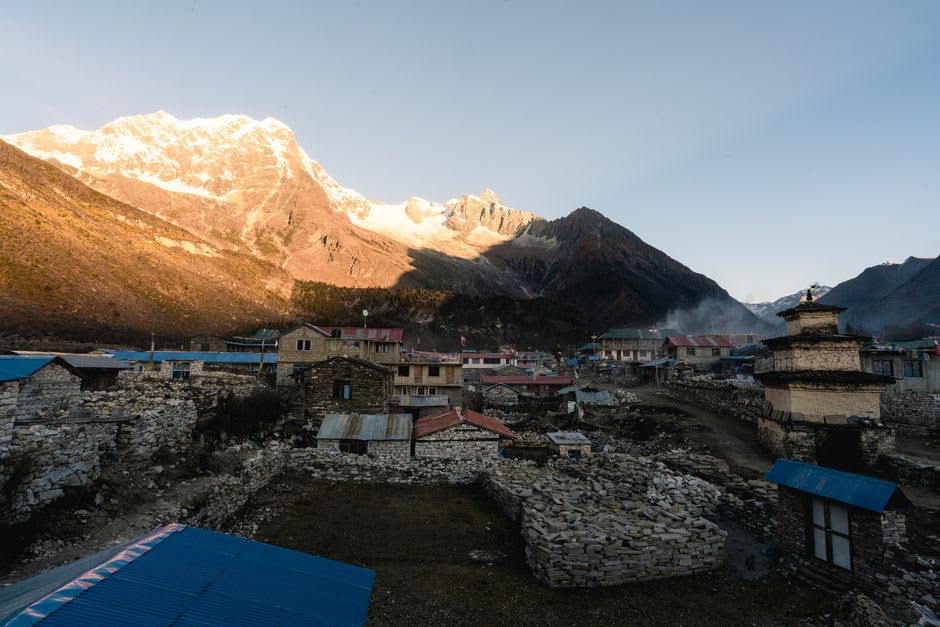
A Base for the Serious
What struck me most was the composition of people staying in Chukhung’s teahouses — fewer casual trekkers, more climbers running final acclimatization rotations before an Island Peak summit push, gear scattered across common rooms in a way that made our modest hiking boots look almost sheepish by comparison. It gives the whole valley a different energy: quieter, more focused, genuinely remote.
When to go: October–November and April–May offer the clearest weather for the Chukhung Ri climb. The valley sees far less foot traffic than the main Base Camp trail year-round, so solitude is available in nearly any season the route is open, weather permitting.