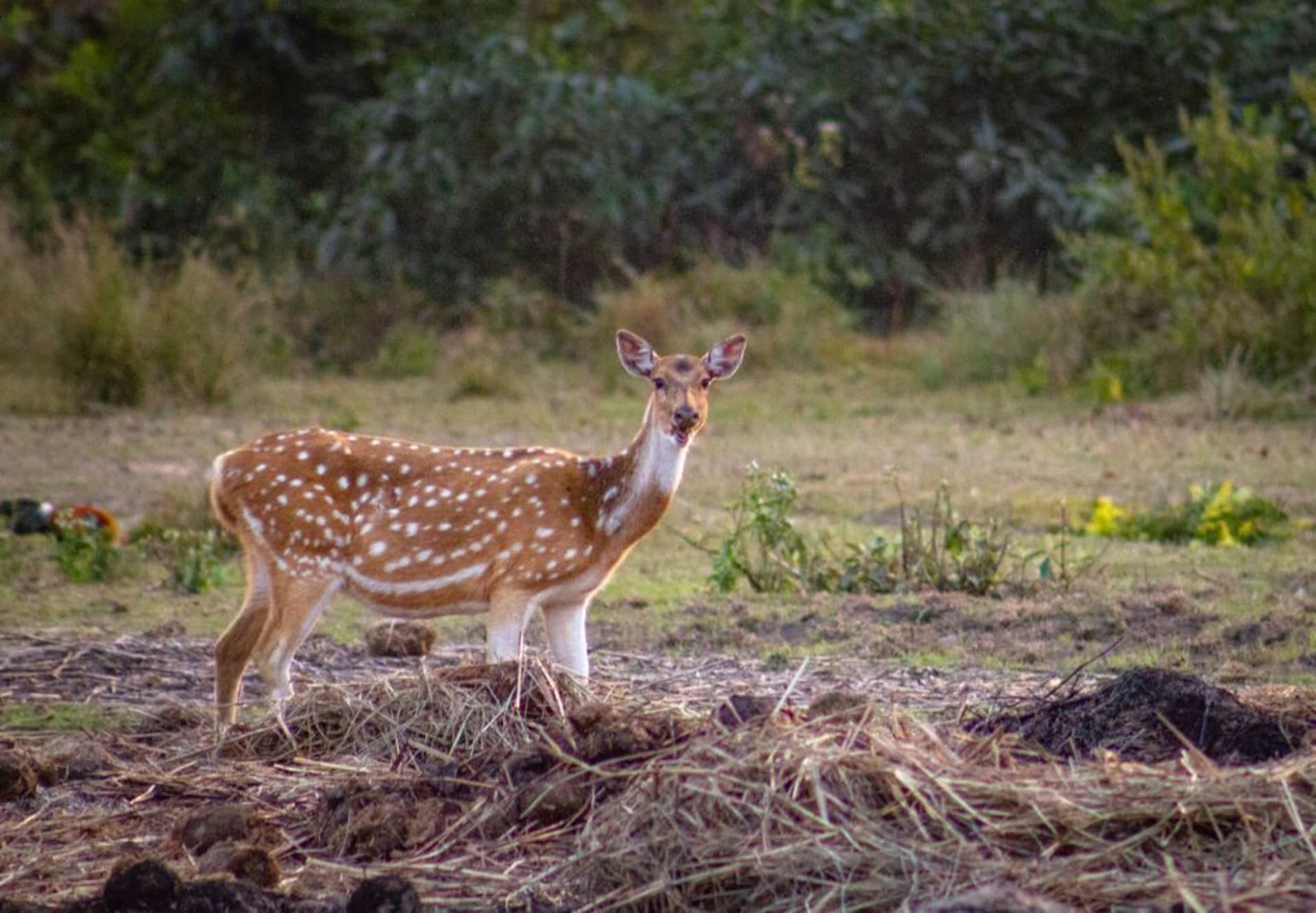
Bardia National Park
"Chitwan has the crowds. Bardia has the silence, and somehow that made the tiger feel more real."
Nepal's wildest and least visited tiger reserve, a stretch of sal forest and river grassland in the far southwest where you can walk for hours without meeting another traveler.
Getting to Bardia takes effort, which is exactly why it stays quiet. The overnight bus from Kathmandu runs twelve hours west along the Mahendra Highway, and by the time Lia and I stumbled into Thakurdwara at dawn, stiff and coated in road dust, we’d already decided the trip had better be worth it. It was. Bardia is the largest national park in the Terai, tucked against the Karnali River in Nepal’s far southwest, and it holds one of the healthiest wild tiger populations in the country — with a fraction of the visitors Chitwan gets.
Into the Core Area on Foot
Most parks make you view wildlife from a jeep or a canoe. Bardia still allows guided walking safaris into parts of the core forest, which changes the whole register of the experience. Our guide, Krishna, moved through the sal trees reading the ground constantly — a fresh set of tiger pugmarks pressed into damp mud near a stream, a langur alarm call rippling through the canopy above us. We never saw the tiger that morning. We heard the forest react to it, which was somehow more unsettling than a sighting would have been.
The Karnali and Its Islands
The Karnali River braids through the western edge of the park into a maze of sandbar islands, and a dugout canoe crossing at sunrise is worth doing even if you see nothing but birds. We watched a mugger crocodile sunning itself on a spit of white sand, motionless as driftwood, and a fishing eagle working the shallows with the kind of patience I don’t have. Downriver, near the park boundary, wild elephants sometimes cross between Nepal and India’s neighboring reserves — a reminder that Bardia is one node in a much larger, still-connected wilderness.
Thakurdwara After Dark
The village itself is little more than a single road of guesthouses and a Tharu cultural center, but the Tharu stick dance performed some evenings — men in a circle striking bamboo poles together in rhythm, faster and faster until it becomes almost a blur — was one of the most purely fun evenings we had in Nepal. Lia got pulled into the circle by a grinning teenager and lasted about four rounds before collapsing into laughter.
When to go: March through May offers the best wildlife visibility, when the grass is low and animals gather near the rivers before the heat peaks. October and November are cooler and greener but slightly harder for spotting tigers. Avoid June through September, when the monsoon floods the Karnali and much of the park closes.